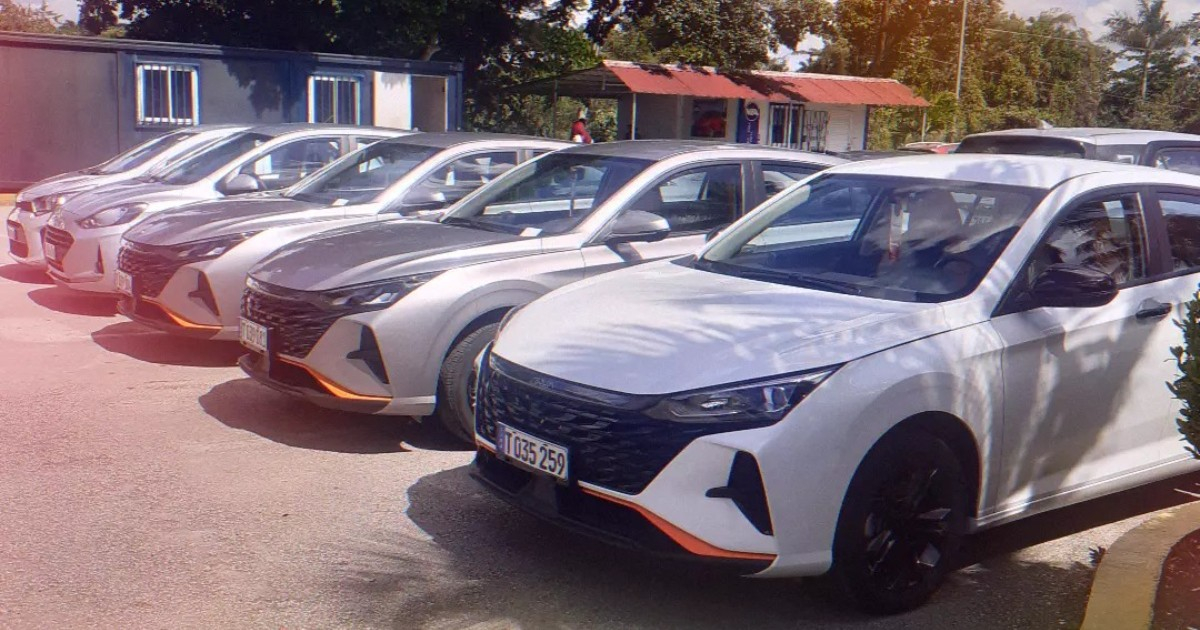
On Tuesday, the Cuban government unveiled a legislative package through Gaceta Oficial No. 64, which updates the regulations concerning the maximum operational time for vehicles in the tourism sector before they can be sold domestically. This package also includes new rules about the manufacturing, sale, and importation of motor vehicles.
The Ministry of Transportation (MITRANS) has introduced Resolution 52/2026, which provides "Supplementary Regulations on the commercialization, import, manufacture, assembly, and dismantling of motor vehicles, trailers, and semi-trailers," revising the timelines set by previous legislation.
Under Resolution 34/2023, effective from March 1, 2023, the maximum usage periods for tourism vehicles were defined as follows: up to two years for economic or mid-range cars and motorcycles; up to three years for luxury cars, rural vehicles, and minibuses; up to five years for buses with 17 to 30 seats; and up to seven years for buses with more than 30 seats or double-decker buses.
The new resolution modifies this framework in light of the Cuban government's stated goal of transforming the energy matrix.
Additionally, the package includes Decree 163/2026 from the Council of Ministers, signed by Prime Minister Manuel Marrero Cruz. This decree, which replaces Decree 119 from December 30, 2024, will take effect seven days after its publication.
This decree permits the sale of vehicles that are no longer in technical use in the tourism rental sector in Cuban pesos (CUP), allowing interested parties to potentially acquire and restore these vehicles for the domestic market.
The decree acknowledges that these updates are necessary to "adapt to the current economic context" and aim to "contribute to transforming the energy matrix."
Another major update is Decree-Law 122/2026 from the Council of State, signed on July 22, 2026, by Juan Esteban Lazo Hernández, President of the National Assembly of People's Power. This law amends the 2010 Road Safety Code to permit vehicle assembly not only by state entities but also by joint ventures and authorized non-state actors.
The revised Article 229 of the Road Safety Code states: "The manufacture and assembly of motor vehicles, trailers, and semi-trailers are authorized, provided that their parts and components are lawfully acquired, as determined by the Council of Ministers, to ensure quality and safety in their operation."
Under this framework, non-state Cuban legal entities can import parts to assemble new mopeds, motorcycles, electric tricycles, and electric cars, as long as they have approval from the Council of Ministers via MITRANS, and this activity is included in their business objectives.
Only entities authorized by the Ministry of Foreign Trade and Foreign Investment (MINCEX) can import kits, components, and accessories for these activities. Furthermore, electric vehicle assembly projects must incorporate charging stations powered by renewable energy sources.
In terms of taxation, the special tax on vehicle sales can reach up to 35% of the total value in foreign currency for high-end vehicles, whereas electric vehicles assembled in Cuba might be exempt, with a 0% tax rate.
This legislative package is part of the 176 economic reform measures announced by the Cuban government in 2026, aiming to increase non-state participation in the economy and stimulate the internal vehicle market amidst a structural crisis that the regime attributes to external factors, yet is deeply rooted in over six decades of centralized management.
Key Questions on Cuba's Vehicle Legislation
What are the new maximum usage periods for tourist vehicles in Cuba?
The new regulations specify up to two years for economic or mid-range cars and motorcycles, three years for luxury cars, rural vehicles, and minibuses, five years for buses with 17 to 30 seats, and seven years for larger or double-decker buses.
How will the new decrees impact the Cuban vehicle market?
The decrees aim to diversify and expand the vehicle market by allowing the sale of vehicles in Cuban pesos, promoting non-state participation, and encouraging the assembly of electric vehicles with renewable energy charging stations.
Who can now assemble vehicles in Cuba under the new laws?
Vehicle assembly is now authorized not only for state entities but also for joint ventures and non-state actors who have received approval from the Council of Ministers.