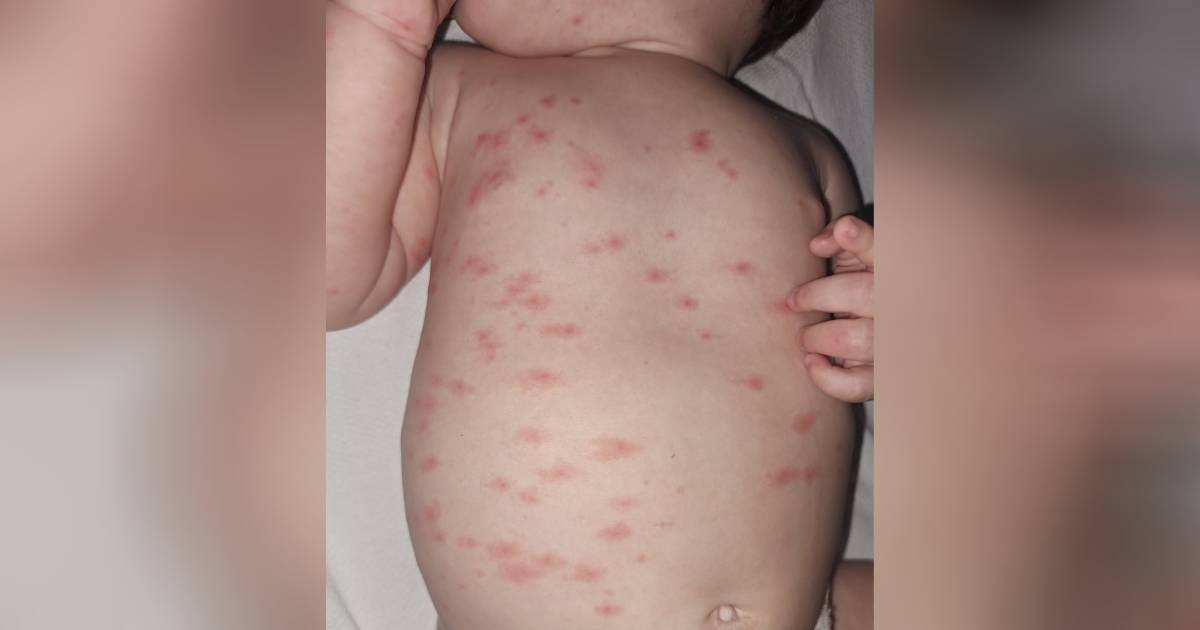
A Cuban mother named Arais Barbara took to Facebook on Tuesday to share a heart-wrenching account of the dire circumstances under which she is raising her baby in Cuba. Accompanying her post was an image showing the child covered in numerous mosquito bites across his back and torso.
"This is the worst torture of living here in Cuba: no electricity, streets filled with trash, and swarms of mosquitoes due to all the filth, combined with the unbearable heat. How much longer, my God? There's no respect for children, the elderly, the sick... no one. But the saddest part is when they get sick, and when you reach the hospital, you have to bring the medication yourself or return home because there's nothing available," wrote Arais Barbara on her Facebook profile.
Her testimony followed the sixth nationwide blackout in Cuba of 2026, which occurred on Monday. According to Infobae, the country is facing an escalating energy crisis.
Escalating Blackouts and Their Impact
In Havana, daily power outages have ranged from 15 to 30 hours in 2026, while other parts of the country have experienced over 48 consecutive hours without electricity. The lack of power prevents the use of fans, air conditioning, and electric mosquito nets, leaving babies and young children exposed to extreme heat and insects during the Caribbean summer.
Garbage Accumulation and Health Hazards
Compounding the problem is the breakdown of garbage collection services: only 44 out of 106 garbage trucks are operational in Havana—just 41.5% of the fleet—resulting in piles of waste over a meter high in some neighborhoods. These conditions create perfect breeding grounds for the Aedes aegypti mosquito.
The deadly combination of blackouts, heat, trash, and mosquitoes has led to a surge in dengue and chikungunya cases across the island. Cuba ended 2025 with at least 81,909 combined cases of these diseases and 65 officially reported deaths, including 29 children.
Ongoing Health Crisis
As of early 2026, the outbreak remained active in all 14 provinces, with more than 2,800 cases reported in 134 municipalities. The Pan American Health Organization warned in February 2026 that infants under one year old—particularly those under three months—are at the highest risk of severe complications and death from chikungunya.
Arais Barbara's situation is not unique this year. On June 1st, another Cuban mother shared images of her child covered in mosquito bites, citing power cuts of more than 20 hours a day in Havana. On Monday, a photo of a baby drenched in sweat during a blackout also stirred social media users. That same day, Cubans took to social media to protest yet another power outage, highlighting its specific impact on children.
Barbara also highlighted that when children become ill and are taken to the hospital, the healthcare system's response is equally distressing: families either have to provide their own medications or leave empty-handed because nothing is available.
The skin rash visible in Arais Barbara's baby's photo could be due to mosquito bites, extreme heat, or other dermatological issues typical of the environment, although only a doctor can provide an accurate diagnosis.
The accounts of Cuban mothers sharing their children's suffering have become a constant in 2026, reflecting a crisis that combines energy collapse, urban sanitation decay, and an ongoing epidemiological emergency that the regime has failed to address.
Understanding Cuba's Crisis
What are the main causes of the health crisis in Cuba?
The health crisis in Cuba is primarily driven by frequent blackouts, inadequate waste management, and the proliferation of mosquitoes, leading to increased cases of dengue and chikungunya.
How have power outages affected daily life in Cuba?
Power outages have severely impacted daily life in Cuba by disabling essential appliances like fans and air conditioning, exacerbating heat exposure and increasing vulnerability to mosquito bites.
What actions are being taken to address the crisis in Cuba?
Currently, there is little evidence of effective actions being taken by the Cuban government to address the crisis, as the situation continues to deteriorate with no significant improvements reported.