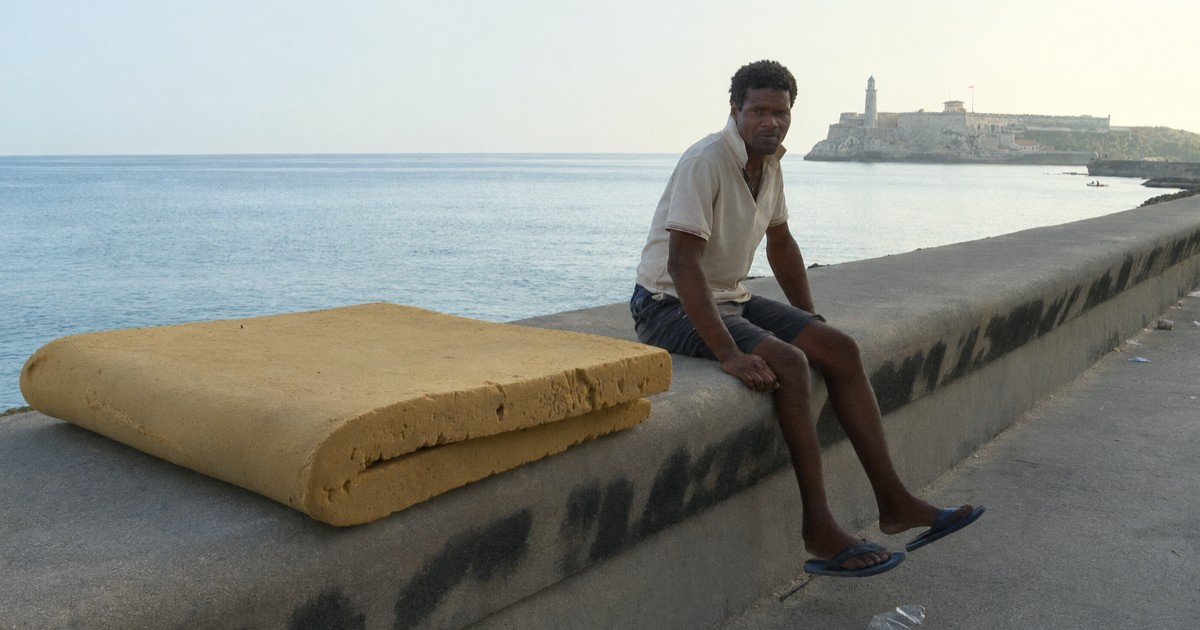
Amidst unbearable heat and frequent power outages, many Cubans have resorted to spending their nights on Havana's Malecón, seeking solace in the ocean breeze. This popular coastal spot has become a sanctuary for those unable to find respite from the stifling conditions in homes lacking electricity, fans, or air conditioning.
The Associated Press (AP) captured these scenes following the sixth complete collapse of Cuba's National Electric System (SEN) in 2026. The blackout occurred at 10:43 p.m. on Sunday, August 2, on a day when temperatures soared to 34 degrees Celsius. Combined with nearly 80% humidity, the heat index reached a sweltering 41 degrees.
Construction worker Alexey Ríos García, 30, was among those who spent the night on the seawall, using a piece of yellow foam as a pillow to shield himself from the hard concrete. "Things are only getting worse. Tomorrow it will happen again... and we'll be back sleeping here on the Malecón," Ríos told AP.
Seeking a Way Out
In images shared by Telemundo 51 journalist Alexis Boentes, another young man expressed a desire to leave Cuba: "I've gotten used to living without power. What I really need is to leave this country; I don't need anything else."
Elaine Delis Ramos, a 30-year-old physical education teacher, also turned to the Malecón for relief, lying down with loved ones on a thick blanket. "Just when we start to hope it won't happen again, it does. We have no solution," she lamented to AP.
A Public Display of Crisis
The sight of families sleeping on the Malecón highlights a new facet of Cuba's ongoing crisis. With power outages and extreme heat, many residents find no relief within their homes and are forced to seek comfort outdoors.
The general blackout on Sunday marked the sixth total collapse of Cuba's electric system in 2026. On Monday, as the regime attempted to restore the national grid, the seventh disconnection of the year occurred. Besides these massive failures, scheduled blackouts now exceed 20 hours daily across most of the country.
Fuel shortages have crippled public transportation, and families fear losing their meager food supplies stored in powerless refrigerators. Hospitals are now striving to install solar panels to maintain some essential services.
Impact of U.S. Policies
AP noted that the crisis worsened following Donald Trump's administration's restrictions on oil supplies to Cuba and threats to impose tariffs on countries continuing to provide crude to the island. These measures have further strained an already deteriorating electrical system, plagued by aging thermoelectric plants, lack of maintenance, and frequent breakdowns.
Understanding Cuba's Power Crisis
Why are Cubans sleeping on the Malecón?
Cubans are sleeping on the Malecón to escape the extreme heat and power outages that make it difficult to stay indoors without electricity, fans, or air conditioning.
What is causing the power outages in Cuba?
The power outages are due to a combination of factors, including a deteriorating electrical infrastructure, aging thermoelectric plants, lack of maintenance, and external pressures such as U.S. oil supply restrictions.
How have U.S. policies affected Cuba's energy crisis?
U.S. policies, particularly restrictions on oil supplies and threats of tariffs on countries providing crude to Cuba, have exacerbated the island's already struggling energy sector.