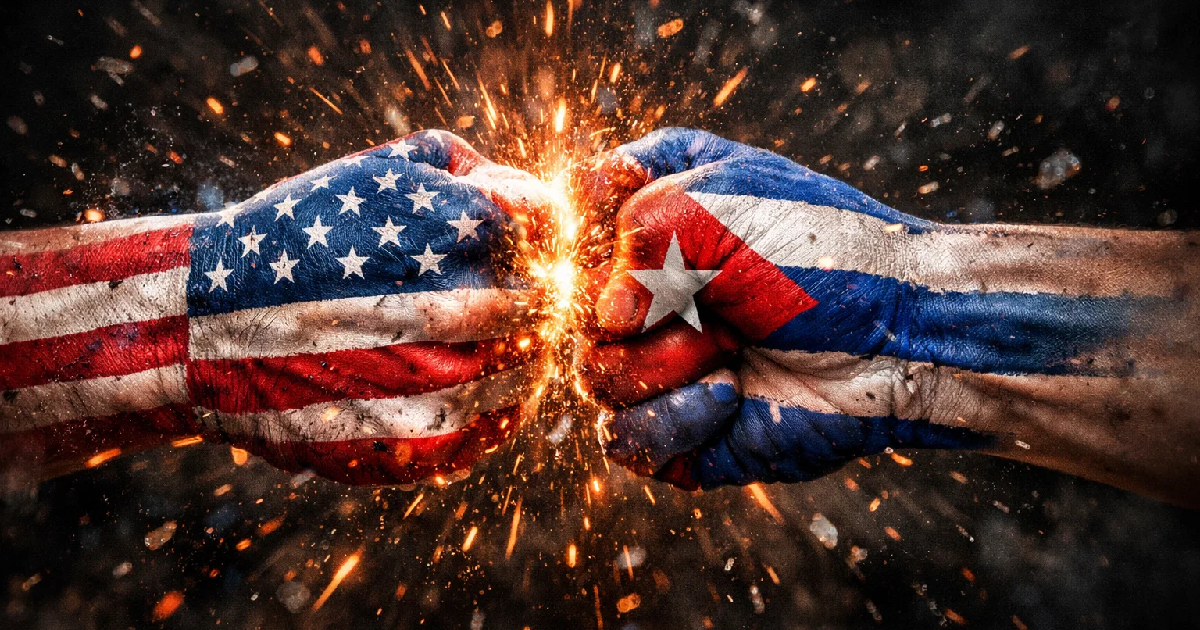
In recent months, the United States has intensified its intelligence-gathering capabilities in Cuba, a strategic move that further escalates the Trump administration's pressure on Havana's government. However, there is no public evidence suggesting that Washington has authorized any military operations against the island.
This development was disclosed by Politico on Tuesday, citing two individuals with knowledge of the U.S. government's plans. These sources, who requested anonymity due to the sensitive and potentially classified nature of the information, provided insight into the situation.
One source indicated that the U.S. has recently deployed intelligence personnel and resources to Cuba, though they refrained from detailing the numbers, functions, or agencies involved to protect ongoing operations.
The other source described the move as an expansion of the CIA's "presence" on Cuban soil.
The U.S. intelligence community consists of 18 civilian and military components, which include the CIA, the Defense Intelligence Agency, the National Security Agency, and various branches of the Armed Forces. Politico was unable to determine which of these are involved in the Cuba-related deployment.
While the increased intelligence resources alone do not confirm the preparation of a military intervention, one source suggested that it represents a tactical step that could facilitate such an operation. However, the scope, objectives, and nature of any potential action remain undefined.
Strategic Pressure on the Cuban Regime
The second source placed this move within a broader strategy aimed at pressuring the Cuban regime to implement changes, asserting that Washington will employ "all conventional tools," including intelligence assets. They clarified, though, that Trump still "prefers diplomacy" as a means to achieve these goals.
An internal email obtained by Politico revealed that a senior State Department official accused the Cuban regime of "exporting anticolonial and third-world resentment" toward U.S. institutions, highlighting the intensified public campaign against Havana.
U.S. military operations are typically preceded by heightened information gathering, but Politico emphasized that the current deployment's potential extends from gaining deeper insights into the regime to recruiting officials, military personnel, or citizens willing to collaborate with Washington.
The Role of Intelligence in U.S. Foreign Policy
Despite the ongoing conflict with Iran, which is nearing its sixth month, Cuba remains a priority for the administration. One source described the island as "a huge priority for Rubio," referring to Secretary of State Marco Rubio.
The CIA declined to comment on the report. Similarly, the White House, the Defense Intelligence Agency, and the Office of the Director of National Intelligence did not respond to Politico's inquiries.
A significant backdrop to these developments is the capture of Nicolás Maduro on January 3, 2026. U.S. intelligence played a crucial role in locating the former Venezuelan leader before the military operation that resulted in his transfer to the United States.
This intelligence enhancement follows CIA Director John Ratcliffe's visit to Havana on May 14, where he informed Cuban officials that the U.S. was open to serious discussions on economic and security matters, contingent on the regime making "fundamental changes."
Subsequently, the Justice Department issued a superseding indictment against Raúl Castro and five others for their alleged roles in the February 24, 1996, downing of two Brothers to the Rescue civilian aircraft, which resulted in the deaths of four individuals. These charges are accusations, and the accused are presumed innocent until proven guilty.
Human intelligence activities complement the technical surveillance around the island. Since February, P-8A Poseidon, RC-135V Rivet Joint, and MQ-4C Triton aircraft have logged over 150 hours of reconnaissance missions near Cuba, according to tracking data previously reported by U.S. media.
Frequently Asked Questions about U.S. Intelligence Actions in Cuba
What is the purpose of increased U.S. intelligence presence in Cuba?
The increase in intelligence presence is part of a broader strategy to pressure the Cuban regime to implement changes. It may also facilitate potential military operations, although no such plans are currently confirmed.
Has the U.S. government confirmed any military actions against Cuba?
No, there is currently no public confirmation from the U.S. government regarding any planned military actions against Cuba. The increased intelligence efforts do not necessarily indicate imminent military intervention.
What role did U.S. intelligence play in the capture of Nicolás Maduro?
U.S. intelligence was crucial in locating Nicolás Maduro, the former Venezuelan leader, before the military operation that led to his capture and transfer to the United States.