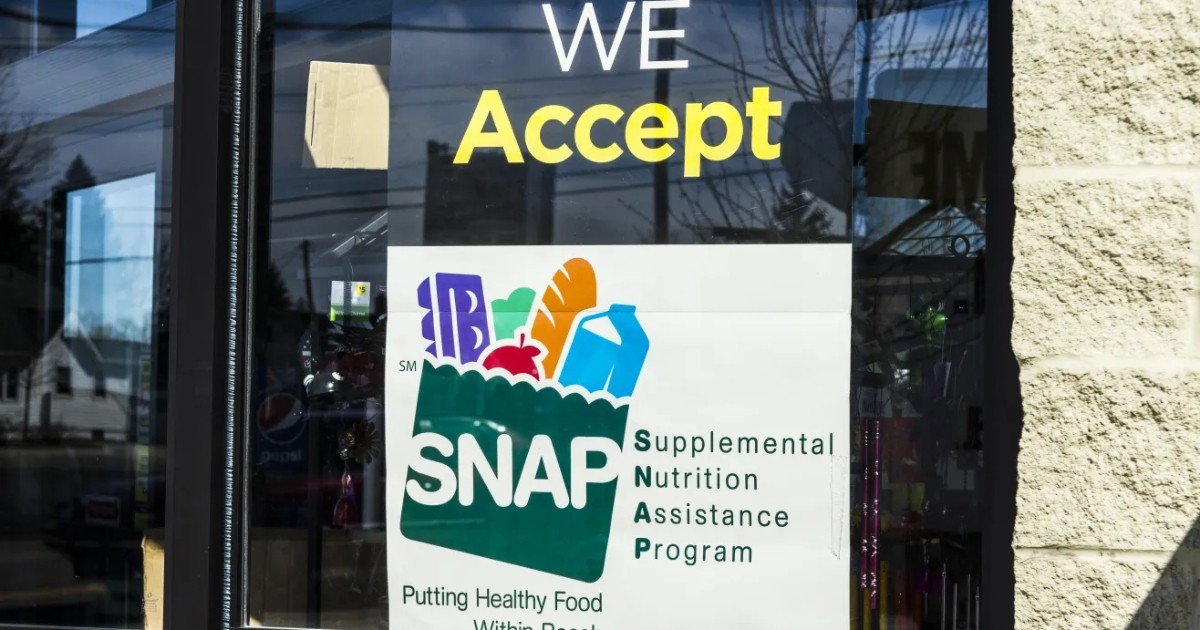
The state of Florida may be compelled to shell out nearly $1 billion annually if it fails to rectify administrative blunders impacting the SNAP food assistance program, commonly referred to as food stamps. Millions of families, including numerous Cuban immigrants eligible for this benefit, rely on this program for sustenance.
As reported by Fox 13, the looming penalty isn't tied to fraud but stems from mismanagement of applications and records. Federal data for the fiscal year 2025 reveals that Florida's error rate surged to 12.97%, more than double the federal threshold of 6% that triggers sanctions.
Current regulations dictate that states exceeding a 10% error rate must cover 15% of the program's total cost, which translates to approximately $984 million annually for Florida.
Escalating Errors and Their Origins
The situation has progressively worsened. Back in 2018, during the last year under then-Governor Rick Scott, the error rate was 4.4%. Under Ron DeSantis' administration, this figure peaked at 15.1% before slightly decreasing to its current level.
Cindy Huddleston from the Florida Policy Institute attributes the rise to the state reallocating resources to manage emergency aid following several natural disasters. "Florida would need to allocate around a billion dollars annually just for SNAP benefits. The error rate increased because resources were redirected towards disaster emergency benefits," she explained.
Experts also blame the issue on staff shortages, high employee turnover, and outdated technology systems. Professor David Himmelgreen from the University of South Florida, who leads the Center for the Advancement of Food Security, highlighted that many workers lack adequate training and face overwhelming workloads. "There's insufficient worker training. I've also heard about high turnover. It's a stressful job," he noted.
Decreasing Beneficiaries and Strategic Adjustments
Currently, around 2.6 million individuals receive SNAP benefits in Florida, but this number has dropped significantly over the past year. From June 2025 to June 2026, beneficiaries decreased from 2.97 million to 2.29 million, a reduction of nearly 23%. The Hispanic community, among others, has been notably impacted, with approximately 189,000 Latinos losing benefits between February 2025 and February 2026.
In light of the potential hefty fine, the Florida Legislature has enacted reforms aimed at optimizing program management. This includes a $4 million investment in an artificial intelligence system designed to detect eligibility errors before cases are erroneously closed.
If Florida fails to decrease the error rate, federal penalties will commence in October 2027, after assessing fiscal year results ending in September 2026. Sky Beard, director of No Kid Hungry Florida, emphasized the gravity of the situation: "Florida will have to engage in very tough discussions and determine our approach to the error rate."
This decision will not only impact state finances but also the lives of millions who depend on food stamps for a fundamental necessity: food.
Understanding Florida's SNAP Challenges
What is causing Florida's SNAP error rate to increase?
The increase in Florida's SNAP error rate is attributed to resource reallocation for disaster emergency benefits, staff shortages, high employee turnover, and outdated technology systems.
How are changes being implemented to address SNAP errors in Florida?
The Florida Legislature has approved reforms, including investing in an AI system to detect eligibility errors early, aimed at reducing the SNAP error rate.
What penalties could Florida face if SNAP errors are not reduced?
If Florida fails to reduce its SNAP error rate, it could face federal penalties starting in October 2027, potentially costing the state nearly $1 billion annually.