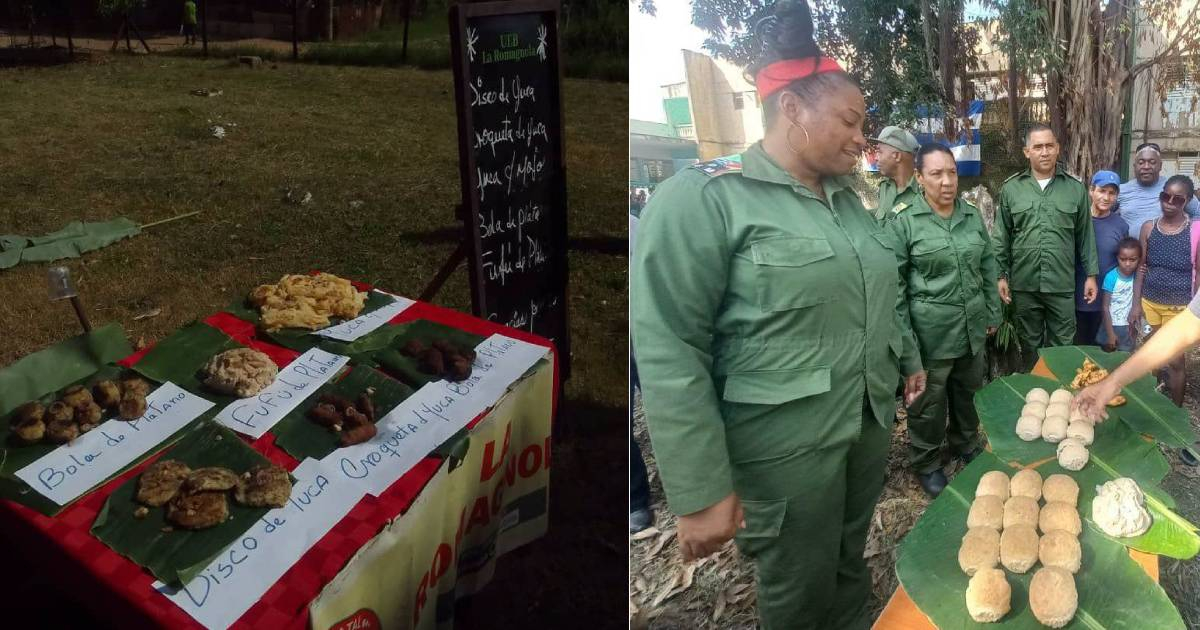
The recent social media posts by Misleidy Abad Modey, the first secretary of the municipal committee of the Communist Party (PCC) in Ciego de Ávila, have sparked controversy. Her pride in showcasing food items during National Defense Day events has drawn criticism, as these foods are seen by many as symbols of the severe food crisis gripping the nation.
On August 1, Abad Modey took to Facebook to share numerous photos from activities across the municipality. Among the images of political events, preparedness exercises, and cultural shows, tables were laden with rustic bread, yuca fritters, plantain balls, yuca discs, community soup, and other substitute-based foods, presented as offerings for the public.
In one post, she praised the "excellent preparation of groups and subgroups" during National Defense Day in the Roberto Rivas Fraga Defense Zone. Another post highlighted a "community projection" in the Centro de Ciudad Popular Council, while a third emphasized support actions in El Purial, Ceballos, where locals received food distributed by an agro-industrial company.
However, it was the images of the food that caught the attention of many users, as they depicted items that were once considered emergency alternatives but are now featured as part of an official event.
The photos reveal trays of coarse-looking bread, tables with yuca-based fritters, plantain balls, soups served in large pots, and small makeshift stalls where attendees could purchase or receive these foods.
Contrasting with Ciego de Ávila's Harsh Reality
These posts come at a particularly challenging time for Ciego de Ávila, one of the provinces hardest hit by the food crisis. Back in May, authorities admitted that the rationed bread could only be distributed on a few days each month due to flour shortages. Consequently, the Food Industry has resorted to using substitutes like yuca, pumpkin, and sweet potato to produce various goods for the population.
This situation has forced many bakeries to scale back production, and the once-commonplace rationed bread has become a rarity for countless Cuban families.
For many citizens, it is difficult to separate the images shared by the PCC secretary from the daily reality of scarcity, high prices, and the struggle to regularly obtain basic foodstuffs.
Propaganda Amidst a Daily Struggle
This is not the first instance where official publications have been criticized for the stark contrast between institutional rhetoric and the everyday lives of Cubans. In recent years, there have been frequent negative reactions to photos of markets prepared for official visits, fairs stocked with hard-to-find products, or propaganda events that depict a sense of normalcy starkly different from the reality described by citizens themselves.
Once again, the images shared by the top PCC official in the municipality have reignited this debate. While thousands of families face long lines, power outages, and shortages of essential foods, the official posts portray makeshift meals with substitute ingredients and low-quality bread as a community success story. Many Cubans see these as clear indicators of the deterioration of their daily diet.
Understanding the Food Crisis in Ciego de Ávila
What foods were highlighted in the PCC secretary's posts?
The posts featured rustic bread, yuca fritters, plantain balls, yuca discs, community soup, and other substitute-based foods.
Why have these food images caused controversy?
The images have sparked controversy because they showcase foods that are seen as symbols of the severe food crisis in Cuba, yet they were portrayed as part of an official celebration.
How has the food crisis affected daily life in Ciego de Ávila?
The crisis has led to reduced bread production, reliance on food substitutes, and difficulties in obtaining basic foodstuffs, impacting the daily lives of many families.