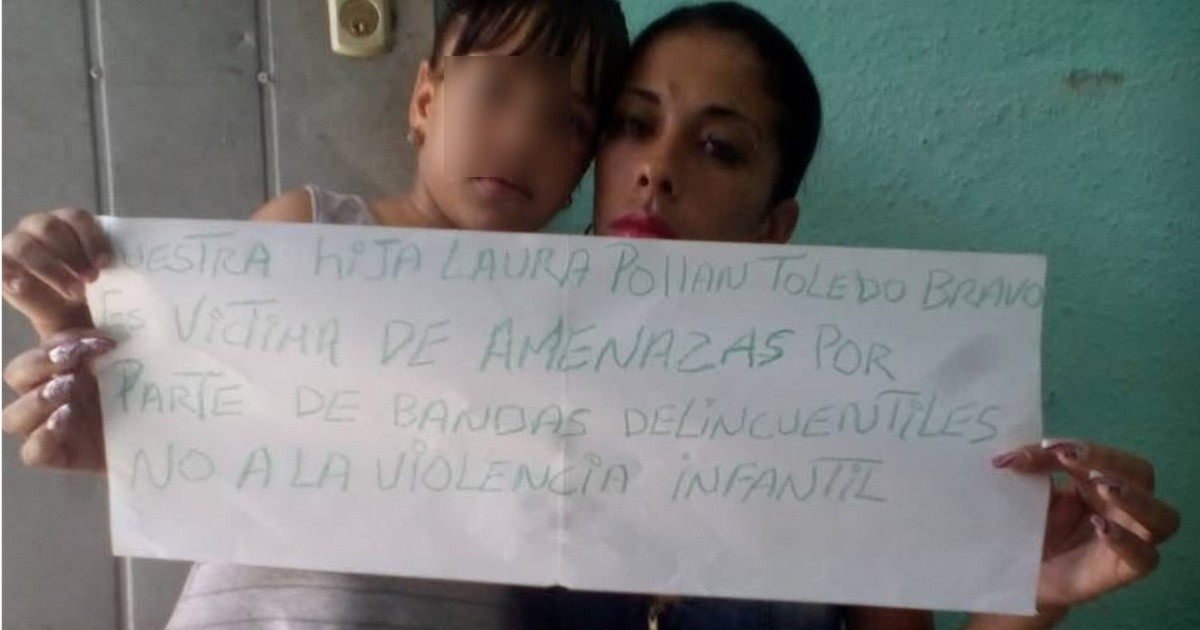
Yoel Bravo López, who leads the opposition group Awake Youth Movement in Santa Clara and is now living in exile in the United States, shared a heart-wrenching story on Facebook this past Monday. He revealed that his daughter, Laura Pollán Toledo Bravo, was politically persecuted by the Cuban regime even before her birth.
"My daughter Laura Pollán is soon turning 13. Today, I want the world to know the truth about what the Castro regime put an innocent child through even before she was born," Bravo stated.
The dissident explained that the young girl's "crime" began in her mother's womb. Her mother, Daily Rodríguez Pérez, also an activist, faced a violent public shaming on July 25 in Santa Clara while pregnant.
After the baby was born, officials refused to register her with the name her parents had chosen: Laura Pollán Toledo, in honor of the founder of the Ladies in White and a symbol of peaceful resistance in Cuba, who passed away in October 2011.
This denial of a legal identity deprived the child of access to healthcare and education for several years.
Enduring a Decade of Psychological Torment
Bravo recounts nearly ten years of psychological torture inflicted on his daughter: violent attacks on their home, witnessing police beatings of her father, and a constant state of terror that led to a nervous disorder causing her hair loss.
"She endured almost a decade of psychological torture: violent assaults on our house, she saw the brutal police beatings of me, and the terror caused her a nervous illness that led to her hair falling out. She was denied health care and education due to the lack of a legal identity," he narrated.
A History of Repression
Bravo himself has faced a long history of documented repression. In July 2020, he was struck on the head with a motorcycle helmet by State Security agents while attempting to join a protest against police violence.
In January 2020, he was detained, threatened with death during an interrogation, and falsely linked to the anonymous opposition group Clandestinos.
By January 2021, he had been arrested at Santa Clara's Third Police Station alongside other activists, and in May of the same year, he was detained following a protest at the provincial Communist Party headquarters, demanding medication for citizens.
The usual tactics employed by State Security against Bravo have included temporary detentions, excessive fines, and house arrests to hinder his street activism.
Ultimately, Bravo made an extreme decision to safeguard his daughter: he chose exile.
"I had to accept exile and leave Cuba so she could get a passport and breathe freely. Today, she's with me, safe, anticipating her 13th birthday in liberty," he wrote.
The narrative ends with a direct question to those who defend the system: "How do you justify targeting a newborn?"
Denying newborns registration in Cuba's civil registry is a documented form of retaliation against dissident families, depriving children of essential services and leaving them in a state of extreme vulnerability for years.
Understanding Persecution of Cuban Dissidents
Why was Yoel Bravo López's daughter targeted by the Cuban regime?
Laura Pollán Toledo Bravo was targeted due to her father's opposition to the Cuban regime and the name she was given, which honors a prominent figure in Cuban resistance. This led to her being denied a legal identity and basic rights.
How did the Cuban government retaliate against dissident families?
The Cuban government has been known to deny legal registration to newborns of dissident families, effectively cutting off access to healthcare and education, leaving them in a precarious situation.
What actions did Yoel Bravo López take to protect his daughter?
In an effort to protect his daughter, Yoel Bravo López chose to go into exile, ensuring she could acquire a passport and live in safety, free from the regime's reach.