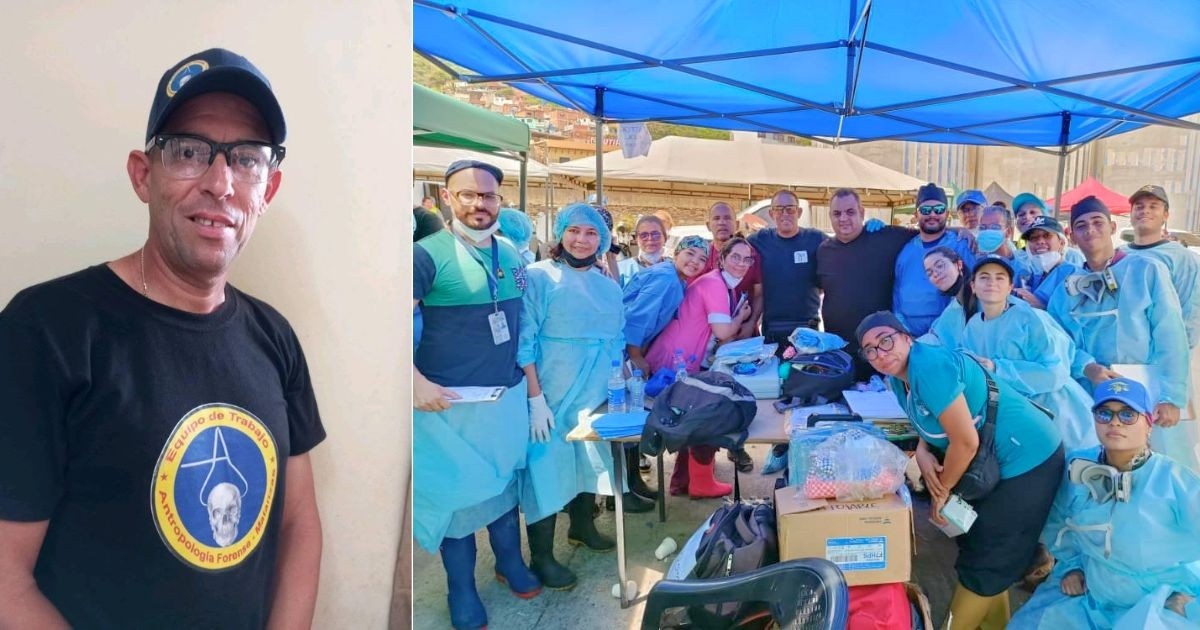
The harrowing ordeal of a young woman repeatedly arriving at the makeshift morgue in La Guaira with the remains of her loved ones profoundly affected Cuban forensic anthropologist Yoel Monzón González. His mission in Venezuela following the devastating twin earthquakes on June 24, 2026, left an indelible mark on him, as he recounted in an interview published by the state-run newspaper Juventud Rebelde.
The Unforgettable Case
From the onset of the mission, this particular case stood out. Initially, the woman brought in her mother's body, which was duly identified. Just two days later, she returned with the remains of a four-year-old girl; six days after that, she brought in those of a six-year-old. Each visit revealed more of the physical and emotional toll the tragedy was taking on this mother.
“Almost before our departure, she arrived with a 15-year-old boy, and that was overwhelming for me as I thought of my 16-year-old son. The mother then approached me, saying, ‘I just need to find my eight-year-old girl…’ She seemed resigned to her fate but was anxious about our imminent departure. Ultimately, she brought in her other daughter, and at that point, I had to take a moment to process this overwhelming reality… I gathered myself after a while, but her story touched me deeply as a human being,” Monzón González recounted to interviewer Hugo García.
Tragedy Strikes Young Lives
In total, the woman lost five family members to the catastrophe. “We encountered several families who lost nearly all their members,” he added. The mission was particularly challenging due to the high number of child victims. “In Cuba, working with deceased children is rare. This time, over 60% of the cases involved those under 17, some as young as a few months or just two, three years old,” emphasized the forensic expert, who has 23 years of experience in criminalistics and physical anthropology.
Unprecedented Challenges
Monzón González spent 30 grueling days at the emergency facility as part of the Henry Reeve International Contingent’s Brigade 91, which arrived in Venezuela on June 29. The Cuban forensic team—comprising eight specialists, including medical examiners, two forensic anthropologists, and a thanatology technician—was, as of July 5, the sole international group focusing on corpse identification alongside Venezuela’s National Service of Forensic Medicine and Science, with a capacity of identifying 50 to 60 bodies daily.
The conditions were dire from the start. “The tension was palpable… Some victims arrived in pieces, their bodies decayed or burned due to fires. Others had amputations from dying in hospitals where they received emergency care,” Monzón González described.
A Mission of Humanity
The twin seismic events of June 24—earthquakes measuring 7.2 and 7.5 in magnitude, occurring just 39 seconds apart—resulted in 5,208 deaths according to the official report on July 20, with 16,740 injured and 17,907 left homeless.
The team also identified Cuban victims. The embassy had warned the group upon arrival about missing compatriots—at least 32 were reported missing, and by July 3, the deaths of at least eight Cuban citizens had been confirmed. At one point, a mother and her son were identified, with their identities confirmed through information from the Venezuelan husband.
Despite the grueling circumstances, Monzón González dismissed the stereotype of forensic scientists as unemotional: “Though we’re often seen as cold, it’s not true—we have feelings and are affected by these events, but we must fulfill our scientific duties.” He leads the forensic anthropology team at the provincial legal medicine service in Matanzas.
At the end of the mission, the Cuban medical brigade awarded him the April 16 Medal, and the Venezuelan government honored him with the Second Class Hero of Venezuela Medal. However, the most significant recognition came from a different source: “The families who placed their hands on our shoulders in gratitude and sought us out for reassurance… that was the greatest acknowledgment.”
FAQs About the Cuban Forensic Mission After Venezuelan Earthquakes
What was the most challenging case for Yoel Monzón González during his mission in Venezuela?
The most challenging case involved a young woman who lost five family members and repeatedly visited the morgue as she recovered their remains.
How did the Cuban forensic team contribute to the recovery efforts in Venezuela?
The Cuban forensic team, part of the Henry Reeve Brigade, was the only international group specializing in corpse identification, working alongside Venezuelan authorities to identify 50 to 60 bodies daily.
How many people were affected by the earthquakes in Venezuela?
The twin earthquakes resulted in 5,208 deaths, 16,740 injuries, and 17,907 people left without homes, according to official reports.