Some images from Cuba's reality are painful, but others are downright soul-crushing.
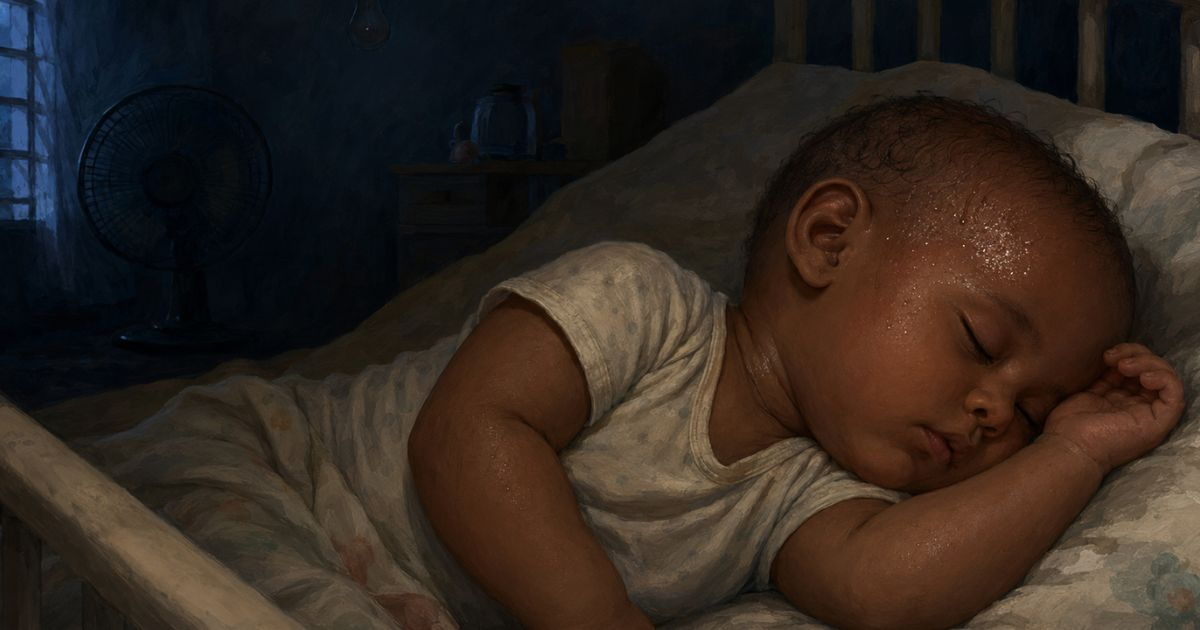
A photo capturing a baby, just a few months old, sleeping in a crib with a sweat-soaked head during a complete blackout, is one of those unforgettable images.
Arianna Fernández Tamayo shared the original image on Facebook, along with a moving message: "To those who uphold 'homeland or death,' to those who cling to resistance, resilience, and the unattainable utopia. I hope you pay in this life for what you're making a nation endure."
The image quickly gained traction due to its symbolic weight. Elvis Lobato, living in exile, was among those who spread it online.
He accompanied the photo with a message encapsulating the outrage sparked by the scene: "These images hurt while leaders live with millions, and a suffering populace they imprison and suppress for voicing their rights—that's the real dictatorship..."
The image shows the baby lying on a white sheet, arms near the face, with a visibly damp head. There’s no light, no fan in sight, just the oppressive heat of the Cuban summer.
Comments under Lobato's post summarize the situation with a harshness no official report could match.
"This is how every night is for us Cuban mothers," wrote Dayaneisy Medina.
"What we mothers have to endure is indescribable. My God, how long will this last?" expressed Misleidis Alarcón.
"Last night was unbearably hot, what we went through was immense, we can't take it anymore," added NMary Escalserra.
Some comments highlight the desperate ingenuity of those with limited resources. "When I didn’t have a rechargeable fan, I'd fan them with cardboard, at least they could sleep without sweating so much," shared Cheylin Medina.
Others directly blame the regime. "It breaks your heart, but they don't care," wrote Ofelia Martin.
"And they have air conditioning set to 17," Susana López quipped, referring to leaders who live detached from the crisis.
"Behind every blackout and every day without water, there's a child who can't sleep, an elder suffering from heat, a sick person relying on medical equipment, a mother unable to cook, or a family losing what little they had in the refrigerator," wrote Virgen Guadalupe in one of the most shared comments below the photo. In 2026 Cuba, this isn't a metaphor; it's the daily reality for millions of families.
"This photo should go around the world," urged Luis Ernesto Álvarez.
Babies and young children are the most vulnerable: they struggle to regulate their body temperature and rely entirely on adults to stay hydrated and cool.
With daytime temperatures around 31-32°C and barely dropping to 23°C at night, Cuban summer nights without electricity pose a genuine threat to their health.
Unfortunately, this isn't the first time blackouts have produced such distressing accounts. A nine-month-old suffered burns while the family cooked with charcoal during a power outage in Santiago de Cuba in June.
In May, a mother showed her child's body covered in mosquito bites due to a lack of nighttime ventilation. The following month, children were seen sleeping on a building's porch in Havana to escape the heat without electricity.
This image is not isolated; it's the most vulnerable face of the worst electrical crisis Cuba has faced in recent times.
This summer of 2026, the National Electric System has collapsed at least five times, with three nationwide blackouts in July alone. On July 8, a record-breaking absolute deficit was recorded: 2,341 MW of simultaneous outages.
Last Saturday, a partial outage left several western provinces without power, with only 757 MW available against a demand of over 3,200 MW, affecting around 4.5 million people.
Cuban Electrical Crisis: Key Questions Answered
What are the implications of power outages for Cuban families?
Power outages can severely affect families, leaving them without basic needs like cooking facilities, refrigeration, and cooling systems during extreme heat, posing serious health and safety risks.
How does the heat affect young children during blackouts?
Young children are particularly vulnerable because they have difficulty regulating their body temperature and depend on adults to keep them cool and hydrated, which becomes challenging during blackouts.
What measures are Cuban families taking to cope with blackouts?
Cuban families are resorting to creative solutions like using cardboard to fan children or sleeping outdoors to cope with the heat during blackouts, demonstrating resilience in the face of limited resources.