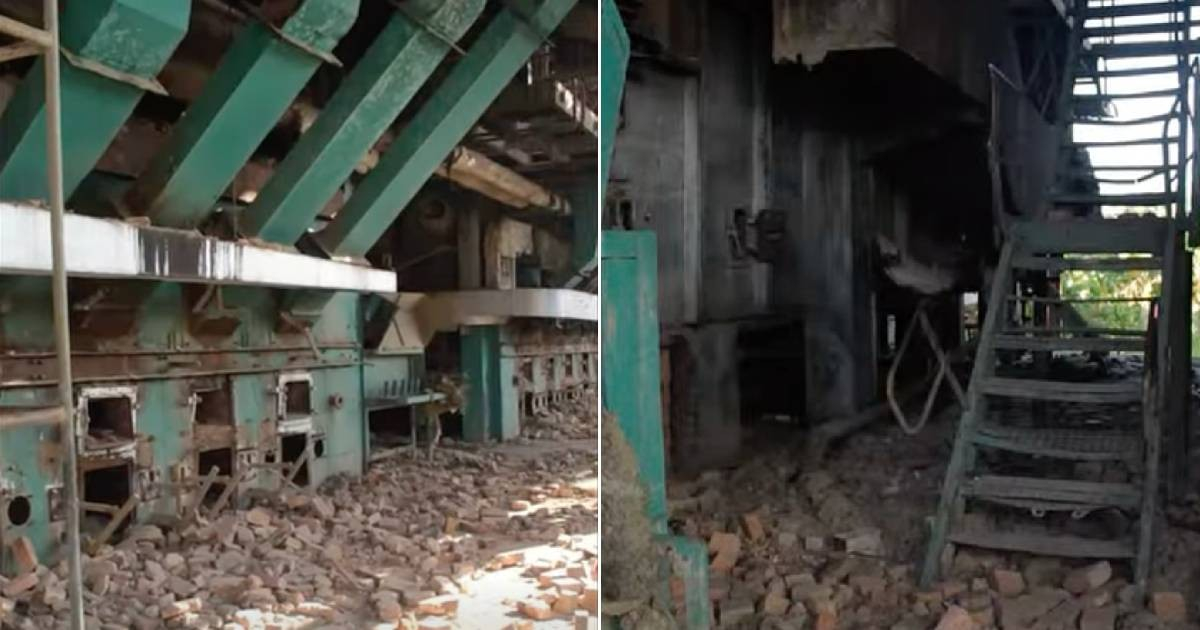
Railways in disrepair, rusting train cars, and weeds overtaking crumbling industrial structures: this stark scene is depicted in a recent video by La Hora de Cuba, showcasing the Argentina sugar mill located in Florida, Camagüey province.
"The sight we encountered at this location was truly disheartening. Once a major sugar producer, this mill has been in a state of decline for a long time, and its deterioration is increasingly apparent," reports José Manuel Ventura Pardillo and Carmen Torreblanca De la Cruz, who captured the footage.
The mill's past stands in stark contrast to its current condition. Established in 1915 as Central Florida with funding from New York's Punta Alegre Sugar Co., it reached its peak production in the 1925-1926 harvest, producing 405,189 sacks of sugar. After the nationalization in 1959, the regime renamed it Central Argentina.
What followed was a steady decline that the government failed to reverse. In 2002, the regime launched the Alvaro Reynoso Task, initially closing 70 out of 155 sugar mills and cutting over 100,000 jobs in the sugar sector. Rather than stabilize the industry, this restructuring hastened its collapse, leading to the dismantling of approximately 98 mills.
The impact is evident in the numbers. The 2024-2025 harvest yielded less than 150,000 metric tons of sugar, the lowest in over a century, compared to a target of 265,000 tons. By January 2025, only six of the 14 planned mills were operational.
The Struggle for Sugar Production
In Camagüey, home to the Argentina mill, the same harvest concluded with only 4,512 tons of raw sugar produced, out of a planned 23,521 tons, achieving a mere 19.2% of the target.
Cuba requires between 600,000 and 700,000 tons of sugar annually to meet domestic consumption, a figure far beyond current production levels, forcing the nation to import what was once its primary export.
The decline of the Argentina mill also has a tangible human impact. In February 2026, Florida residents were seen gathering water from the mill's tracks amidst a severe water crisis in the province.
Widespread Negligence in Florida
The neglect of the sugar mill is not an isolated incident in the area. In July 2026, the deterioration of Florida's zoo was reported, with facilities rusting and in poor condition. Similarly, in April 2026, Camagüey's Japanese Park was described as completely abandoned, with attractions in ruins.
The Argentina sugar mill joins a growing list of once-thriving mills now in ruins, like the Urbano Noris mill in Holguín and the sugar town of Preston, all stark reminders of the failure of more than six decades of sugar policy under Cuba's communist regime.
Understanding Cuba's Sugar Industry Crisis
What caused the decline of the Argentina sugar mill?
The decline was primarily due to the regime's failure to maintain the mill and the broader sugar industry, exacerbated by the Alvaro Reynoso Task in 2002 which led to widespread closures and job cuts.
How does the current sugar production in Cuba compare to its needs?
Cuba's current sugar production is significantly below its needs, producing less than 150,000 metric tons against an annual requirement of 600,000 to 700,000 tons, necessitating imports to meet domestic consumption.