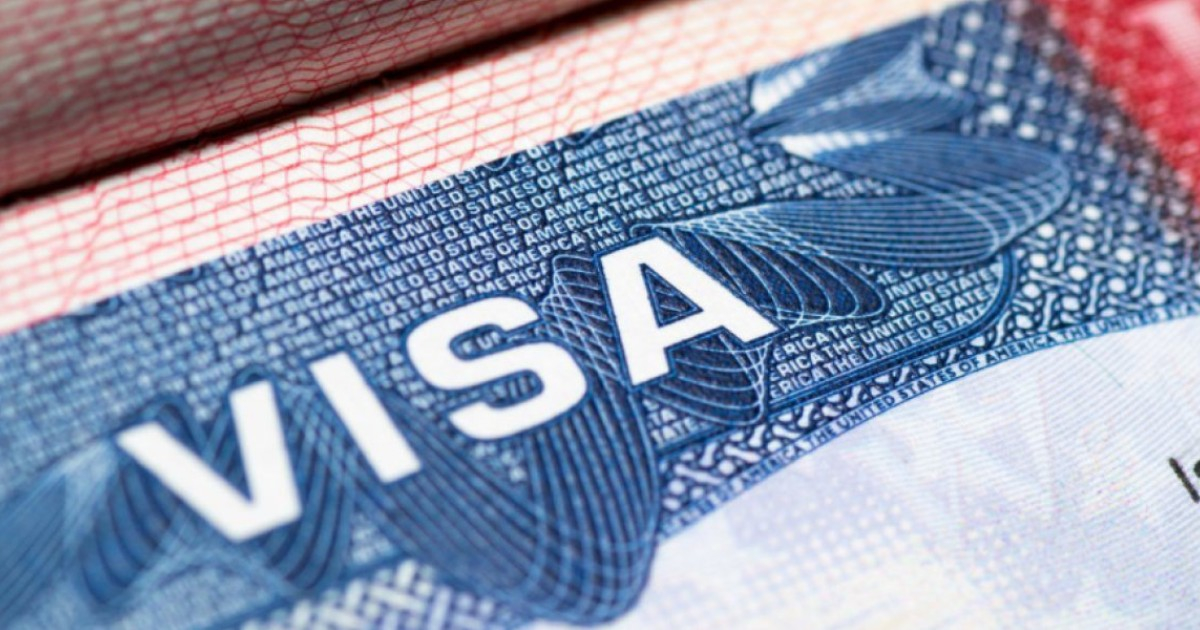
The United States Department of State has solidified its visa bond program as a permanent immigration policy, increasing the maximum bond to $20,000 and keeping Cuba among the 50 nations impacted, according to a report from the Associated Press.
This regulation will be officially documented on Monday in the Federal Register—the official journal of the U.S. government—when it will also come into effect. From this date, citizens from Cuba and other designated countries applying for B1 or B2 visas may be required to post a bond before receiving a visa.
From Pilot to Permanent Policy
Initiated on August 20, 2025, the program originally began as a 12-month pilot ordered by Donald Trump through Executive Order 14159, initially targeting 13 countries with high overstay rates.
Cuba was added to the list in January 2026, alongside Venezuela and several other countries from the Caribbean, Asia, and Latin America, as the program expanded from 13 to 38 countries.
In April of the same year, a subsequent expansion included 12 more countries—including Nicaragua, Georgia, Ethiopia, and Cambodia—bringing the total to the current 50 nations.
The Federal Register draft indicates that nearly a year's worth of review provided ample data to suggest that the program effectively ensures compliance with visa conditions, thereby justifying its permanence.
Three Bond Levels and Key Restrictions
The permanent rule eliminates the former minimum bond of $5,000 from the pilot and establishes three bond tiers at the discretion of the consular officer: $10,000, $15,000, or $20,000.
The Federal Register notice clarifies that "consular officers may require nonimmigrant visa applicants covered by the program to post a bond up to $20,000 as a condition for visa issuance, as determined by the officers themselves."
Payments must be made exclusively through Pay.gov, the Treasury Department's platform; third-party sites are prohibited.
A critical point of clarification in the rule: posting a bond does not guarantee visa issuance.
Moreover, visa holders with a bond are restricted to entering and exiting the United States only through commercial airports; private air, land, or sea ports are not permitted.
The bond is refundable if the visa is denied, if the applicant does not travel before the visa expires, or if the holder complies with all conditions and leaves the country within the authorized time frame.
Statistics Justifying the Measure
In 2024, nearly 45,500 visitors from the 50 countries included in the program overstayed their visas, according to the State Department data cited by the Associated Press.
During the first ten months of the pilot, this number dropped to fewer than 50 cases.
However, the most noticeable effect was elsewhere: nearly half of the 20,000 applications requiring a bond did not complete payment, leading to an 83% drop in the issuance of B1/B2 visas for the affected countries, with a total of $115 million deposited during the pilot.
The State Department acknowledged the deterrent effect: "The department expects this final rule will contribute to the continued reduction in demand for B1/B2 visa applications from citizens of countries subject to the program."
An Additional Barrier for Cubans
For Cuban citizens, this measure adds to a series of restrictions that have accumulated since 2025.
In June of that year, Trump signed a proclamation suspending the entry of Cubans with B-1, B-2, F, M, and J visas. By December 2025, the "travel ban" was expanded to include 20 more countries.
The Trump administration is also considering requiring a $100,000 bond for certain applicants for permanent residency processed from abroad, a measure still under evaluation.
For many Cubans who already face economic and bureaucratic hurdles to legally emigrate, gathering up to $20,000 without a guarantee of obtaining a visa represents an almost insurmountable barrier.
Understanding the Permanent Visa Bond Requirement
What is the purpose of the U.S. visa bond program?
The U.S. visa bond program aims to ensure compliance with visa conditions by requiring applicants from certain countries to post a bond, which acts as a financial guarantee that they will abide by the terms of their visa.
How does the bond amount vary for visa applicants?
The bond amount can vary between $10,000, $15,000, and $20,000, determined at the discretion of the consular officer handling the visa application.
Can posting a bond guarantee a visa will be issued?
No, posting a bond does not guarantee that a visa will be issued. It is merely a requirement that must be fulfilled before the visa can be considered for approval.