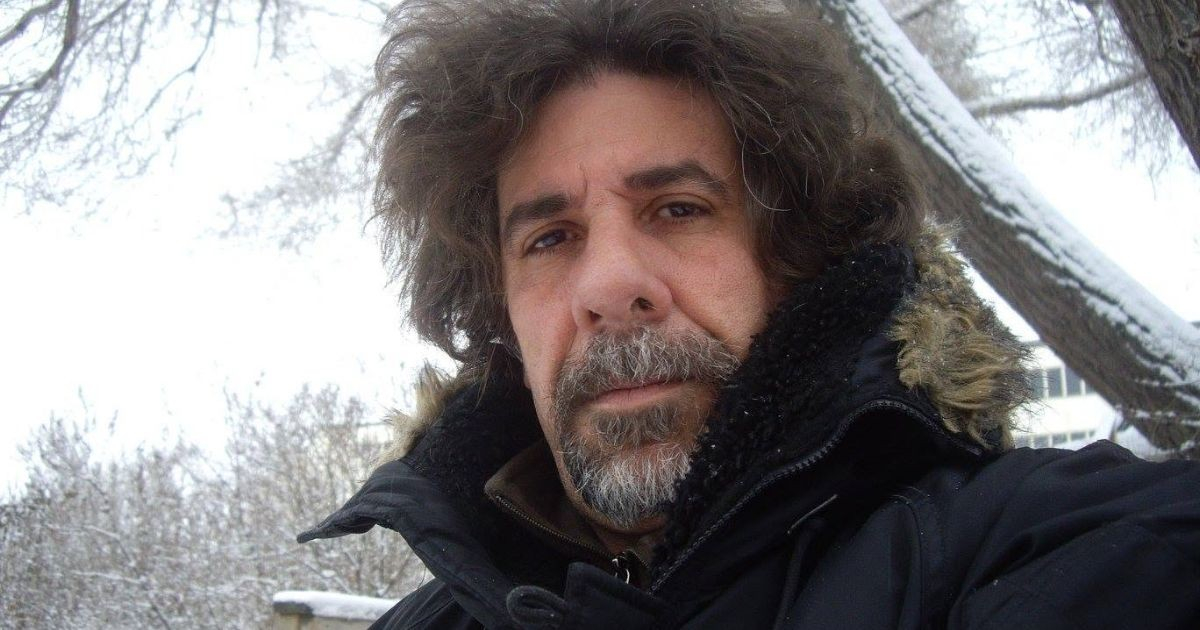
On Friday, Cuban artist and writer Hermes Entenza unleashed a fiery critique on Facebook aimed at the Cuban Deputy Foreign Minister, Carlos Fernández de Cossío. The official had told the New York Times that Cuba would not exclude Donald Trump or his companies from investing in the island.
The deputy minister stated to the American newspaper, "If he wishes to invest peacefully, we have no particular reason to exclude him," adding that the true barrier lies with U.S. laws, not Cuban ones. Entenza, originally from Sancti Spíritus and currently residing in Germany, responded with outrage to the regime's hypocrisy.
"What infuriates me is that after years of inciting hatred against the north; after parades, loudspeakers, pamphlets, and young pioneers shouting slogans without even knowing who the hated ones are; after so much bottled nonsense with imported and recycled political sub-products where 'if you don't jump, you're a Yankee' was shouted, this guy comes to flaunt in our faces that longing — because it is a longing — for the fiercest enemy, as they have said, to set up small businesses in that 'triumphant' socialism they proclaim," wrote the artist.
Hypocrisy and Contradictions
His outrage is not solely about Trump's potential investments but the contradiction it reveals, especially in light of specific repressive cases.
The most notable is the case of rapper and activist Maykel "Osorbo" Castillo Pérez, co-author of the opposition anthem "Patria y Vida." In July, he was transferred to the maximum-security prison of Guanajay after being sentenced in June 2022 to nine years in prison.
"One reason why artist Maykel 'Osorbo' Castillo Pérez is in prison is because he said, in front of a government informer, that he was a Trump supporter. Saying so is not a crime anywhere in the world; only in Cuba," Entenza pointed out, posing the paradoxical question: "Will they release Maykel 'Osorbo' today? Isn't it ridiculous that Donald Trump might invest on the island while an artist is imprisoned for believing in him?"
Castillo has been incarcerated since May 2021, sentenced in June 2022 to nine years on charges of contempt for national symbols, disrespect, assault, public disorder, and defamation. Human rights organizations consider his imprisonment arbitrary and politically motivated.
Double Standards and Selective Censorship
The writer also recalled the case of the youth group Fuera de la Caja, censored in February 2026 by the official program Con Filo for wearing caps with the slogan "Make Cuba Great Again," accused of promoting Trumpism.
"Can MAGA hats now be legalized in Cuba, or will only the wealthy and powerful partake in this new affection?" he asked sarcastically.
Entenza used Cuban political language to illustrate the magnitude of the shift: the term "worm" was officially coined to label those who admired or thought in a Yankee style, and "Yuma" was used to refer to the north that the regime had portrayed for decades as the enemy but became the true utopia for millions of Cubans.
"So now the yumas can invest, go for a stroll, sip mojitos at El Floridita, enjoy life, while the islanders, amazed, penniless, hungry, sad, or imprisoned for being worms, watch them revel in the new socialism where capitalism calls the shots," he wrote.
Elite Benefits Amid Economic Opening
Fernández de Cossío's statements come amidst an economic opening driven by the regime in response to the island's deep crisis: in June 2026, the government approved a package of 176 measures to ease foreign investment, and in July, Decree 153/2026, which amends the Foreign Investment Law of 2014, came into effect.
Many social media users agreed that the opening to foreign capital exclusively benefits the power elite, while ordinary Cubans continue to lack access to currency, food, and freedom of expression.
Entenza concluded his post with a direct condemnation of the leadership: "Figures like Carlos Fernández de Cossío and all the power-hungry cronies and PCC members, along with those who applaud and raise their arms in adherence to everything said from the podium, should be imprisoned in the same jails where so many young people suffer for being labeled as worms."
Key Questions on Cuba's Economic Policies and Political Repression
What are the implications of Cuba allowing foreign investment from figures like Donald Trump?
Allowing foreign investment from figures like Donald Trump signifies a shift in Cuba's economic policy, highlighting a contradiction between the regime's historical anti-American rhetoric and current economic necessities. It raises questions about the regime’s consistency and the true beneficiaries of such investments.
Why is Maykel "Osorbo" Castillo Pérez imprisoned in Cuba?
Maykel "Osorbo" Castillo Pérez is imprisoned due to charges of contempt for national symbols, disrespect, assault, public disorder, and defamation. His case is seen as politically motivated and arbitrary, particularly given his involvement in the opposition anthem "Patria y Vida."