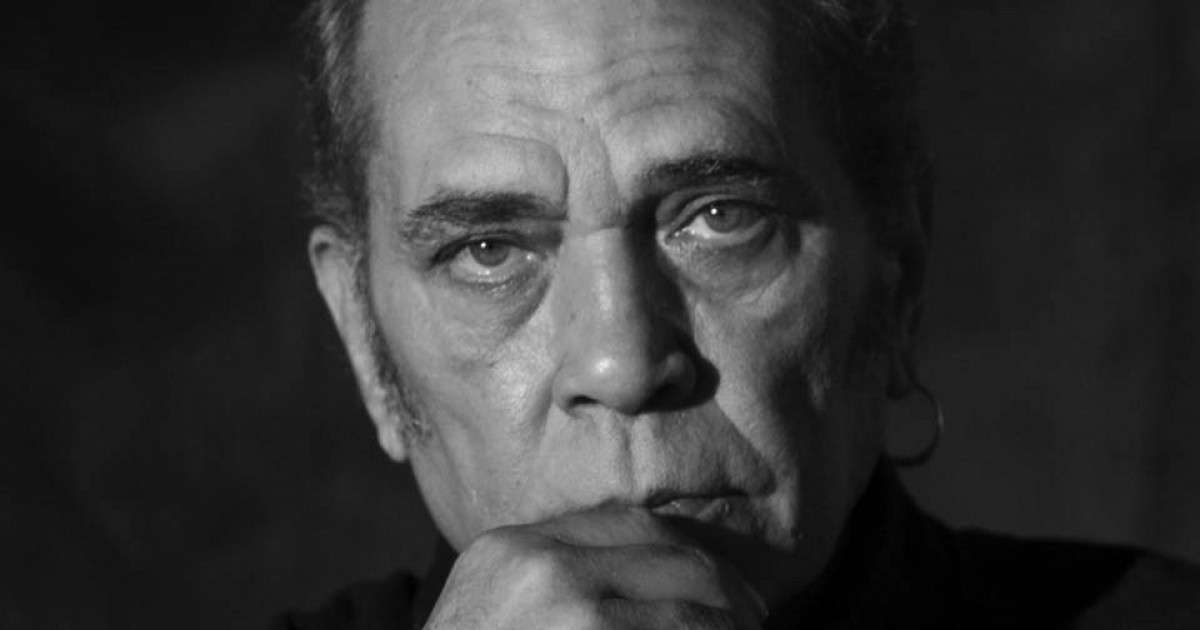
Cuban actor Luis Alberto García Novoa took to Facebook on Friday to express his disapproval of the government's repression of citizens protesting peacefully against power outages. He labeled these actions as unconstitutional and against democratic principles.
This statement comes amid Cuba's severe electricity crisis, where on July 29, the power deficit reached 2,380 MW, leading to three complete collapses of the National Electrical System in July and leaving millions without electricity.
Pattern of Repression
García detailed what he sees as an all-too-familiar pattern: authorities arrive at protest sites to negotiate, promise change, calm tensions, and temporarily restore power. However, the following day, they conduct door-to-door searches to identify and punish protest leaders.
“Taking people, even mothers with small children, to a PNR unit or a State Security office without violating the Constitution is unconstitutional and very, very anti-democratic,” García stated, referring to Article 56 of the 2019 Cuban Constitution, which enshrines the right to peaceful assembly and protest.
Refuting Government Justifications
The actor refuted the regime's rationale for arrests, asserting, “Banging on one’s own cooking utensil does not damage state property,” and added that “expressing dissatisfaction, anxiety, and desires verbally is not a crime.”
García also directly challenged the government by rejecting external excuses: “This approach, unfortunately now routine, is not the result of the blockade.”
Widespread Repression
García's denunciation aligns with data showing a sustained crackdown. In June 2026, a record 107 on-site protests were reported across the island, with at least 38 people detained, according to the NGO Cubalex. The Cuban Observatory of Human Rights recorded 1,949 repressive actions and around 257 arbitrary arrests in the first half of the year.
Unequal Distribution of Resources
In his post, García also criticized the unequal distribution of photovoltaic modules, another source of public discontent. He noted that while no one objects to a sick person or a distinguished scientist receiving a solar panel, outrage arises when those who receive them are the same officials preaching collective sacrifice and “romanticizing the blackout.” He pointed out that the same argument could apply to countless other professions that are “far more important than leading or shepherding us.”
Documenting Personal Struggles
García has been a consistent voice highlighting the energy crisis from within Cuba, documenting extreme power outages at his home. On July 5, he reported 34 hours without electricity or water, and on July 11, he experienced three days and nights without power, warning that “food is spoiling.”
In neighborhoods like Lawton, El Vedado, Guanabacoa, Centro Habana, El Cerro, and Old Havana, protests with pots and chants of “We want light” and “Freedom” have persisted throughout July. The official response has been a mix of temporary promises and subsequent harassment of participants.
“The Constitution allows peaceful protests. At least on paper,” García wrote, summarizing the gap between constitutional rights and the reality faced by those protesting in Cuba.
Understanding Cuba's Electricity Crisis and Protests
What is causing the electricity crisis in Cuba?
Cuba is experiencing a significant electricity crisis due to a substantial power deficit, reaching alarming levels and resulting in several complete system collapses, leaving millions without power.
How has the government responded to peaceful protests?
The government has responded to peaceful protests with temporary negotiations and power restoration but follows up with searches and arrests of those identified as protest leaders, actions that have been criticized as unconstitutional.
What are some criticisms regarding the distribution of resources?
Critics, including Luis Alberto García, have pointed out the uneven distribution of photovoltaic modules, with priority given to officials rather than those in genuine need, sparking public discontent.