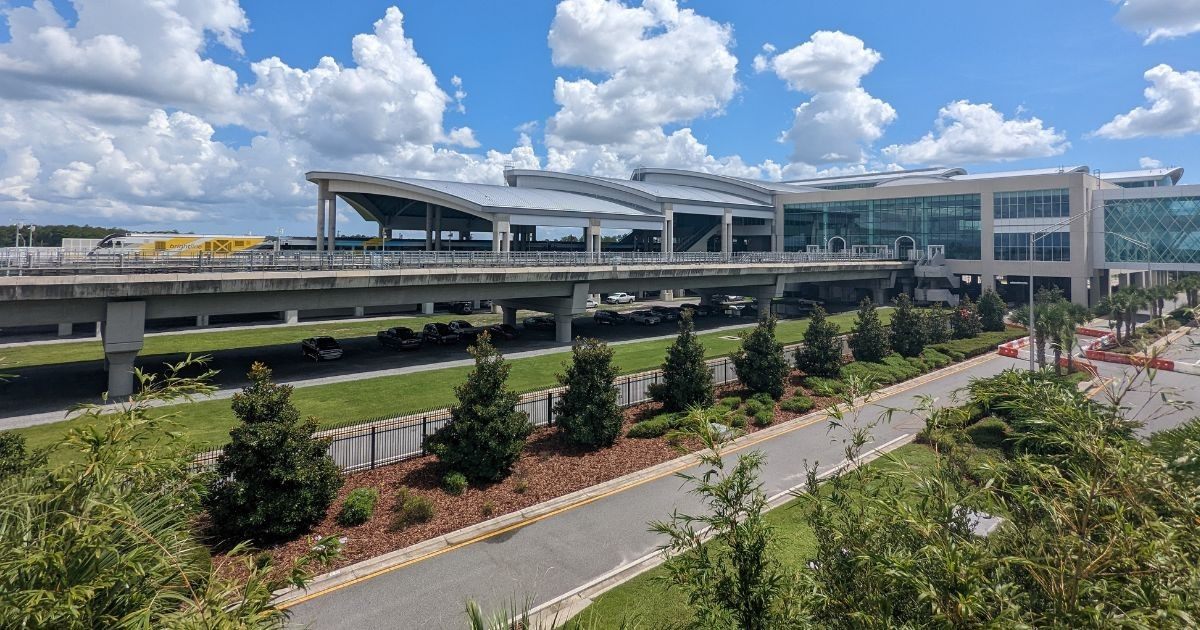
In 2025, Orlando International Airport (MCO) emerged as Florida's most trafficked airport, surpassing both Miami and Fort Lauderdale, according to the latest report from the Airports Council International–North America (ACI-NA) released last Monday.
MCO welcomed 57,675,573 passengers last year, marking a 0.8% increase over 2024. Meanwhile, Miami International Airport (MIA) took the second spot in the state with 55,314,661 travelers.
Fort Lauderdale-Hollywood International experienced a significant decline, handling 32,208,419 passengers, down 8.5% compared to the previous year.
On a national scale, Orlando climbed from ninth to seventh place among the busiest airports in the United States, during a year when overall air traffic in North America saw a 0.7% decrease.
International Tourism Fuels Growth
MCO's growth was largely driven by a surge in international tourism. The airport recorded an approximately 8% rise in foreign travelers, reaching nearly 8.5 million international passengers in 2025.
The launch of three new nonstop routes to Paris, Munich, and Madrid played a crucial role in this increase.
Conversely, domestic travel saw a slight downturn, declining by 0.4%.
Strategic Vision for Expansion
Lance Lyttle, CEO of the Greater Orlando Aviation Authority (GOAA), the government body managing the airport, remarked that the 2025 figures reflect the "ongoing growth and global appeal of Central Florida."
"These numbers also underscore the importance of adopting a strategic vision focused on enhancing customer service and addressing critical infrastructure needs," Lyttle added.
Nationally, six airports surpassed MCO: Atlanta's Hartsfield-Jackson (106.3 million passengers), Dallas Fort Worth (85.6 million), Chicago O'Hare (84.8 million), Denver (82.4 million), Los Angeles (73.7 million), and New York's John F. Kennedy (62.6 million).
Orlando's Economic Impact and Future Plans
The GOAA highlighted that "positioning the airport as the busiest in Florida demonstrates the strong demand in the region and reinforces Orlando as a preferred destination for visitors, connections, and business investment."
MCO offers over 170 nonstop destinations, including routes to Cuba, and it is the only U.S. airport connected to an intercity high-speed rail service (Brightline), linking Orlando to Miami and South Florida since 2023.
Covering 11,605 acres, MCO is the fourth-largest commercial airport in the U.S. by land area, contributing more than $41 billion annually to the regional economy, according to official data from the GOAA.
The 2025 results come as MCO advances its ambitious "Elevating MCO" strategy, supported by a capital improvement program worth approximately $5.9 billion.
The plan includes expanding Terminal C, implementing a new baggage handling system for Terminals A and B, adding 8,000 parking spaces, and aiming for a Skytrax five-star rating, with targets set for 2030 and 2035.
In 2023, MCO reached its historic peak with 57,735,720 passengers, a record it nearly matched in 2025, welcoming 57,675,573 travelers, though it did not surpass it.
Frequently Asked Questions About Orlando International Airport's Growth
What factors contributed to Orlando International Airport's growth in 2025?
The primary factor was a surge in international tourism, with a notable increase in passengers from new nonstop routes to Paris, Munich, and Madrid.
How does Orlando International compare to other U.S. airports?
In 2025, Orlando International moved up to the seventh position among the busiest airports in the United States, surpassing Miami and Fort Lauderdale in Florida.
What future plans does Orlando International Airport have?
The airport's "Elevating MCO" strategy includes expanding Terminal C, adding new parking spaces, and aiming for a Skytrax five-star rating by 2030 and 2035.