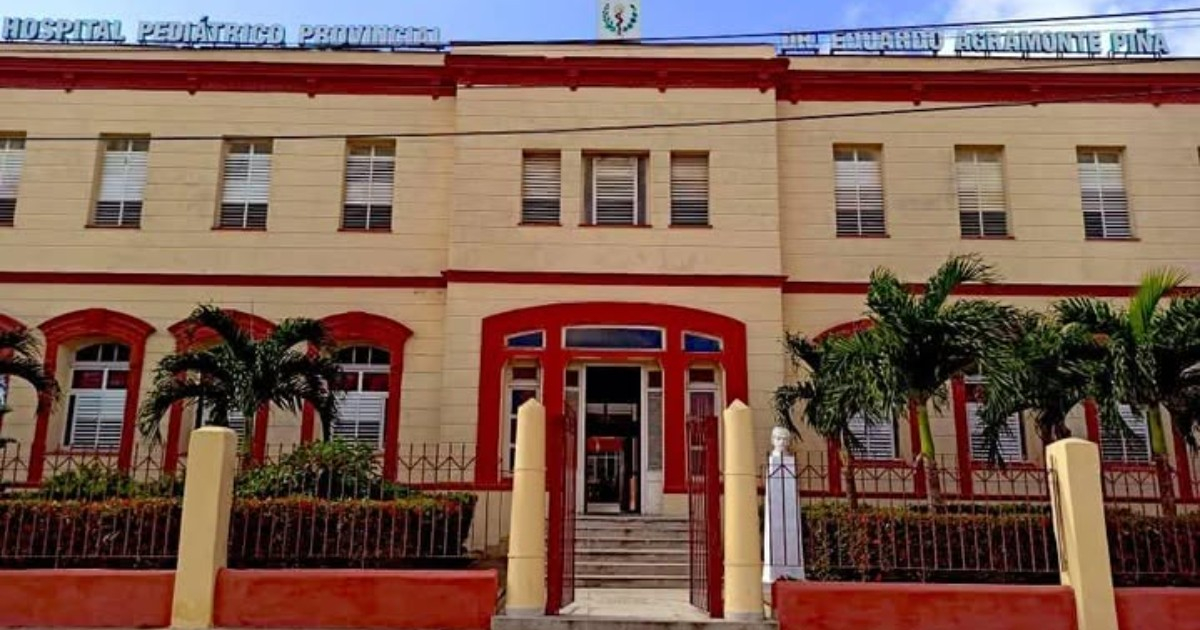
A 13-year-old girl hospitalized at the Eduardo Agramonte Piña Pediatric Hospital in Camagüey faces a life-threatening situation due to the unavailability of the only antibiotic capable of treating her infection. This alarming news was shared in a letter sent to our outlet on Friday by a relative of the patient.
Ismelys Torres Monzón, identified as the girl's relative, detailed the critical condition: "The patient is suffering from a dural fistula with cerebrospinal fluid leakage, and a recent blood culture tested positive for Pseudomonas aeruginosa."
Sensitivity testing revealed that the bacteria is susceptible to the antibiotic Aztreonam, which is the sole medication prescribed by the medical team for this condition.
Desperate Search for Aztreonam
The recommended treatment involves administering 60 vials of Aztreonam 1 g injectable, approximately one gram every eight hours, based on the child's weight of 32 kilograms, over a minimum period of ten days.
"As of now, the hospital lacks this crucial medication, and the family is frantically seeking a solution to ensure the treatment prescribed by specialists," Torres Monzón expressed.
The relative emphasized the urgency of time in dealing with such an infection: "We are talking about a pediatric patient with a severe infection in a high-risk setting, where time is a critical factor."
Those who can assist in finding the medication are urged to contact Ismelys Torres Monzón at +5359028069.
A Recurring Tragedy
This case brings to mind a tragic incident just three months ago when a baby named Naelis Barrio Oliveira, less than two months old, died on April 7 at the Carlos Manuel de Céspedes Hospital in Bayamo due to the same shortage of Aztreonam.
That incident also prompted an urgent plea on social media, but unfortunately, help arrived too late, resulting in the infant's death.
Systemic Failures in Healthcare
The Pediatric Hospital in Camagüey has been the subject of other recent complaints highlighting its decline: in October 2025, a mother reported a single pediatrician covering the entire facility; this month, a cockroach infestation was reported; and in early July, the hospital's main power generator caught fire.
The scarcity of Aztreonam is not an isolated issue but part of a broader pharmaceutical crisis: in June 2026, BioCubaFarma disclosed its inability to supply nearly 300 out of the 395 medications promised to the national health system.
According to official data from the Ministry of Public Health, Cuba's infant mortality rate concluded 2025 at 9.9 per 1,000 live births, almost triple the 3.9 recorded in 2018, while the system operates with only 30% of the basic medication chart available.
Torres Monzón concluded her letter with a direct plea: "We respectfully request that all necessary efforts be made to locate and provide this medication as urgently as possible, whether through national availability, inter-institutional transfers, or any means to ensure the child receives the treatment she requires."
FAQs on the Medication Crisis in Cuba
What is the current situation regarding the availability of Aztreonam in Cuba?
Aztreonam is currently scarce in Cuba, contributing to life-threatening situations for patients like the 13-year-old girl in Camagüey. This shortage is part of a broader pharmaceutical crisis affecting the country.
How are families coping with medication shortages in Cuba?
Families are resorting to desperate measures, including public pleas and searching for medication through personal networks, to obtain the necessary treatments prescribed by doctors.
What impact does the pharmaceutical crisis have on public health in Cuba?
The ongoing pharmaceutical crisis severely affects public health, leading to increased infant mortality rates and the inability to provide adequate medical care due to the lack of essential medications.