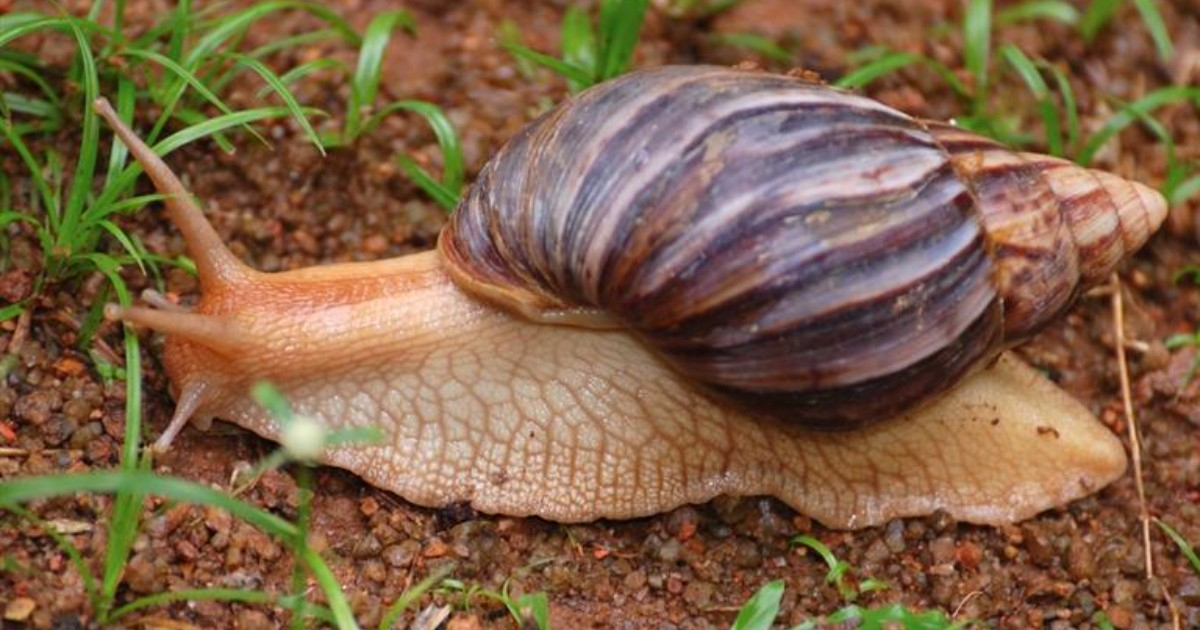
The giant African snail hasn't vanished from Cuba; it simply faded from the headlines. A recent report by the Girón newspaper highlights that this invasive species continues to proliferate unchecked across various municipalities in the province of Matanzas, leaving residents to battle the infestation on their own due to a lack of institutional response.
For years, ongoing crises such as power outages, food and water shortages, and economic collapse have overshadowed the snail issue, yet the species has never ceased its relentless spread.
Living with the Uninvited Guest
In the Santa Marta community within the municipality of Cárdenas, locals encounter the mollusk daily as if it were a component of the natural environment.
Graciela Isaac, a resident of La Emilia, describes the situation bluntly: “They’re in my yard and reach the doorstep. Occasionally, I gather them up, put them in a designated container; I should use salt, but that’s impossible, so I manage with lime. They’re devouring my plants.”
Isaac also points out the diminished caution among her neighbors: “They kill them with sticks, touch them with bare hands, leave them lying around the yard. People have grown accustomed and fearless of them.”
Her primary concern is the lack of action from authorities: “No entity responds; no one comes around to guide us on what to do with them. Previously, it was a frequent topic, and Health kept an eye on it; now, it’s different.”
Scientific Inquiry Triggers
Ladislao Reyes, residing at the end of 12th Street in Santa Marta, shares the sentiment: “It’s just another creature, but precautions are futile if others are unaware. The numbers have become alarming, and the population hasn’t decreased.”
This situation spurred a scientific investigation in May, spearheaded by Dr. Enrique Ramón Soto Ramírez, a senior professor at the University of Matanzas and a specialist with the provincial CITMA, alongside biologist Esteban Pérez Peña.
The study was ignited by a Journalism student’s Facebook post showing images of the mollusk near the city’s old Bus Terminal.
The Expanding Threat
Soto Ramírez identified hotspots in several Matanzas locations—including the Camilo Cienfuegos and Armando Mestre (Naranjal) districts, and the area around the old Terminal—as well as in other municipalities: Cárdenas, Colón, Jovellanos, Santa Marta, and the Humberto Álvarez sugar mill.
Back in June, CITMA had already warned about the species’ presence in Matanzas city, with growing concerns about a potential spread to Varadero.
The health risk is severe. Soto Ramírez states, “It transmits highly dangerous diseases to humans, such as different types of meningitis, illnesses affecting the nervous system, and conditions particularly harmful to individuals with compromised immune systems.”
The expert advises using gloves and masks when handling, avoiding contact with eyes and nose, and washing hands after any contact.
To eradicate them, he suggests submerging them in water—since they breathe with lungs—and then burying them. He also warns against consuming them, even if cooked, saying it’s “inadvisable.”
The giant African snail (Lissachatina fulica), native to eastern Africa, is hermaphroditic and can reproduce without a mate. It can lay up to six clutches annually, with approximately 500 eggs per clutch, boasting a hatching rate exceeding 90%. Adult shells can grow up to 30 centimeters.
FAQs on the Giant African Snail Infestation in Cuba
Why is the giant African snail a problem in Matanzas?
The giant African snail is a problem due to its rapid and uncontrolled reproduction, causing ecological damage and posing severe health risks by transmitting dangerous diseases to humans.
What measures are being taken to control the snail population?
A scientific investigation is underway to understand and control the population. Residents are advised to drown and bury the snails, and to avoid handling them without protection.
Can the snails be safely consumed?
No, it is not advisable to consume the snails, even if cooked, due to the potential health risks they carry.