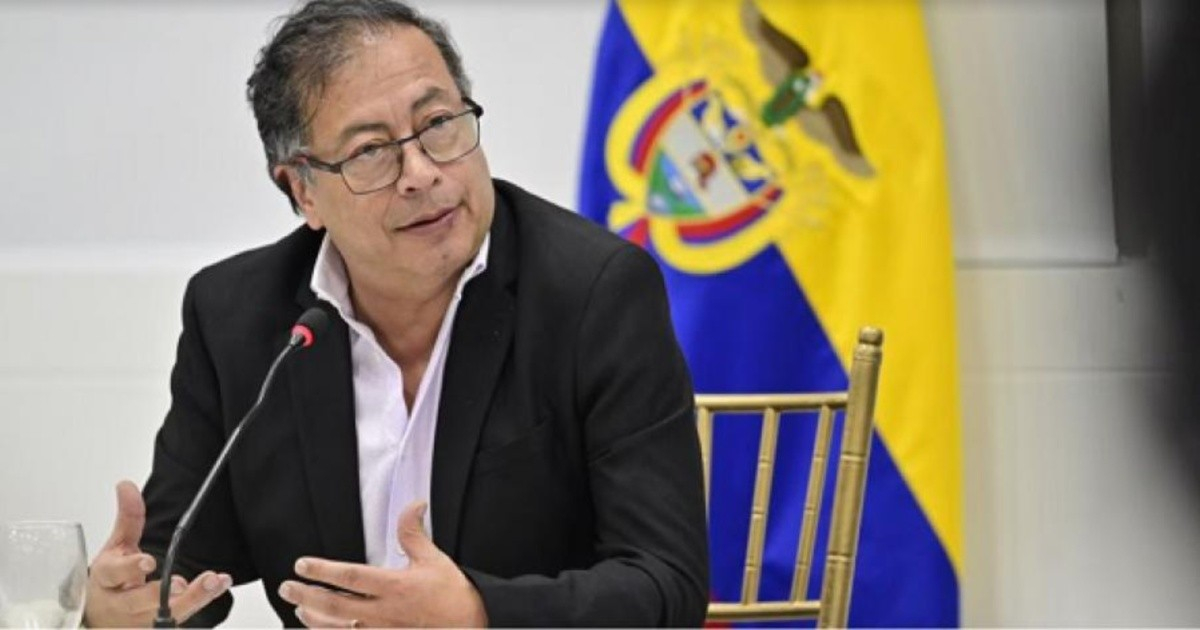
On Friday, Gustavo Petro embarked on a visit to Cuba, marking his final official international trip before his presidential term concludes on August 7. This journey, as explained by his Foreign Minister, Rosa Yolanda Villavicencio Mapy, is intended as a demonstration of political solidarity with Havana's regime amid its growing international isolation.
In an interview with Russian state media outlet RT, Villavicencio elaborated on the purpose of the trip, stating, "This is an official visit to express our solidarity with the Cuban people, our gratitude, and to affirm that within the framework of the United Nations and the Security Council, we will continue to defend the sovereignty and autonomy of nations."
The Foreign Minister described the visit as "necessary," particularly given the island's economic struggles, and emphasized that it sends a global message of "consistency" with international law principles and peaceful conflict resolution.
The Context and Timing of Petro's Visit
According to Cuba's Ministry of Foreign Affairs, the visit, which will last until August 1, was initiated by Miguel Díaz-Canel through an official invitation to the Colombian leader.
The trip emerged from a last-minute agenda change: Petro had planned to travel to Washington and New York for a United Nations conference on natural resource governance but canceled after learning that the president of the Democratic Republic of the Congo would not attend the event.
In a statement on his X account, Petro explained his decision: "I replaced it with a location I consider vital for national sovereignty and the fight for life in the Caribbean: the embattled Cuba."
Shifting Political Landscapes and Future Implications
The political backdrop of this visit is closely tied to the radical shift Colombia is set to undergo in its foreign policy starting August 7, when President-elect Abelardo de la Espriella takes office in Cali.
On July 28, De la Espriella announced the complete severance of diplomatic ties with Cuba and Nicaragua—labeling them as "tyrannies"—and the closure of 14 Colombian embassies initially, including the one in Havana.
This marks the third diplomatic break between Colombia and Cuba in history and comes as the incoming government openly aligns with Washington. Vice President-elect José Manuel Restrepo met with U.S. Secretary of State Marco Rubio on July 15 in a mission dubbed "The Miracle Homeland."
Villavicencio opposed this decision, calling the potential closure of the Havana embassy a "definitely negative message," recalling Cuba's role as the venue for the peace talks that led to the 2016 agreement with the FARC and its involvement in training Colombian doctors.
In response, the Cuban regime accused De la Espriella of acting in "subordination" to Washington's policies following the diplomatic break announcement.
Thus, Petro's visit concludes four years of explicit political alignment with the Cuban government, contrasting with the direction De la Espriella will take from August 7, when Colombia will sever ties with the dictatorship for the third time in its history.
"As always, we have offered in all conflicts during President Petro's term the possibility of helping to form mediating countries, to invite dialogue, and to prevent the pain and destruction caused by war," concluded Villavicencio.
Key Questions About Petro's Visit to Cuba
What is the purpose of Petro's visit to Cuba?
Petro's visit aims to demonstrate political solidarity with Cuba and express gratitude, while affirming Colombia's commitment to defending sovereignty and autonomy within international forums.
How does the visit relate to Colombia's foreign policy shift?
The visit highlights the end of Petro's alignment with Cuba, as Colombia prepares for a major foreign policy shift under President-elect Abelardo de la Espriella, who plans to sever ties with Cuba.
Why did Petro change his travel plans?
Petro altered his plans after the Congo's president decided not to attend a UN conference, opting instead to visit Cuba, which he regards as crucial for sovereignty and life in the Caribbean.