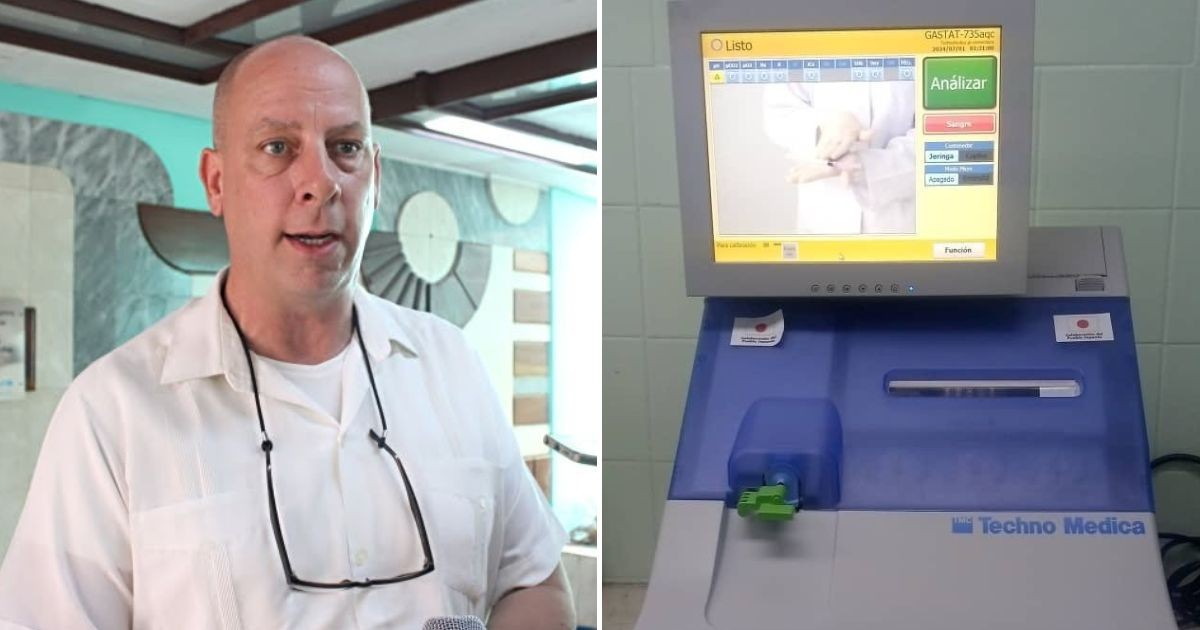
Essential materials that will keep two gasometers operational for a year in Santiago de Cuba's hospitals have arrived in Havana, awaiting their journey to their final destination.
These supplies are crucial for conducting around 13,700 vital tests for newborns, intensive care patients, and individuals with severe illnesses.
On Thursday, Mark Kuster, founder and director of the Swiss NGO Camaquito, shared the news. "Today is a special day for me. The materials have reached Havana. I hope they soon make it to Santiago de Cuba as well," he posted on Facebook.
Kuster highlighted that while the devices are in working condition, they require consumables to be used effectively.
"Without these supplies, the equipment ceases to function, even if they're in perfect shape," he emphasized.
He further explained, "Thanks to Camaquito's support, we have secured funding for a year's worth of necessary materials. This will enable approximately 13,700 critical tests, particularly for newborns, intensive care patients, and those with severe illnesses."
The NGO director summed up the project's human impact with a straightforward message: "We're not just talking about consumables. We're talking about 13,700 chances to save a life."
Kuster also expressed gratitude to those who contributed to the initiative and the Santiago de Cuba health authorities for their collaboration.
"I want to sincerely thank everyone and every institution that made this project possible, as well as the Santiago de Cuba health authorities for their cooperation," he concluded.
Gasometers are blood gas analyzers that quickly measure parameters like pH, carbon dioxide, oxygen, and electrolytes. Their results are crucial in assessing patients in neonatology, intensive care, and respiratory emergencies.
The equipment is located in Santiago de Cuba at the Dr. Juan Bruno Zayas Alfonso General Hospital and the Dr. Juan de la Cruz Martínez Maceira Pediatric Hospital.
The funding to acquire these consumables was approximately $17,000. Camaquito had also secured approval from Santiago de Cuba's relevant authorities to carry out the project.
The arrival of materials in Havana marks a new phase of an initiative that had its funding secured months prior, aiming to prevent well-functioning equipment from becoming unusable due to supply shortages.
This project continues a cooperation effort that began in March 2023 when Camaquito signed an agreement with the Japanese Embassy in Cuba for €75,068 to acquire two diagnostic machines and two incubators for the same hospitals in Santiago.
The situation highlights a persistent issue within the Cuban healthcare system: medical equipment often remains idle or at risk of becoming unusable due to a lack of essential parts, reagents, and materials that the regime fails to provide.
Camaquito, established by Kuster in 2001, is an independent international organization with no political, religious, or profit-driven affiliations. Over 25 years, it has raised over €4 million for health, education, culture, and social inclusion projects in Camagüey and Santiago de Cuba.
In April 2026, Kuster also secured $50,000 to repair homes damaged by Hurricane Melissa in Santiago de Cuba. That same month, he announced an additional $100,000 investment in civil infrastructure over the next five years.
Frequently Asked Questions about Hospital Equipment in Santiago de Cuba
What is the significance of the gasometers in Santiago de Cuba hospitals?
Gasometers are crucial for conducting tests that measure blood gases, including pH, carbon dioxide, oxygen, and electrolytes, essential for evaluating patients in critical conditions.
Who is Mark Kuster and what is Camaquito?
Mark Kuster is the founder and director of Camaquito, a Swiss NGO focused on health, education, culture, and social inclusion projects in Cuba. The organization is independent and has raised significant funds for various initiatives.
What challenges does the Cuban healthcare system face regarding medical equipment?
Cuba's healthcare system struggles with keeping medical equipment operational due to shortages of essential parts and supplies, a problem exacerbated by the regime's inability to ensure a steady supply chain.