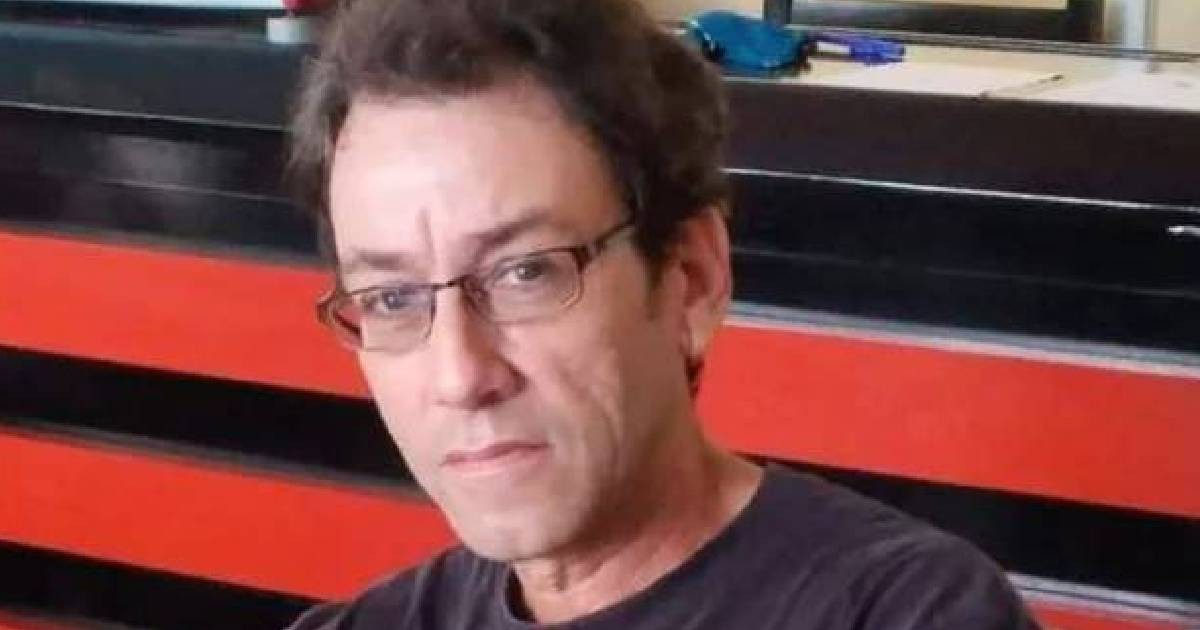
The Cuban Supreme People's Court has rejected the appeal filed six months ago on behalf of independent writer and journalist José Gabriel Barrenechea Chávez, as reported by the independent outlet Cubanet.
On July 28, the court issued ruling No. 417-2026-1875-2717, fully supporting the six-year prison sentence handed down by the Villa Clara Provincial Court in mid-January 2026 for "public disorder." This conviction followed Barrenechea's participation in a peaceful protest in Encrucijada demanding the restoration of electricity service.
This decision effectively closes the last ordinary legal avenue for Barrenechea Chávez, who was not even able to say goodbye to his mother, who passed away a few months ago while waiting to see her son free.
The highest court argued that the provincial sentence "is not based on isolated or generic assessments but on a comprehensive set of evidence, including statements from acting agents, eyewitnesses, and the defendants' own testimonies."
The appeal was managed by the State Security Crimes Chamber of the Supreme Court, the same body that handles politically sensitive cases in Cuba.
Barrenechea was arrested on November 8, 2024, a day after Encrucijada residents took to the streets in front of Communist Party and Government offices following more than 48 hours without electricity.
According to the charges, the journalist shouted "Turn on the power; we want the power" and urged others not to leave the protest. However, videos circulated on social media show him trying to calm the situation to prevent any escalation into violence, contradicting the official narrative.
The Supreme Court asserted that the demonstrations "led to an actual disruption of public order by affecting the normal vehicular and pedestrian traffic in the area and by the loud noises made by the defendants using metal objects."
The defense argued that there was insufficient evidence of Barrenechea's involvement beyond his presence at the scene and that the actions did not constitute a crime as they were an exercise of a constitutional right. The Supreme Court dismissed both claims.
Alongside Barrenechea, five other protestors were sentenced in January 2026, receiving penalties ranging from three years of corrective labor to eight years in prison, in a process that international organizations like PEN International and Artists at Risk Connection have criticized as the criminalization of peaceful protest.
The journalist has been imprisoned at La Pendiente in Santa Clara for a year and eight months and will turn 55 this Friday.
During his incarceration, he endured one of the most painful experiences related to his case: his mother, Zoila Esther Chávez, passed away in May 2025, and he was unable to bid her farewell. Despite being her sole caretaker, authorities repeatedly denied him humanitarian leave, only allowing him to attend her wake in handcuffs and under guard.
From prison, Barrenechea penned a letter expressing his sorrow: "It's my fault. Knowing the country I live in, I committed the grave crime of joining my neighbors in the civic demand for electricity. (...) I couldn't say goodbye to her, couldn't ask for her forgiveness, or receive her blessing."
The rejection of the appeal solidifies a sentence that, accounting for time already served since November 2024, will keep Barrenechea behind bars until approximately 2030.
Frequently Asked Questions about José Gabriel Barrenechea's Case
What was José Gabriel Barrenechea accused of?
José Gabriel Barrenechea was accused of "public disorder" for participating in a peaceful protest demanding the restoration of electricity service.
Why did the Cuban Supreme Court reject his appeal?
The Cuban Supreme Court rejected his appeal, arguing that the provincial sentence was based on a comprehensive set of evidence, including statements from acting agents and eyewitnesses.
How long is Barrenechea's prison sentence?
José Gabriel Barrenechea received a six-year prison sentence, which will keep him incarcerated until approximately 2030, considering time already served.