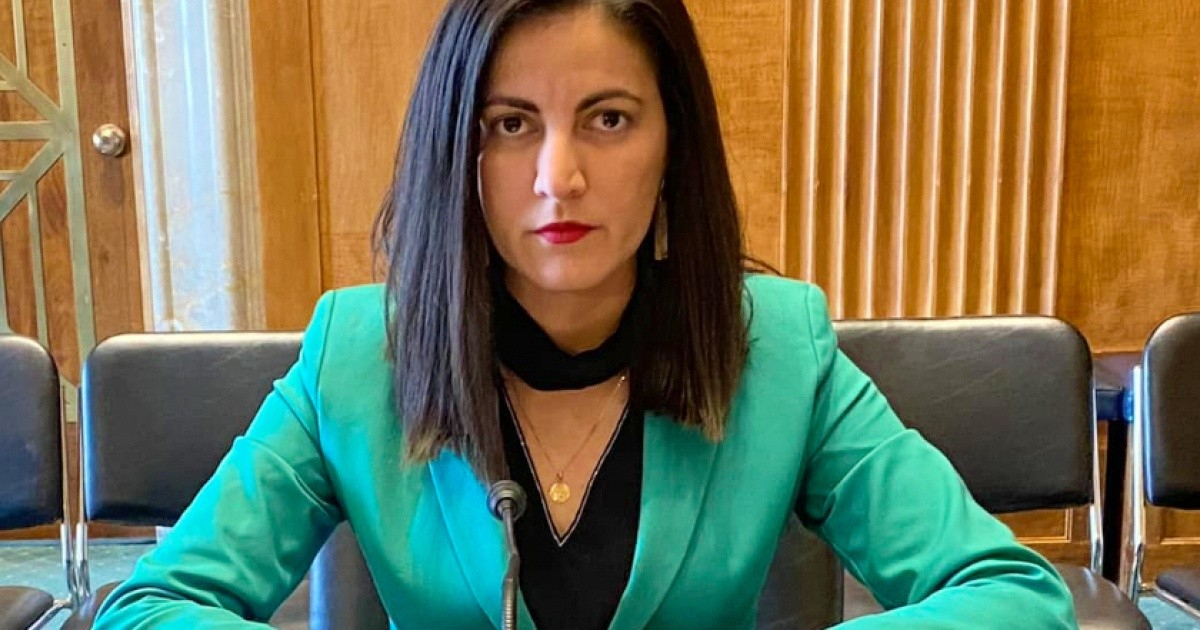
Rosa María Payá, a commissioner of the Inter-American Commission on Human Rights and a staunch activist, took a firm stance on Thursday against former Colombian President Ernesto Samper Pizano after he praised Cuba's involvement in Colombia's peace processes in a message on X.
Samper, who was in office from 1994 to 1998, claimed that "without Cuba, Colombia wouldn't have glimpsed peace with the FARC nor attempted it with the ELN." He also urged Colombia to abstain from joining what he termed a "vandalistic process" against the island, referring to international sanctions.
Payá countered his claims, stating, "Without the Cuban regime, the ELN wouldn't have been founded."
In a post on X, she highlighted the direct connection between the guerrilla group's origins and the Cuban Revolution: in 1962, Colombian students sponsored by Fidel Castro's government formed the José Antonio Galán Brigade in Cuba, which became the core of the armed organization.
Regarding Cuban doctors, whom Samper portrayed as a symbol of solidarity, Payá was unequivocal: "Without the Cuban regime, these doctors wouldn't endure slave-like work conditions abroad and could choose where to work without the dictatorship seizing up to 90% of their salary and their passports."
Payá also debunked the argument about COVID-19 vaccines, asserting that it was the regime itself that rejected doses offered by the United States via the UN. This decision led to Cuba having one of the highest estimated excess mortality rates due to COVID-19 globally, relative to its population.
The activist expanded on the humanitarian disaster in Cuba: "From 2021 to 2024, while Maduro sent tens of thousands of barrels of oil daily to the island, Cuba's population is estimated to have decreased by around 2 million people (~20% of the population). It's not just about the exodus; it's about the deaths."
Payá also criticized GAESA, the military conglomerate controlling Cuba's economy: "It operates like a private enterprise for the Castros, with billions in foreign accounts. These are resources stolen from the Cuban people, and not a cent is used to alleviate the humanitarian catastrophe."
A BBC report documented GAESA's assets at a minimum of $17.894 billion as of March 2024.
This exchange occurs amid heightened diplomatic tensions between Colombia and Cuba. On July 27, Colombian President-elect Abelardo de la Espriella declared a complete severance of diplomatic ties with Cuba and Nicaragua, labeling them "tyrannies."
The Cuban regime retaliated, deeming the move "hostile and unfounded."
Payá praised this decision: "Distancing from dictators, as President De la Espriella announced, is an act of solidarity," urging other governments in the region to follow suit.
She left Samper with a clear message: "Defending the criminals in power in Cuba isn't just an insult to their victims, it's complicity."
And she concluded with a direct appeal to the former president: "Now that you're informed, you might adjust your narrative (not the reality): out of respect for the truth, the Cubans, and the Colombians."
Understanding the Impact of the Cuban Regime on Latin America
How did the Cuban regime contribute to the formation of the ELN?
The ELN's origins are directly linked to the Cuban Revolution. In 1962, Colombian students funded by Fidel Castro's government formed the José Antonio Galán Brigade in Cuba, which became the foundation of the guerrilla group.
What is GAESA, and why is it significant?
GAESA is a military conglomerate that controls significant portions of the Cuban economy. It's seen as a private enterprise benefiting the Castro family, with billions in foreign accounts, while failing to address the Cuban humanitarian crisis.
Why did Colombia sever ties with Cuba?
Colombia's President-elect Abelardo de la Espriella announced the severance of diplomatic relations with Cuba, labeling it a "tyranny." This decision reflects a stance against authoritarian regimes and aligns with international sanctions.