The U.S. Department of State recently amplified an analysis by The Federalist, sharing it via their official account on X. The analysis focuses on a Cuban report that underscores how Fidel Castro's regime adapted Soviet Marxism-Leninism into a form of "third worldism" intended to export revolution into Western territories, including the United States.
This analysis references a 100-page report titled "Cuba: The Capital of 21st Century Communism," issued by the Trump administration on July 20. According to the document, Cuba has become the "beating heart of a new and distinct type of Marxism," driven by deep-seated resentment and fundamental animosity towards the United States and the West.
The Federalist's analysis, which the Department of State endorsed as part of its official stance, details how the 1959 Cuban revolution marked an ideological shift by incorporating colonized nations of the Global South as the new "oppressed proletariat" in their struggle against Western powers.
Historical Support for Global Revolution
According to the report, Castro convened the Tricontinental Conference in Havana in 1966 to unite Marxist movements from Africa, Asia, and Latin America, with the explicit aim of creating "two, three, or many Vietnams."
Since the revolution in 1959, the Cuban regime has trained guerrillas, revolutionaries, and terrorists across the Third World, deploying military advisors to countries like Venezuela, El Salvador, and Yemen. The document further elaborates on Cuba's role in helping to instate Hugo Chávez's socialist regime in Venezuela in 1999, thereby securing access to Venezuelan oil resources.
Intelligence and Subversion Activities
On the intelligence front, the report reveals operations by Cuba's Directorate of Intelligence (DI), which managed to infiltrate the U.S. government with agents in the National Security Council, the State Department, and the CIA.
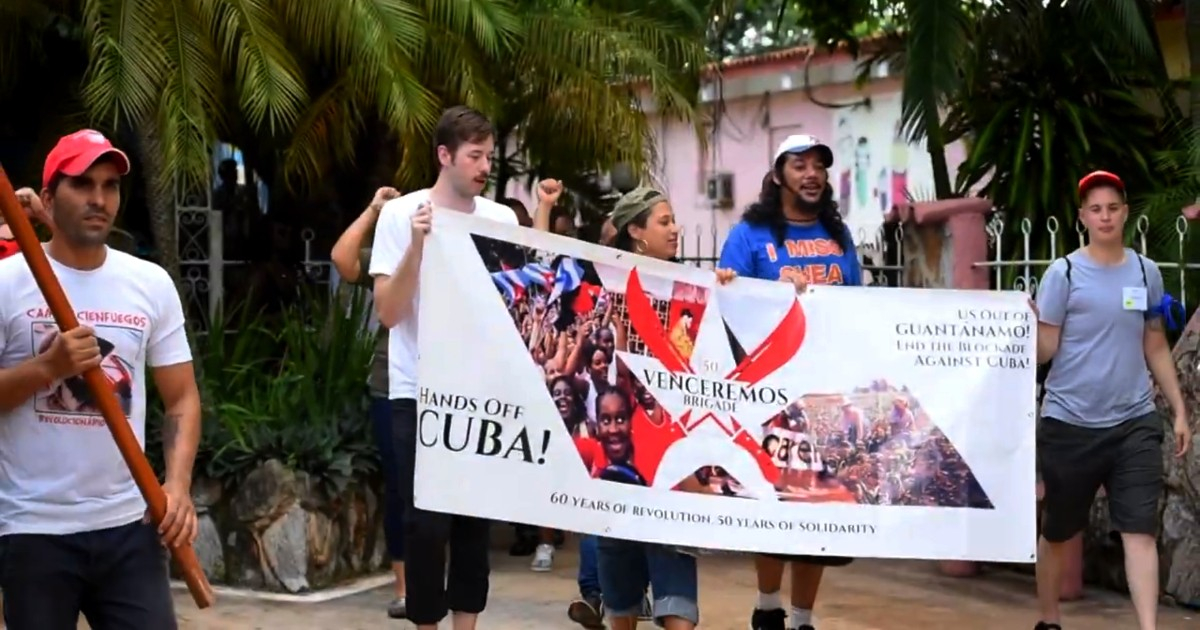
Within the United States, the document alleges Cuba provided active support to the Weather Underground, a student terrorist group responsible for bombings at the Capitol and the Pentagon during the 1970s. It also orchestrated the Venceremos Brigades, facilitating American activists' travel to Cuba for training aimed at destabilizing the U.S. from within.
Fostering Domestic Turmoil
The report also connects the Cuban regime to inciting racial conflict by supporting the Black Panthers, Black Liberation Army, and figures such as Stokely Carmichael and Eldridge Cleaver. Cuba even offered asylum to Assata Shakur, convicted of a police officer's murder, who fled to the island in 1984 and was received as a "martyr," living there until her death in 2025.
Contemporary Connections and Investigations
The document links modern organizations like Antifa, the People's Forum, and the National Lawyers Guild to Cuba's objectives of undermining the United States.
Last Tuesday, Congress summoned entities such as The People's Forum, BreakThrough News, and Tricontinental: Institute for Social Research to probe their alleged connections to Havana and potential violations of the Foreign Agents Registration Act (FARA).
The Department of Justice and the Treasury are investigating over 145 pro-Cuba organizations with combined annual revenues of approximately $1 billion.
This report aligns with the Trump administration's maximum pressure strategy, which, since January 2026, has implemented over 240 sanctions against the Cuban regime and established a maritime blockade to prevent oil imports to the island.
The capture of Nicolás Maduro in January 2026 further disrupted one of Cuba's main regional allies and severed the supply of Venezuelan crude to Havana.
The Federalist concludes that labeling Cuban entities as state sponsors of terrorism paves the way for new investigations and the potential shutdown of their U.S. affiliates, a stance the Department of State publicly supported by sharing the article.
Frequently Asked Questions on Cuba's Influence and U.S. Response
What is the significance of the Tricontinental Conference hosted by Cuba in 1966?
The Tricontinental Conference in 1966 was significant because it aimed to unite Marxist movements from Africa, Asia, and Latin America to promote revolutions worldwide, challenging Western powers and creating multiple conflicts like the Vietnam War.
How has Cuba allegedly influenced racial conflicts in the United States?
According to the report, Cuba has been involved in fostering racial conflicts by supporting groups like the Black Panthers and the Black Liberation Army, as well as providing refuge to activists such as Assata Shakur, who were involved in racial justice movements.
What actions has the U.S. taken against Cuba since January 2026?
Since January 2026, the U.S. has imposed over 240 sanctions against Cuba and enforced a maritime blockade to prevent oil imports, as part of the Trump administration's strategy to exert maximum pressure on the Cuban regime.