This week, the National Assembly of People's Power (ANPP) holds a critical session aimed at addressing the ongoing crisis in Cuba. The agenda includes not only the 176 economic measures introduced by the regime to revive an economy on the brink, but also the legal framework necessary to implement them.
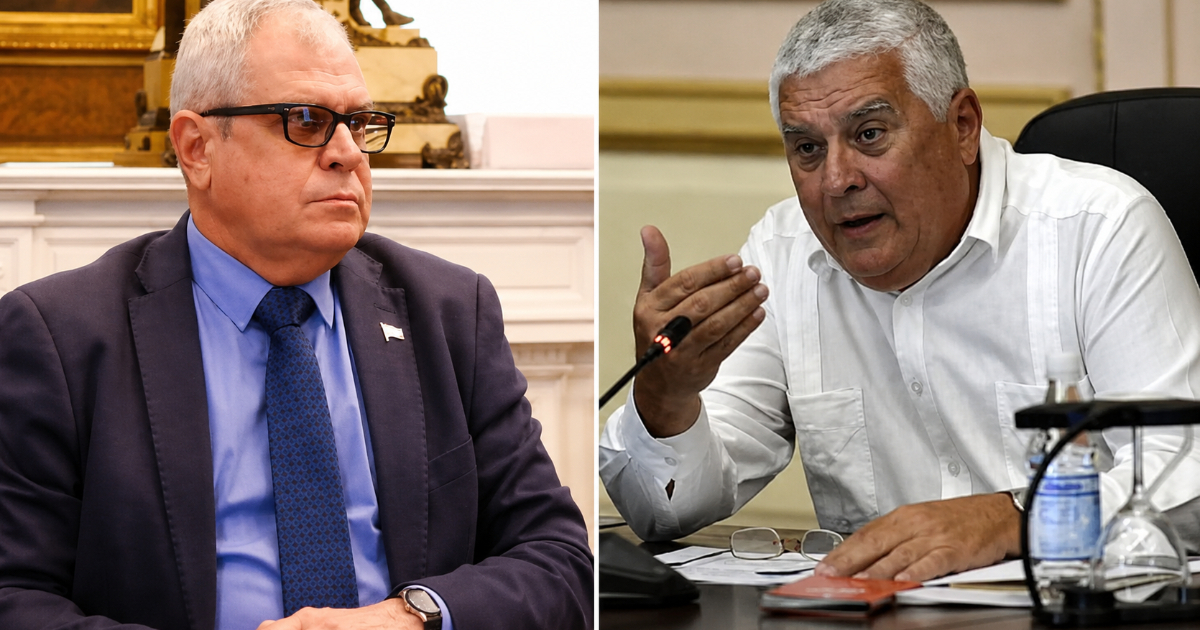
The Cuban government maintains that it is not overhauling its system, but rather "perfecting" socialism. Yet, as Parliament adjusts the legal framework to accommodate the most significant economic reforms in decades, one major change has gone largely unnoticed: the legislative work is no longer spearheaded by Homero Acosta Álvarez, the key figure behind the 2019 Constitution. Instead, José Luis Toledo Santander has taken the helm.
The Quiet Leadership Change
The significance of this leadership shift, viewed from the current parliamentary session, was not apparent when it was first announced. In a discreet reshuffling on December 18, 2025, Rubén Remigio Ferro was replaced as president of the Supreme People's Court by then Minister of Justice, Óscar Silvera Martínez. This session also formalized the departure of several prominent figures, including Ulises Guilarte de Nacimiento and Ricardo Rodríguez González.
Amid these changes, the replacement of Acosta Álvarez as secretary of the National Assembly and the Council of State by Toledo Santander drew little attention. The official announcement offered no explanation for the departure of one of the regime's most politically influential jurists of the past two decades.
Two Jurists, Two Eras
Homero Acosta played a pivotal role in drafting the 2019 Constitution and the legislative developments that followed its approval. He was a staunch advocate for the institutional model and legal framework born from that constitutional text.
José Luis Toledo Santander, though not an unfamiliar name, had been building influence in key legislative debates. A military prosecutor and long-serving deputy, he led the Commission on Constitutional and Legal Affairs for years. In July 2025, he appeared alongside Acosta to advocate for a constitutional amendment eliminating the presidential age limit without a referendum, framing it as a technical adjustment compatible with the existing Constitution. Five months later, he assumed Acosta's former office.
The 176 Measures: A New Economic Direction
When the leadership change occurred, the full scope of the economic reforms now being approved by the regime's parliament was yet unknown. Today, the 176 measures aim to expand private initiative, liberalize business activities, open new investment avenues, and alter essential aspects of the country's economic structure, all under the official narrative of "updating" Cuban socialism.
This transformation requires significant legislative adaptation, a task now overseen by José Luis Toledo Santander, who has coordinated and supervised parliamentary activities since last December. The timing of these events is striking, to say the least.
An Explanation Never Provided
There is no public evidence to suggest that Homero Acosta's departure was due to disagreements with the subsequent economic direction of the regime. To assert otherwise would be speculative. However, it is noteworthy that this change occurred precisely during the transition from the development of the 2019 constitutional model to its adaptation to a new economic reality demanding reforms once unthinkable in official rhetoric.
The Constitution itself was designed to solidify the continuity of Cuba's political and economic system. Now, without formally altering that text, Parliament is working to provide legal backing to a suite of reforms forcing the regime to reinterpret some foundational principles of its model.
This legal transition is now under new leadership.
Beyond a Simple Personnel Change
Perhaps the replacement of Homero Acosta marked the end of a political and legislative cycle. Maybe the regime needed a figure more suited to managing the parliamentary phase ushered in by economic reforms. Or perhaps there were other undisclosed factors at play. What is clear is that the government never explained the reasons behind this leadership change.
Seven months later, as Toledo Santander leads the parliamentary session that will enact the most extensive economic reforms in decades, this shift appears far more significant than a mere administrative adjustment. It emerges as one of the least explained decisions in an institutional reorganization process that now seems part of a broader strategy to adapt Cuba's legal framework to the survival demands of a faltering economic model.
Understanding Cuba's Legislative Shift
Why was José Luis Toledo Santander appointed to replace Homero Acosta Álvarez?
The government has not publicly explained the reasons for this leadership change. It may relate to the shift in focus towards managing new economic reforms, but the exact motivations remain speculative.
What are the 176 economic measures introduced by the Cuban government?
These measures aim to expand private sector opportunities, liberalize business operations, and open new paths for investment, all while claiming to "update" socialism in Cuba.