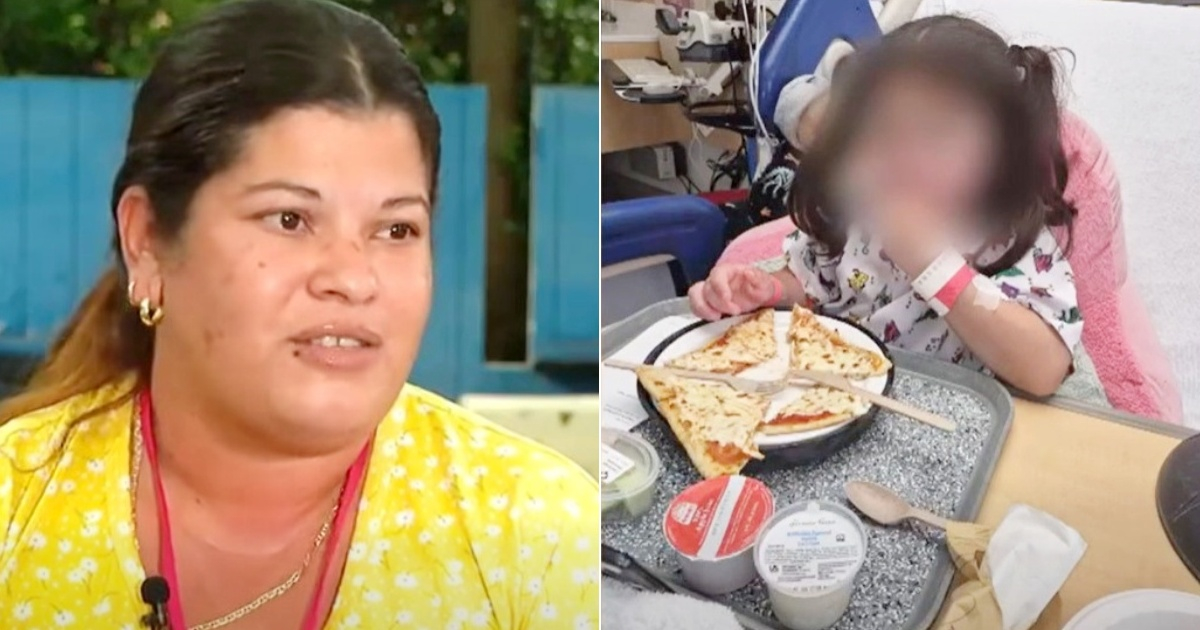
Yudisleidy Rodríguez, a single Cuban mother holding an I-220A status and residing in Miami, is reaching out for support during one of the most challenging times a migrant could face. Her five-year-old daughter, Sara, recently underwent brain tumor surgery, suffers from autism with ADHD, and both are now residing in a homeless shelter after spending nearly seven weeks living in their car in a Walmart parking lot.
The story gained attention on Wednesday thanks to Cuban journalist Javier Díaz, a presenter on N+MAS Univision 23 Miami, who shared it on his social media platforms and during the evening news. "Migrating is tough, but life is truly testing this Cuban mother," Díaz commented while introducing the segment.
A Series of Misfortunes
Their ordeal began in November 2025 when Sara was diagnosed with a brain tumor and underwent surgery. Already living with an autism diagnosis for three years, Sara's frequent medical appointments and follow-up treatments made it impossible for Yudisleidy to maintain steady employment.
"There's no stable job that can accommodate all the medical appointments my daughter requires," Yudisleidy explained in the video shared by Díaz.
Without a steady income, she lost her rental home. As a single mother without family support in the United States, Yudisleidy and Sara ended up living in their car for nearly seven weeks before seeking refuge in a Miami homeless shelter.
"I wouldn't wish this situation on any mother," journalist Díaz remarked.
The I-220A Dilemma
Yudisleidy's situation is further complicated by her immigration status. Both she and Sara possess the I-220A document, an Order of Supervision from Immigration and Customs Enforcement (ICE), allowing them to remain free while awaiting court decisions. However, it does not provide legal status, work permits, or access to most government benefits.
This limitation excludes them from federal and state assistance like Medicaid, housing aid, or cash subsidies, as reported by media outlets such as Univision and El País. Hundreds of thousands of Cubans in Miami find themselves in this same immigration limbo, with detentions and deportation orders increasing for I-220A holders during routine ICE appointments in 2025 and 2026.
Though Sara's father lives in Miami, Yudisleidy frankly described his involvement as sporadic. Her mother in Cuba urges her to return to the island, but she refuses to leave the medical professionals treating her daughter.
Shelter Life's Challenges
While Yudisleidy is grateful for having a roof over their heads, she acknowledges that the shelter environment poses difficulties for a child with Sara's needs. "I'm thankful she has a bed to sleep in, but with so many people in a shelter and her condition, it's challenging," she stated.
Nonetheless, she takes pride in her dedication as a mother: "As a mother, I feel fulfilled because I've done everything, everything for her."
Yudisleidy is appealing to the community for specific help: donations to cover rent and Sara's medical expenses, as well as leads on flexible job opportunities. "If there's any sporadic work, let me know, I'll do it," she affirmed.
Ways to Help
On July 13, 2026, Yudisleidy launched a GoFundMe campaign with a goal of $15,000 to secure housing and cover Sara's medical treatments. By Thursday, the campaign had raised $3,633 from 75 donors, less than a quarter of the target.
"I don't sleep; I ended up seeing a psychiatrist," Yudisleidy summarized, encapsulating the immense burden she carries, a statement that paints the rawest picture of her plight.
Understanding I-220A and Its Impact
What is an I-220A document?
The I-220A is an Order of Supervision issued by ICE that allows individuals to remain free while their immigration case is processed in court, but it does not grant legal status or access to work permits and government benefits.
How does the I-220A status affect access to benefits?
Individuals with I-220A status are ineligible for most federal and state assistance programs, such as Medicaid, housing aid, and cash subsidies, leaving them in a vulnerable position without essential support.