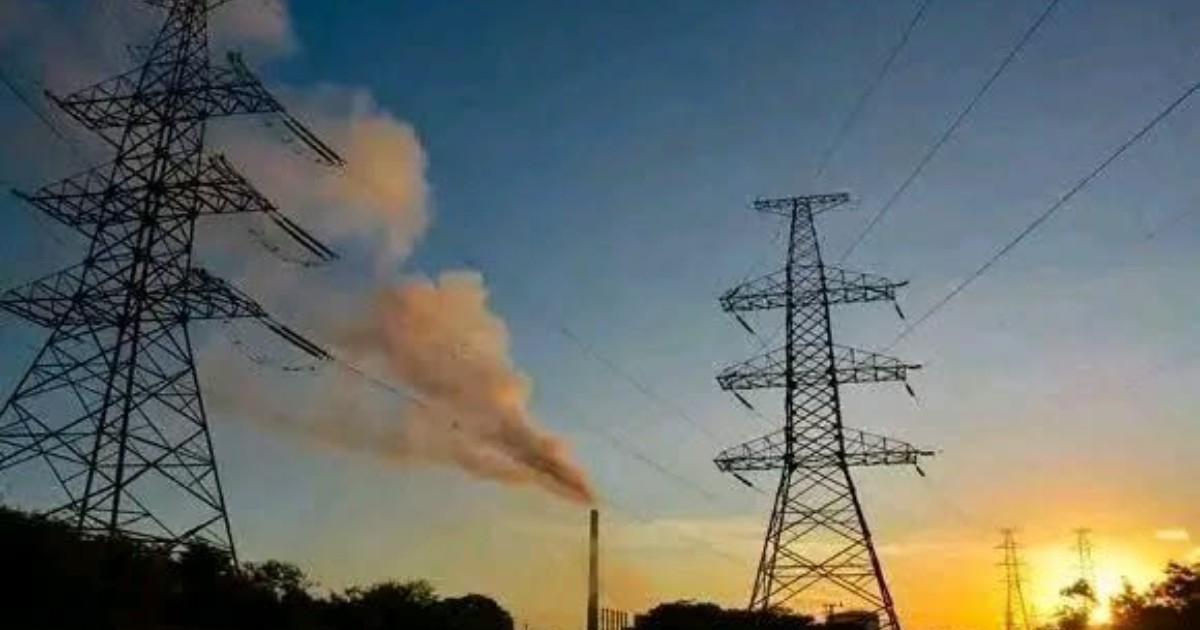
A blaze erupted in the perimeter of the Santiago East Substation late Wednesday, prompting an emergency shutdown of the power supply in four circuits of Santiago de Cuba, according to an official statement by the Electric Company shared on Facebook.
The organization, which operates under the National Electric Union (UNE), stated that circuits 12, 13, 15, and 16 were taken offline as a precautionary measure to safeguard both the facilities and the personnel present at the site.
"We inform our customers that due to a fire in the perimeter area of the Santiago East Substation, it was necessary to urgently affect the electric service in circuits: 12, 13, 15, and 16, as a measure to ensure the safety of the facilities and the staff working at the location," the company mentioned in its announcement.
Employees from the Electric Company and the Fire Department were actively working to contain the fire and restore service "as soon as conditions allow," according to the same statement. No casualties were reported, and the cause of the fire remained undisclosed.
Mounting Challenges for Santiago de Cuba
The incident exacerbates an already critical situation for the province. On the same day, the citizen observatory on blackouts recorded 907 reports in Santiago de Cuba, with outages lasting up to 24 hours.
Nationally, the National Electroenergetic System (SEN) was operating with only 849 MW of available generation against a deficit of 1,830 MW. UNE had predicted a 2,230 MW shortfall for the evening peak, potentially leaving up to 74% of the country without power simultaneously.
Recurring Infrastructure Fires
The Santiago East Substation fire is part of a troubling trend of electrical infrastructure fires throughout 2026: On July 19, a fire at the Alquízar substation in Artemisa left nearly 7,000 people without service; on June 17, another blaze at the Caibarién substation in Villa Clara damaged the transformer and affected 15 districts.
In July alone, the SEN experienced at least four total collapses—including on July 6, 10, and 14—leaving about 9.6 million people without electricity each time.
On July 8, the country recorded its largest recent energy deficit: 2,341 MW, with 73% of the population affected simultaneously.
Social Unrest and Public Dissent
This scenario has sparked explosive social unrest in Santiago de Cuba. That same evening, residents of Reparto Sueño—a central neighborhood with over 17,000 inhabitants—banged pots and pans in protest against the prolonged blackouts, as documented by independent journalist Yosmany Mayeta Labrada.
"Another night that residents of Reparto Sueño take to the streets to bang pots," wrote Mayeta Labrada.
It wasn't the first occurrence: the neighborhood had already witnessed similar protests in June and on several July dates, including July 25, the eve of the anniversary of the Moncada attack.
The wave of demonstrations spilled over to Havana, with protests in Lawton, El Vedado, Guanabacoa, Centro Habana, and Old Havana, while the regime responded with arrests, police deployments, and internet blackouts in the most agitated areas.
Understanding the Energy Crisis in Cuba
What caused the fire at Santiago East Substation?
The cause of the fire at Santiago East Substation has not been disclosed.
How is the national energy system coping with the crisis?
The National Electroenergetic System is struggling with a significant deficit, operating with only 849 MW available against a need for 1,830 MW. Power outages are anticipated to affect up to 74% of the country simultaneously during peak times.
What has been the public reaction to the ongoing energy issues?
The public response has been one of significant unrest, with protests erupting in Santiago de Cuba and spreading to Havana. Residents are expressing their dissatisfaction with the prolonged power outages through demonstrations.