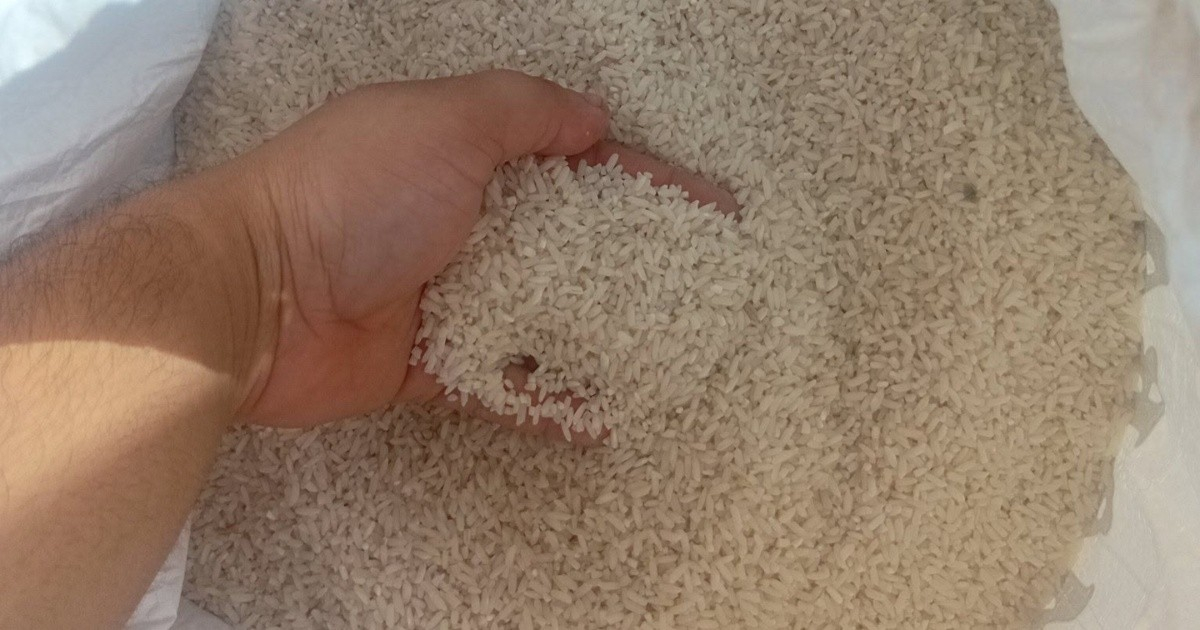
This week, the Ministry of Domestic Trade (MINCIN) declared through its official channels the commencement of distributing three pounds of donated rice in Ciego de Ávila, starting in the municipality of Baraguá. However, this announcement was met with a torrent of criticism and accusations of deceit from Cuban citizens who have been waiting months for previously promised deliveries that never arrived.
According to MINCIN's official Facebook announcement, the third round of donations continues for vulnerable groups and pregnant women, with four kilograms of rice allocated per person, based on a census closed as of May 31.
Instead of providing relief, the announcement sparked collective discontent. Many users inquired about when the rice would reach their municipalities or provinces, while others complained that past announcements never came to fruition.
"And what about Morón in Ciego de Ávila... when?" questioned one user. "And for Ciego de Ávila, when?" another asked. Responses from other provinces quickly followed: "What about Villa Clara?" and "In Camagüey, nothing at all, not even an announcement."
More severe accusations focused on unequal distribution and growing hunger. "In San Germán, they haven't distributed even the six pounds promised long ago... people are starving," wrote one resident.
Another questioned, "Why is there a difference in Florencia, where they’re giving out three pounds, even though we live in the same province?"
There were also demands from Holguín: "When will the eight pounds of rice announced for everyone be distributed?" The distrust towards official announcements was summed up in comments like "They already announced the other shipment, and it never arrived. Will it be the same this time?" or simply: "Lies."
The dissatisfaction stems from a history of unmet promises. As of July 11, Ciego de Ávila was one of five provinces—alongside Villa Clara, Cienfuegos, Sancti Spíritus, and Camagüey—experiencing delays in the distribution of rice donated by China, while Las Tunas, Holguín, and Granma had already received eight pounds per person.
The rice being distributed by the regime comes from a Chinese donation of 90,000 tons pledged for 2026, with the first 15,000 tons announced in May.
However, on the informal market, rice prices surged to between 360 and over 400 Cuban pesos (CUP) per pound in July, compared to an average state salary of about 7,000 CUP per month.
The situation worsened when, on July 16, the government removed the maximum retail price of rice—formerly capped at 155 CUP per pound—without publishing a new official replacement price, according to americateve.com.
The ration book crisis extends beyond rice. In June, regime officials admitted that in 2026, oil, chicken, and yogurt had not been distributed, with only one round of coffee delivered in Havana.
The scenario is exacerbated by the June 18 announcement from Díaz-Canel that the ration book will no longer be universal and will be reserved for retirees, chronically ill patients, and vulnerable individuals as part of a package of 176 economic measures, marking the most significant reduction to the rationing system since its inception in 1962.
Key Questions About Rice Distribution in Cuba
Why are Cubans skeptical about the rice distribution announcements?
Cubans are skeptical due to a history of unmet promises regarding distribution, with many previously announced deliveries never materializing.
Where does the rice being distributed in Cuba come from?
The rice comes from a Chinese donation of 90,000 tons pledged for 2026, with the first 15,000 tons announced in May.
What changes were announced regarding Cuba's ration book system?
The ration book will no longer be universal and will be reserved for retirees, chronically ill patients, and vulnerable individuals as part of a package of 176 economic measures.