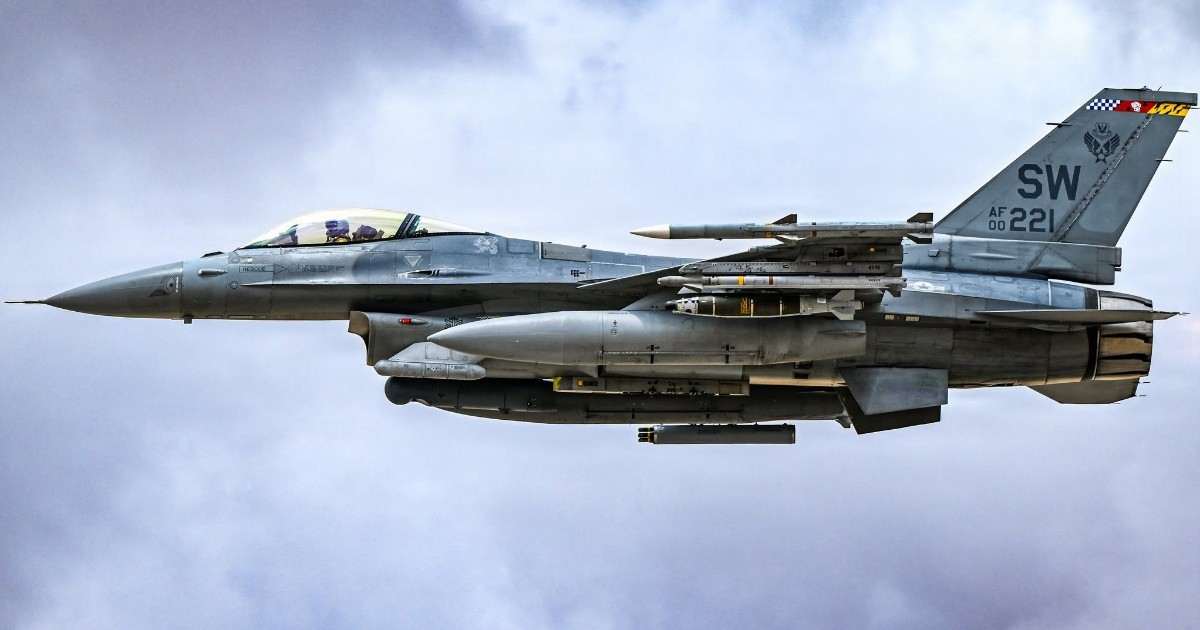
The United States commenced a fresh series of airstrikes against Iran this Wednesday, just hours after the Iranian Revolutionary Guard Corps (IRGC) claimed responsibility for a ballistic missile attack on a U.S. airbase in Jordan, according to an official statement from the U.S. Central Command (CENTCOM).
Initiated at 8:00 p.m. Eastern Time, these strikes were described by Washington as a "powerful response to Iranian attempts to target U.S. forces stationed in the Middle East," as reported by the EFE news agency.
A Surprise Attack and Swift Retaliation
The Iranian offensive that led to this retaliation occurred on Tuesday when the IRGC launched ballistic missiles at the U.S. base in Jordan, an act CENTCOM labeled as "unexpected."
U.S. military forces claimed to have intercepted each missile, while Jordan announced it had successfully destroyed five missiles launched from Iranian territory.
Trump's Stern Warning
Before the airstrikes began, President Donald Trump issued a stern warning to Iran, speaking with uncharacteristic bluntness during an interview with Fox News.
"We're going to give them a severe beating," declared the President. "We will hit them hard. They are in for a thrashing," he emphasized, according to a Fox News reporter.
From the Oval Office, Trump reiterated his threat with equal forcefulness: "We're going to hit them very hard because now it's our turn. They know what's coming."
He also explained that U.S. forces had mere minutes to intercept and destroy the Iranian missiles, and he personally reviewed footage showing military personnel relaying coordinates in real-time during the operation.
Diplomatic Efforts Thwarted
The resumption of strikes followed a brief diplomatic pause. On July 26 and 27, Trump had ordered a halt to bombings against Iran to allow for negotiations. However, Tehran's attack on the Jordanian base on Tuesday effectively closed that diplomatic window.
On the same Wednesday, amid escalating tensions, the U.S. and Saudi Arabia conducted precision bombings against Iran-aligned groups in eastern Iraq, resulting in 20 deaths and 32 injuries among the Popular Mobilization Forces (PMF).
Trump confirmed that this operation was pre-coordinated with the Iraqi government, labeling pro-Iranian Shia groups in the region as a "cancer" and warning of potential future actions against them.
Ongoing Conflict and Attempts at Peace
According to CENTCOM, in the 72 hours leading up to the Wednesday strikes, the IRGC had launched over 30 drone attacks against U.S. forces and Saudi energy infrastructure.
The conflict between Washington and Tehran has persisted for over five months, with numerous pauses and resumptions in hostilities.
Since the U.S. broke a cease-fire on July 8, engaging in more than 13 consecutive nights of bombing, the latest escalation on Wednesday has further jeopardized peace talks that have yet to achieve any lasting resolution.
Understanding the U.S.-Iran Tensions
What prompted the recent U.S. airstrikes on Iran?
The U.S. launched airstrikes on Iran in response to a ballistic missile attack by the IRGC on a U.S. airbase in Jordan.
How did President Trump react to the Iranian missile attack?
President Trump issued a strong warning to Iran, promising a harsh response and emphasizing the U.S.'s readiness to retaliate.
What has been the impact of these strikes on U.S.-Iran relations?
The airstrikes have escalated tensions and further complicated peace negotiations between the U.S. and Iran.