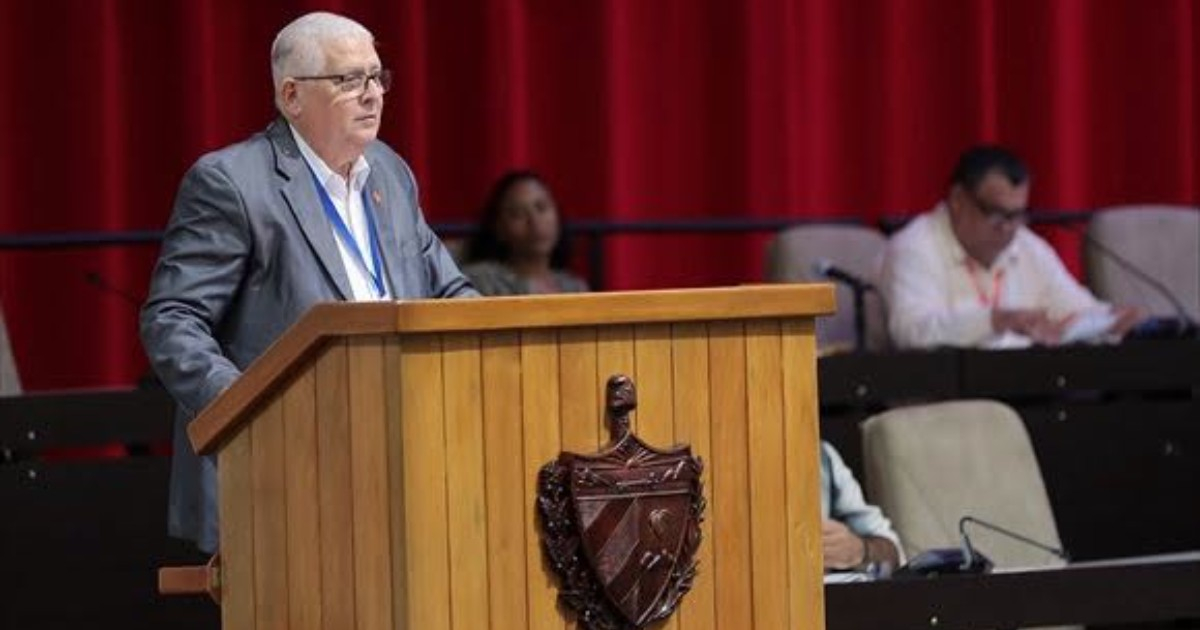
The National Assembly of People's Power has repealed Law 183, a decision made public on Wednesday. This law, which had been enacted just seven months ago, shortened the term for municipal assembly delegates from five to four years.
This announcement, reported by the government-run outlet Cubadebate, sparked a wave of sarcastic and critical comments on social media, where Cubans openly questioned the purpose of these positions.
Law 183 was initially approved in January 2026 with the intention of adjusting the electoral calendar that had been disrupted by the COVID-19 pandemic. Under this legislation, the current delegates' terms would have ended in November of this year.
According to Deputy José Luis Toledo Santander, the decision to repeal the law was due to the "complex economic and social situation of the country," making it an inappropriate time to hold municipal elections.
With the repeal, the Cuban Constitution's article 187, which sets the delegate term at five years, is reinstated.
The Public's Reaction to Legislative Changes
This legislative back-and-forth did not go unnoticed. "They change laws like changing clothes, how interesting," commented one user on Cubadebate's post. Another summed up the situation with a simple phrase: "The seven-month law."
The general sentiment among commenters was that the length of the delegate's term is irrelevant if they do not resolve issues. "Whether it's four years or five, even 20, it doesn't matter. A seal at four is a seal at five and remains a seal at 20. Their job is to say yes and clap," one person quipped. Another was more direct: "For what they achieve, makes no difference if they change them or not; it's all a circus."
Cuban System Under Scrutiny
Many comments targeted the system itself rather than the delegates. "It's a charade: when the time comes, 100% agree with everything, and everything is fine. The decisions up for vote have long been decided; they put on more theater than TV actors," noted one user. Another added, "A law passed by the same beneficiaries to meet and enhance their service demands."
Some linked the measure to a broader political landscape. "The devil is in the details. This seems like the first step to legitimizing an extension of Díaz-Canel's mandate, implying the government," speculated a commentator. Another pointed out the real concerns of the population: "Deputies, cooking oil is 3,000, why should I care about that law?"
Nevertheless, the public seems to have drawn its own conclusions: "This shows a fear of having to undergo validating electoral processes," wrote one user, while another concluded the debate succinctly: "If those below move, those above fall."
Active Legislative Session
The repeal occurred during the Seventh Ordinary Session of the Tenth Legislature, a notably active day in parliament. Alongside this decision, the Assembly approved the Labor Code, the Law on Agricultural and Forestry Lands, the Housing Law, and the Law on the Organization of the Central State Administration, which includes a reduction of 92,000 positions.
In recent months, the regime had turned to municipal delegates as a crisis management tool: in September 2025, they were relieved from their regular jobs to focus on community tasks during power outages, and in February 2026, more delegates were freed to bolster their political presence in neighborhoods.
Understanding the Cuban Legislative Repeal
Why was Law 183 initially implemented?
Law 183 was enacted in January 2026 to adjust the electoral calendar, which had been disrupted by the COVID-19 pandemic.
What prompted the repeal of Law 183?
The repeal was prompted by the complex economic and social situation in Cuba, deemed unsuitable for municipal elections at the time.
How did the public react to the legislative changes?
The public reacted with sarcasm and criticism, questioning the effectiveness and purpose of the delegates' roles.