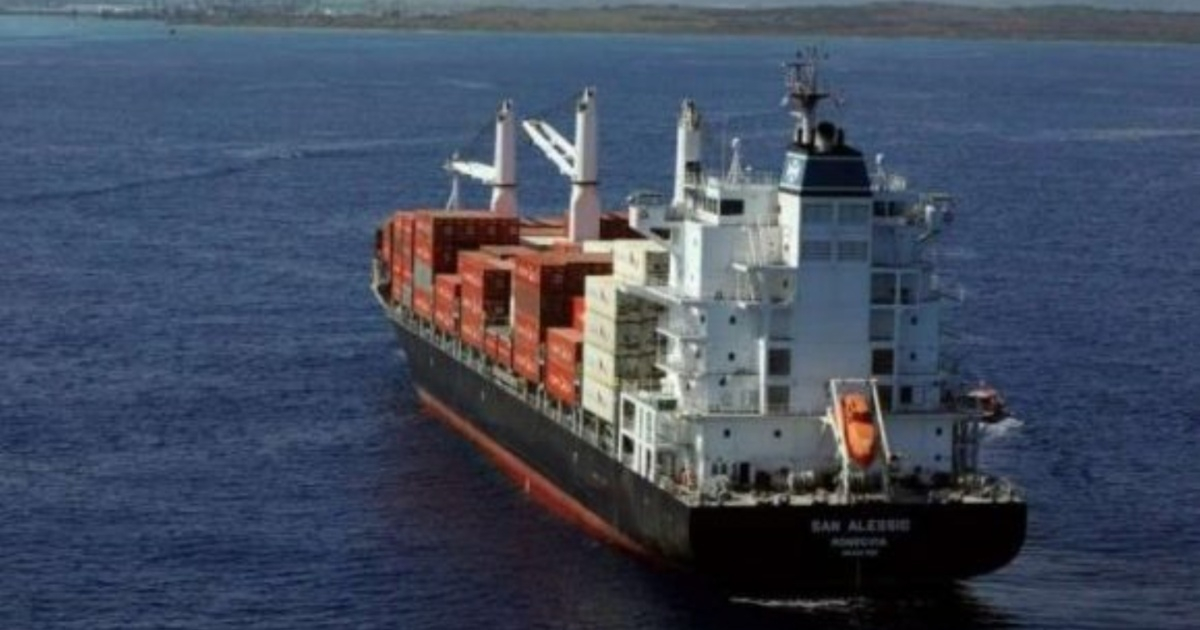
The Cuban government has accused U.S. sanctions of causing the detention of over 7,000 containers carrying goods intended for the island. These containers are allegedly held in various Caribbean ports, according to Óscar Pérez-Oliva Fraga, Vice President of the Council of Ministers and Minister of Foreign Trade, during his address to the National Assembly of People's Power.
State-run media outlet Cubadebate reported that Pérez-Oliva Fraga informed legislators that the stalled containers contain food, resources for an energy matrix transformation program, drinking water supplies, and essential medicines. He emphasized that these goods were purchased in compliance with international trade regulations.
Pérez-Oliva Fraga highlighted the severe impact on the Cuban population, noting that "each day, over three million Cubans wake up facing difficulties accessing this vital resource," referring to the worsening scarcity of potable water due to the detained shipments.
He placed direct blame on those obstructing the delivery of these goods, warning of the potential humanitarian consequences: "I want to hold accountable those who attempt to prevent the arrival of this cargo, those who remain indifferent to this act of genocide, and those aligning with U.S. interests in this endeavor, for the loss of innocent lives," he stated.
The Ripple Effect of Intensified Sanctions
The widespread detention of containers stems from an escalation in sanctions, notably following Executive Order 14404, signed by President Donald Trump on May 1, 2026. This order broadened secondary sanctions against entities associated with the Cuban government in sectors such as energy, finance, defense, and security.
As a direct result, shipping companies Hapag-Lloyd and CMA CGM suspended operations with Cuba between May 14 and May 18, 2026, citing regulatory risks linked to GAESA, the military conglomerate overseeing a significant portion of Cuba's formal economy.
Specific instances of container detention have accumulated in recent months. MediCuba reported on July 23 that 10 containers filled with crucial medical supplies were halted in Jamaican and Colombian ports. Among these were five containers with nephrology materials, three with blood bags, and two with sodium valproate, an anticonvulsant for epilepsy treatment, detained in Cartagena by Hapag-Lloyd.
Impact on Healthcare and Humanitarian Aid
A Cuban hospital also reported the detention of over 3.5 million syringes and needles intended for Santiago de Cuba, stalled in Kingston, Jamaica.
Sanctions have been imposed in successive waves: On July 13, GEMAR, a state company managing the Port of Mariel, was sanctioned. On July 23, Marco Rubio announced new measures against nine entities and two officials, including the Minister of Public Health, José Ángel Portal Miranda. On July 24, Washington directly sanctioned the Mariel Container Terminal and Coral Marítima S.A. for attempting to circumvent the restrictions.
The humanitarian situation is dire, with independent reports highlighting the gravity of the crisis. The United Nations has launched an assistance plan for two million people in Cuba, requesting $94 million to meet basic needs, as the water supply system operates with only 37% of the necessary fuel. Nearly a million Cubans depend on water trucks for potable water.
Understanding the Impact of U.S. Sanctions on Cuba
How have U.S. sanctions affected Cuba's access to essential goods?
U.S. sanctions have led to the detention of over 7,000 containers with essential goods like food, water supplies, and medicines, impacting the daily lives of millions of Cubans who struggle to access these vital resources.
What sectors are targeted by the intensified U.S. sanctions?
The intensified U.S. sanctions target sectors linked to the Cuban government, including energy, finance, defense, and security, as per the Executive Order 14404 signed by President Trump in 2026.
What humanitarian assistance is being provided to Cuba?
The United Nations has initiated a plan to assist two million people in Cuba, seeking $94 million in aid to address basic needs amidst critical shortages in water and medical supplies.