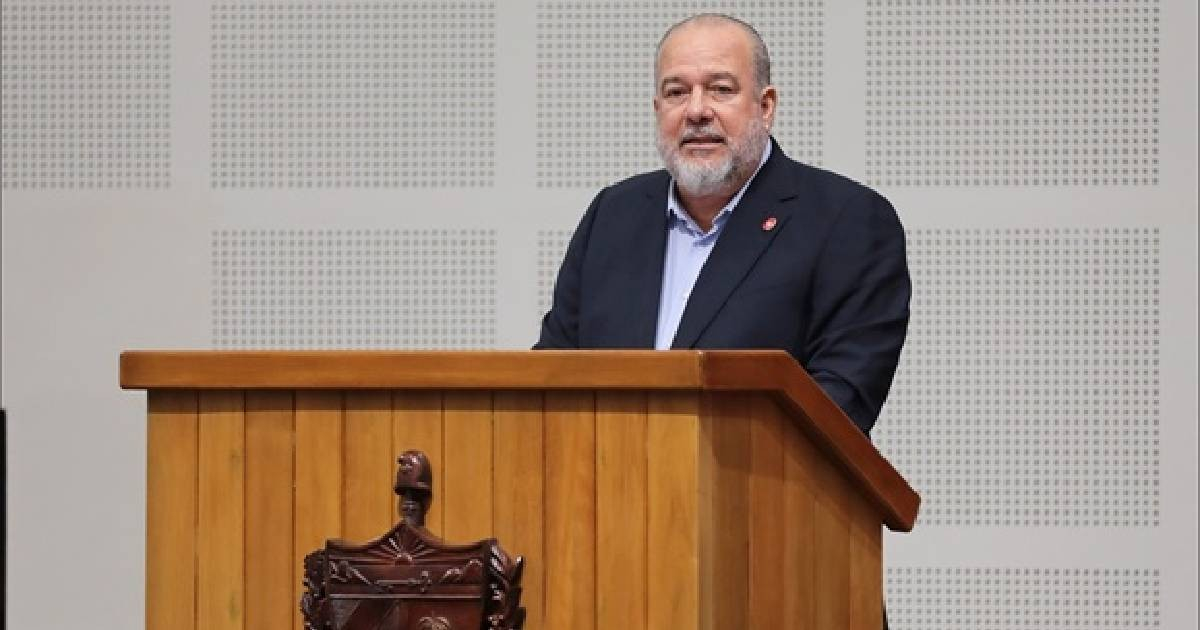
This Wednesday, Prime Minister Manuel Marrero Cruz revealed to the National Assembly of People's Power that over 92,000 positions across four ministries will be cut as part of a comprehensive reorganization of the Cuban state, as reported by the official outlet Cubadebate.
The ministries affected include Public Health, Education, Culture, and Sports, with the reductions primarily targeting vacant administrative positions, according to the regime. Remaining state agencies are expected to finalize their own resizing processes by September.
This announcement is part of the largest package of economic reforms the regime has introduced in decades: 176 transformations were approved during a special session of the National Assembly on June 18, 2026, endorsed by Raúl Castro and the Communist Party's Central Committee.
Marrero stated that out of the 121 transformations planned for June and July, 110 had already been approved, accounting for 90.9% of the planned total, while five others were partially underway.
Goals of the Reorganization Effort
The stated aim of the restructuring is to separate state functions from business operations, streamline structures, and achieve more efficient government management. The regime has not specified how many of these 92,000 positions are currently filled versus those that are already vacant.
This initiative is part of a broader plan to reduce the number of ministries from 27 to between 20 and 21 through mergers and the creation of super-ministries, announced back in April 2026.
Additional Reform Measures
Simultaneously, Marrero introduced other reform measures. He highlighted the approval of a decree law granting greater autonomy to state enterprises to set their own salary systems, define prices and tariffs, and make decisions regarding their employees' labor relations. The prime minister described this as "the most significant transformation in work organization and salaries implemented in recent years."
Furthermore, Marrero noted that Cuba has surpassed 15,000 authorized SMEs and non-agricultural cooperatives, following the approval of all pending applications. Additionally, Decree 160, which removes 46 prohibitions and modifies 36 others for the non-state sector, came into effect this Tuesday.
Challenges and Acknowledgments
In terms of territorial matters, the regime assigned excess revenues obtained in 2025 to 111 municipalities for their local development strategies.
However, Marrero acknowledged to deputies that "prolonged blackouts remain one of the country's main challenges," a statement that contrasts with the otherwise triumphant tone of his speech. Cuba is enduring a severe energy crisis, with electricity outages lasting up to 18 to 25 hours a day in some areas, alongside widespread shortages of food and fuel.
Energy and Economic Impacts
The prime minister attributed some of these difficulties to the tightening of U.S. sanctions, which the regime claims have affected sectors like energy, food production, tourism, and foreign trade, without acknowledging the role of 67 years of centralized management in the island's structural crisis.
According to official sources, 1,464 MW of renewable energy sources have been installed, equivalent to 13.8% of national electricity generation, and 4,292 photovoltaic systems have been placed in vital centers and homes. The parliament session on Wednesday also included the approval of the Labor Code, the Housing Law, and the Central State Administration Organization Law, among other key regulations to support the reforms.
Understanding Cuba's Government Restructuring
Why is Cuba reducing its ministerial positions?
The reduction is part of a broader effort to reorganize the state, streamline structures, separate state and business functions, and achieve more efficient governmental management.
Which ministries are affected by the job cuts?
The ministries affected by the job cuts include Public Health, Education, Culture, and Sports, focusing primarily on vacant administrative roles.
What are the main challenges facing Cuba according to Marrero?
Marrero acknowledged that prolonged blackouts and a severe energy crisis are significant challenges, alongside widespread shortages of food and fuel.