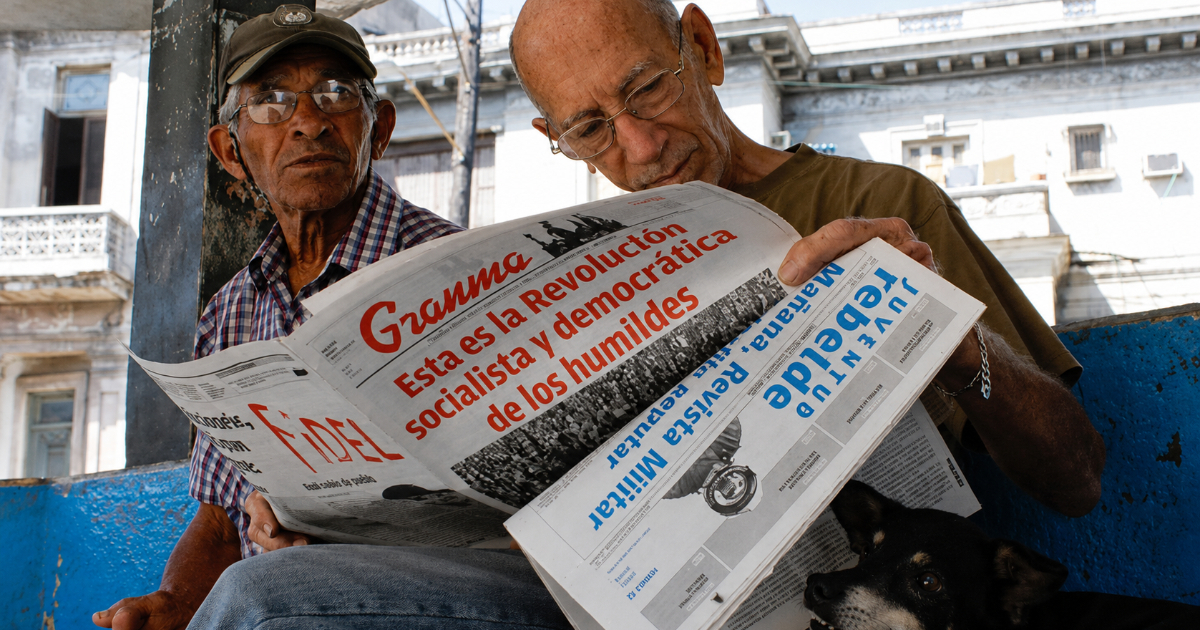
This week, the Cuban government's new Decree 160 was published in the Official Gazette, highlighting the regime's willingness to partially open up the economy while maintaining a tight grip on information control.
Although the new regulation eases restrictions on numerous economic activities, it explicitly keeps journalism, media, and news dissemination under state monopoly.
Economic Reforms Amidst Tightened Media Control
The contrast is stark. The reform package, introduced by Prime Minister Manuel Marrero Cruz in June, signaled unprecedented changes—such as expanding the private sector, allowing private banking, increasing foreign investment, and introducing new investment methods—in an effort to mitigate Cuba's worst economic crisis in decades.
Nonetheless, when it comes to the flow of information, censorship, manipulation, and restrictions remain firmly in place.
No Space for Independent Media
Decree 160 explicitly prohibits non-state economic actors from publishing newspapers, magazines, editorials, and publishing labels.
Agencies and news services are also banned, as public information is deemed "reserved by its nature."
The state retains control over radio and television broadcasts, as well as many telecommunications services linked to content dissemination. While certain technical services or audiovisual productions are permitted under specific regulations, the creation of independent media outlets is not acknowledged.
One of the decree's most striking elements is Article 67 of the Sole Annex, which clearly states: Journalism remains an activity the Cuban state does not recognize as an independent professional practice within the legal economic framework.
Economic Changes Without Political Freedom
The persistence of these prohibitions underscores that the government's announced reforms focus on the economic sphere, while political control over information remains unchanged.
Decree 160 not only reserves journalistic activity for the state but also radio, television, news agencies, and the publication of newspapers and magazines, consolidating the Communist Party of Cuba's monopoly and control over key public information channels.
In practice, this means any independent journalistic endeavor continues to operate outside the Cuban legal framework, without the opportunity to establish as a private business, cooperative, or microenterprise.
Press Freedom: An Unresolved Issue
Press freedom is recognized by various international human rights instruments as a fundamental element of a democratic society.
This freedom encompasses the ability to establish media outlets, investigate, publish information, and express opinions without undue interference from public authorities.
The new decree illustrates that despite economic reforms, the Cuban state reserves the institutional exercise of information for itself and continues not to legally recognize a space for private or independent media.
This decision also has implications for other closely related freedoms, such as freedom of expression, thought, and academic freedom, which rely heavily on an environment where ideas, research, and information can circulate freely.
As Decree 160 takes effect on August 4, the Cuban regime aims to modernize part of its deteriorating economic framework while preserving a fundamental pillar of its historical totalitarian political model: state monopoly over information and the lack of legal acknowledgment for independent journalism.
Understanding Cuba's Media Landscape Under Decree 160
What is the main purpose of Cuba's Decree 160?
Decree 160 aims to maintain the Cuban government's monopoly over media and information dissemination, prohibiting independent journalism while allowing certain economic reforms.
How does Decree 160 affect independent journalism in Cuba?
The decree bans non-state actors from publishing newspapers and other media, effectively preventing the establishment of independent journalism within the legal framework of Cuba.
What is the impact of Decree 160 on press freedom?
Press freedom is severely restricted under Decree 160, as the state retains control over all major forms of media and prohibits the creation of independent media outlets.