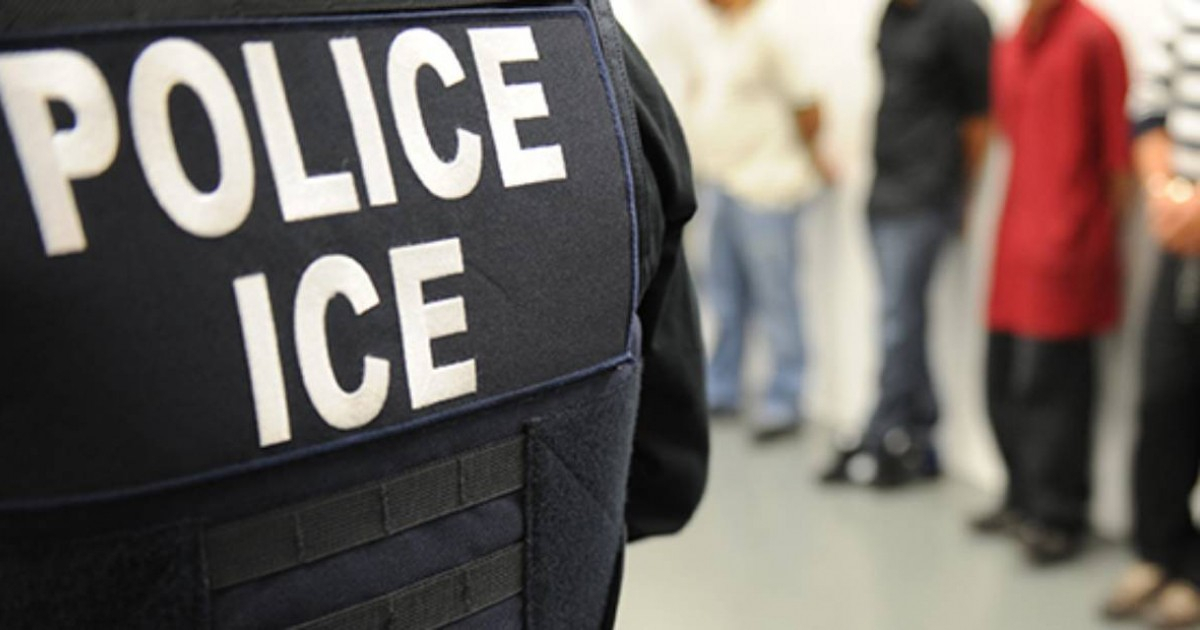
Undercover agents from the U.S. Immigration and Customs Enforcement (ICE) have been detaining individuals with expired visas at airport check-in counters and boarding gates across the country. This information comes from a New York Times investigation, which utilized documents from the Department of Homeland Security (DHS) and interviews with attorneys representing over 25 detainees.
These operations have occurred in at least 15 airports over recent weeks, targeting individuals from more than a dozen nations. Among those arrested are spouses of U.S. citizens and technology sector workers.
This approach marks a broadening of the collaboration agreement between the Transportation Security Administration (TSA) and ICE, which initiated the deployment of 50 agents per shift in 14 airports since March, with its scope formalized on May 5.
The Shift in Immigration Enforcement Tactics
Initially, the program focused on individuals with final deportation orders. Now, it also includes those with expired visas, potentially affecting hundreds of thousands who were not previously prioritized for deportation unless they had criminal records.
The DHS defended these operations, stating, "This Administration is working diligently to ensure undocumented foreigners can no longer fly unless it's to voluntarily depart the country."
Notable Cases Highlight the Impact
One of the most publicized incidents involves Chantal Morales Rojas, a 27-year-old Ecuadorian detained on July 20 at Denver International Airport while attempting to travel to Oakland, California. Morales entered legally in 2023 on an exchange visa and applied to remain in the U.S. before her visa's expiration on January 4, 2025. Her boarding pass scan triggered an alert, leading to her detention by two plainclothes agents. This incident was recorded and widely shared on social media, resulting in a $3,000 bail set by a judge.
Another significant case is that of Iryna Gorb, a Ukrainian citizen with over a decade of residence in California. She was arrested at San Francisco International Airport upon returning from a domestic trip to Portland. Richmond councilwoman Doria Robinson captured the moment as agents detained Gorb, who was shouting for help and identifying herself as Ukrainian. The DHS stated her visa expired in May 2011, and she had lived illegally in the U.S. for 15 years; she remains in ICE custody.
The detained also include a Ugandan woman in a wheelchair with a pending asylum application who suffers from sickle cell anemia, as reported by her lawyer to the New York Times.
Broader Implications of Trump's Immigration Policies
Charles Kuck, an immigration attorney, expressed his shock to the New York Times, stating, "In 38 years of practicing immigration law, I've never seen anything like this, and it's happening to many people." Kuck represents an Indian engineer detained at an airport while awaiting the renewal of his work permit.
These airport arrests are part of a larger escalation in immigration policy under the Trump administration, which reached a record number of detentions in June 2026, with 39,563 individuals detained in a single month. The administration aims for 2,000 daily arrests, nearly double the figures from earlier in the year.
The Cuban community has felt the impact acutely, with ICE arrests of Cubans increasing by 463% between late 2024 and early 2026. Over 42,000 Cubans face pending final deportation orders.
Economic repercussions have also been noted: Studies by the University of Pennsylvania, Brookings, and the University of California at Irvine estimate that ICE raids have resulted in up to $14 billion in lost consumption and the loss of 668,000 jobs in metropolitan areas across the country.
Frequently Asked Questions About ICE Airport Arrests
What is the new focus of ICE's airport operations?
The new focus includes individuals with expired visas, expanding from the original target of those with final deportation orders.
How has the Cuban community been affected by these operations?
The Cuban community has seen a dramatic increase in arrests, with a 463% rise in ICE detentions of Cubans between late 2024 and early 2026.
What economic impact have ICE raids had in the U.S.?
ICE raids have led to significant economic losses, estimated at up to $14 billion in reduced consumption and the loss of 668,000 jobs in metropolitan areas.