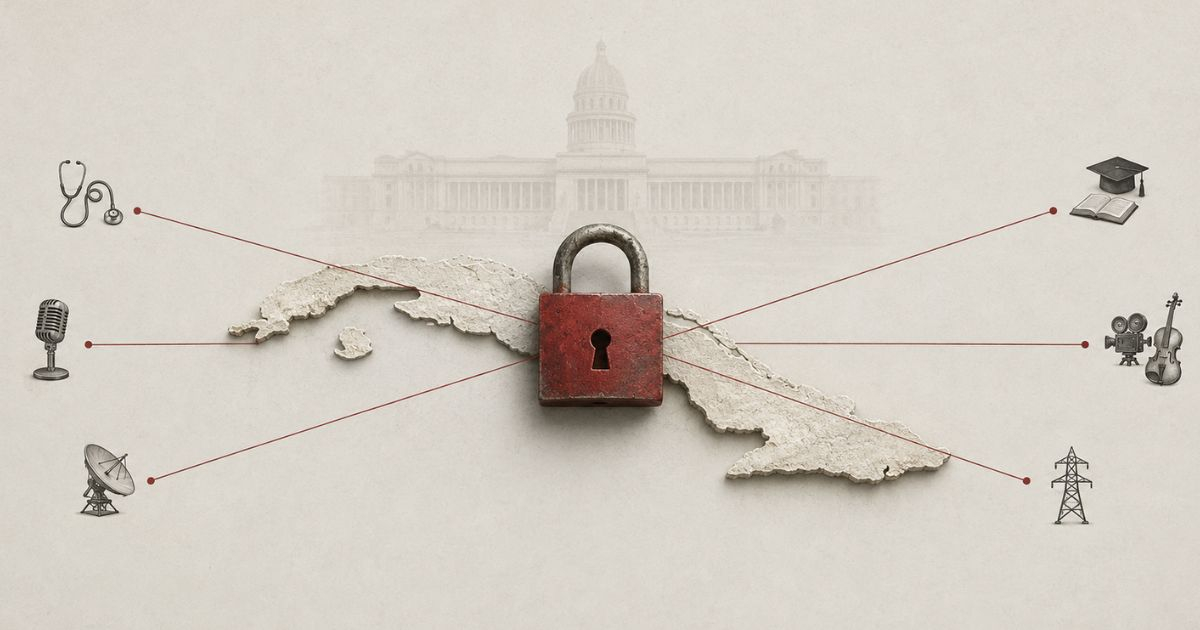
The Cuban government unveiled Decree 160 in the Official Gazette this Tuesday, a regulation that reshapes the landscape for private businesses, small and medium enterprises (SMEs), non-agricultural cooperatives, and self-employed individuals on the island. This decree outlines 79 activities that are either regulated, prohibited, or restricted for the non-state sector.
Signed by Prime Minister Manuel Marrero Cruz and published in the Official Gazette No. 62 Ordinaria on July 28, this decree will become effective on August 4, 2026. It replaces Decree 107 from August 2024, which previously listed 125 banned activities.
New Restrictions: Categories Defined
The new regulation introduces four distinct categories of restriction: absolute prohibition, activities reserved for the state, activities barred only to the self-employed, and activities that require authorization or are conditionally permitted.
The decree justifies these updates by emphasizing the need for economic transformations that demand a "differentiated regulation by type of economic actor, clearly distinguishing between unauthorized, conditional, or permissible activities."
Key Sectors and Activities Under Control
The agriculture, mining, and manufacturing sectors are among those heavily impacted. For instance, commercial hunting requires environmental authorization, while fishing for protected species is completely banned unless otherwise permitted by law.
In mining, the extraction of crude oil and natural gas is conditionally allowed, subject to state approval, while large-scale mining remains a state monopoly. The manufacturing of products like tobacco and pharmaceuticals is also tightly controlled, with many activities reserved exclusively for the state.
Impact on Information and Communication
The decree severely limits non-state actors' involvement in media and telecommunications. Activities like newspaper publishing and radio broadcasting are restricted to state-run entities. However, private enterprises may engage in audiovisual production under specific conditions.
Financial Services and Professional Activities
Financial services, including insurance and pension funds, remain off-limits for non-state actors. Certain professional services, such as veterinary care and renewable energy engineering, can be offered by private entities but require professional accreditation.
Administrative Oversight and Revisions
The decree mandates that non-state actors renting properties to foreign residents report the tenants' information to the Ministry of the Interior. Furthermore, the Council of Ministers is tasked with reviewing the regulation biennially, with recommendations from the National Institute of Non-State Economic Actors.
Part of a broader set of 176 economic and social measures introduced by Marrero Cruz to the National Assembly on June 18, 2026, Decree 160 represents the most significant structural reform since the Special Period. This reform package also lifts the cap on the number of workers in SMEs and paves the way for private banking.
Understanding Cuba's Economic Regulations
What is the purpose of Decree 160 in Cuba?
Decree 160 aims to redefine and regulate the activities that private businesses, SMEs, cooperatives, and self-employed individuals can undertake in Cuba. It establishes specific categories of restrictions, differentiating between activities that are prohibited, reserved for the state, or conditionally allowed.
How does Decree 160 affect private businesses in Cuba?
The decree imposes strict regulations on 79 activities across various sectors, limiting the scope of operations for private businesses. It outlines activities that require state permission, are reserved for state entities, or are entirely prohibited, thereby restricting the growth and autonomy of private enterprises.