The Cuban Ministry of Tourism (MINTUR) has responded to reports about the withdrawal of major international hotel chains from the island.
Speaking from Buenos Aires to the official news agency Prensa Latina, José Antonio Aguilera, MINTUR's advisor for the Southern Cone, stated that the establishments previously managed by these chains are still open under Cuban management.
Aguilera aimed to reassure travel operators and agencies in the Southern Cone, who have recently expressed concern over the hotel industry's retreat.
"Hotels on the island remain open, and the destination continues to operate normally," Aguilera emphasized.
The official added, "Our hotel infrastructure is fully operational, and there is no impact on travelers."
The Shift in Hotel Management
Addressing Cuba's capacity to independently manage these facilities, Aguilera noted that years of collaboration with international groups have provided a valuable technical legacy.
"Cuba has gained the necessary 'know-how' to maintain the service standards and quality that define our destination. The hotels continue to operate under national brands, with no disruption in service," he said, downplaying the departure of Spanish hotel chains.
Aguilera also highlighted Cuba's tradition of hospitality as a selling point.
"Cuba continues to welcome visitors with the warmth, care, and safety that have always distinguished us. This commitment remains unchanged," he remarked.
Outlook for Argentine Tourism
For the Argentine market, which is the main source of tourists from the Southern Cone to Cuba, Aguilera's message was clear:
"The destination remains open and operational, with a commitment to further strengthen commercial ties with agencies, tour operators, and airlines in the region."
Looking ahead, Aguilera expressed optimism about the sector's future:
"We are confident that new opportunities will draw other international operators interested in participating in the development of Cuban tourism. We will ensure the continuation of services and keep enhancing their quality, with Cuba remaining a key tourism player in the Caribbean."
The Exodus Downplayed by the Regime
These statements were made shortly after Meliá Hotels International completed its full withdrawal from the 34 hotels it managed in Cuba on July 24, ending a 36-year presence.
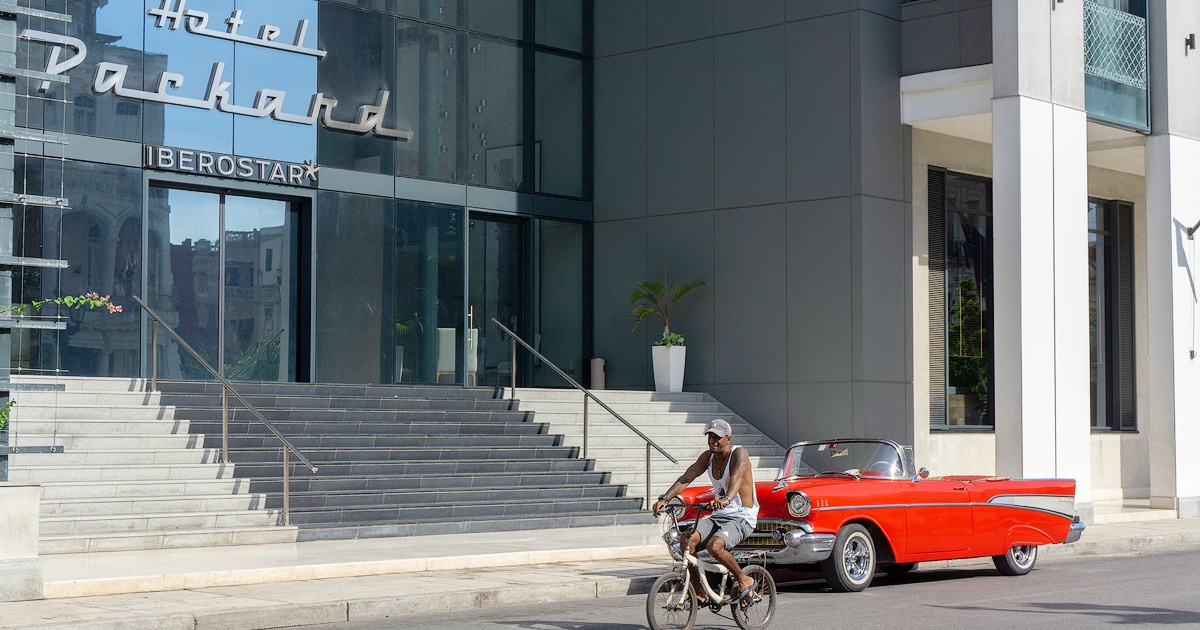
Following Meliá's exit, Iberostar, Barceló, and Canadian company Blue Diamond Resorts also pulled out, collectively controlling about 35% of the country's available accommodations.
What Aguilera describes as an orderly transition is actually the largest international hotel withdrawal Cuba has seen in decades.
The trigger was an Executive Order signed by Donald Trump on May 1, 2026, designating GAESA—the military conglomerate controlling much of Cuba's tourism—as a sanctioned entity.
On July 13, Washington expanded these sanctions to include MINTUR and nine other state entities.
Iberostar confirmed on July 21 that it no longer managed any establishments in Cuba, and Barceló followed suit with its two hotels in Varadero.
Blue Diamond Resorts had announced its cessation on May 31, impacting 62 hotels and over 12,900 rooms.
On Monday, the removal of the Meliá sign from the facade of Havana's Hotel Cohiba became a visual symbol of the end of an era.
Optimism Versus Reality
The official optimism clashes with the sector's own figures.
In 2025, Cuba received only 1.81 million international visitors, the lowest since 2002 and less than half of the 2018 record of 4.7 million.
Hotel occupancy fell to 12.9% in the first quarter of 2026. Between January and May 2026, only 359,491 tourists arrived, marking a 58.4% year-on-year decline.
The regime blames the crisis on the U.S. embargo, but Cuba's tourism slump predates the 2026 sanctions and is a result of decades of structural economic decline.
A New Hotel Landscape Emerging
As a sign of openness to new investors, Aguilera highlighted a recent agreement with the Italian chain Domina—founded in 2000, with over 40 properties in Europe and Africa—to manage several hotels on the island, including one in Varadero and two in Havana.
Experts predict that the void left by the Spanish chains might attract major U.S. hotel corporations such as Marriott, Hilton, Hyatt, or Wyndham, should there be a political shift in Cuba.
Understanding Cuba's Tourism Shift
Why did major hotel chains withdraw from Cuba?
Major hotel chains like Meliá, Iberostar, and Barceló withdrew due to sanctions imposed by the U.S. government on Cuban entities involved in the tourism sector, including GAESA and MINTUR.
How is Cuba managing its hotels after the withdrawal?
Cuba claims it has acquired the necessary expertise to manage the hotels independently, maintaining service standards and quality under national brands.
What impact has the withdrawal had on Cuba's tourism?
The withdrawal has significantly impacted Cuba's tourism industry, with a sharp decline in visitor numbers and hotel occupancy rates.
Are there new opportunities for international hotel chains in Cuba?
Yes, there are new opportunities, as seen with the recent agreement with Italian chain Domina. Experts believe U.S. hotel giants might enter the market if there's a political change in Cuba.