This Wednesday, the United States Senate took a significant step towards approving a bipartisan bill that aims to impose tariffs as high as 100% on major buyers of Russian oil and gas. The legislation also seeks to expand sanctions against both Russia and Iran.
While Wednesday's vote was procedural, the bipartisan support — boasting over 60 co-sponsors — suggests that the bill is likely to pass the final Senate vote by the end of the week, as reported by ABC News.
Following Senate approval, the House of Representatives, which is on break until August 31, must also pass the bill. Only then can it be sent to President Donald Trump for his signature to become law.
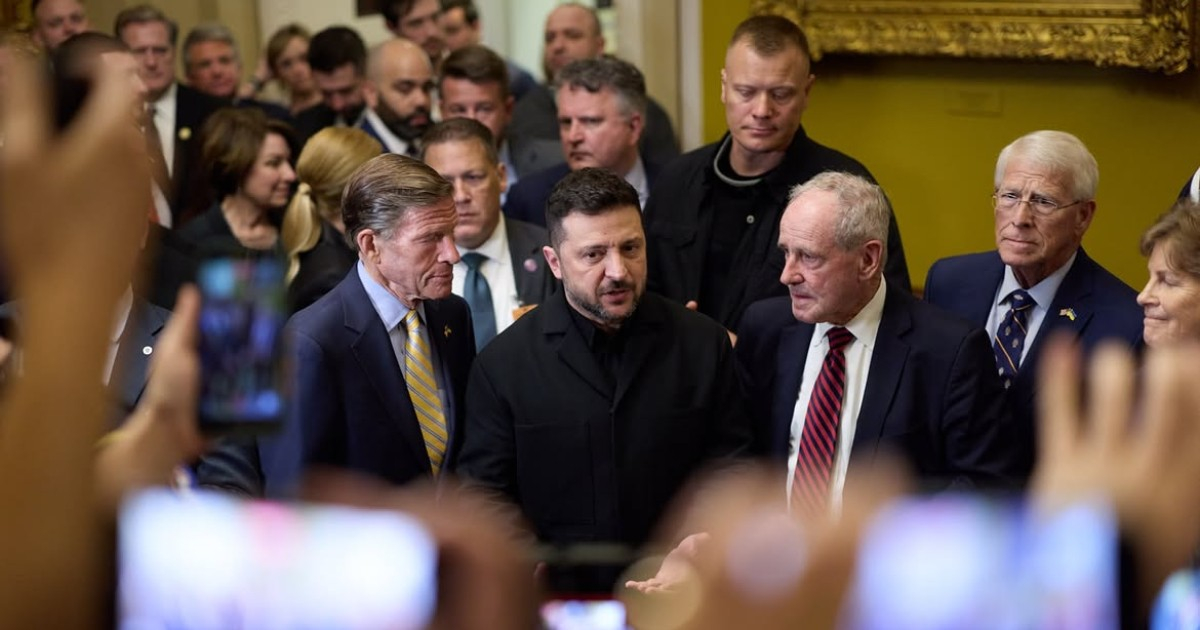
Ukrainian President Volodymyr Zelensky witnessed the vote from the Senate floor, having traveled to Washington, D.C., to attend the funeral of Senator Lindsay Graham at the National Cathedral on Tuesday. On the same day, Zelensky met with Trump at the White House as the ongoing war in Ukraine remains unresolved.
"We are grateful to the senators and appreciate this discussion. We thank them for creating a significant sanctions pressure on Russia. This isn't just about the money and how to stop funding this war; it's a substantial signal to Europe and Ukraine, providing great support to our people," Zelensky stated after meeting lawmakers at the Capitol.
The legislation targets Russia with both primary and secondary sanctions, focusing on political figures, oligarchs, banks, financial institutions, and the so-called "ghost fleet" that Moscow employs to circumvent energy restrictions.
Additionally, the bill empowers the president to impose tariffs of up to 100% on the five largest importers of Russian crude oil, the five biggest buyers of Russian natural gas, and the five leading countries aiding in evading energy sanctions.
China, as the largest importer of both commodities, stands to be the most affected by these measures.
The proposal also extends sanctions on Iran — originally set to expire this year — until 2031, limiting funding for its energy and arms sectors. A White House official confirmed that the initiative aligns with President Trump's call to include sanctions against the Iranian regime, explaining the executive backing for a law primarily driven by Congress.
This development occurs amid a notable shift in Trump's stance towards Russia. Since resuming office in January 2025, the president has significantly reduced support for Ukraine, sought diplomatic rapprochement with Putin, and described Congress's sanctions laws as "optional."
However, Trump has gradually toughened his position: in July 2025, he issued a 50-day ultimatum threatening 100% tariffs, and by October of that year, he sanctioned Rosneft and Lukoil, Russia's two largest oil companies.
Senator Graham, a staunch Republican supporter of Ukraine, passed away on July 11, 2026, at the age of 71 due to an aortic dissection, just days after returning from Kiev, where he had met with Zelensky. In his final days, he was actively negotiating the sanctions package with the White House.
"There is no better way to honor Senator Graham's legacy than to advance this bipartisan agreement," wrote Senators Richard Blumenthal, Darline Graham, Katie Britt, Jeanne Shaheen, Jim Risch, and Roger Wicker in a joint statement. They added that the bill aims to "halt those purchasing Russian oil and gas from funding Putin's war machine and continue to restrict the Iranian regime's ability to support terrorism and develop its nuclear program."
Frequently Asked Questions about U.S. Tariffs on Russian Energy Buyers
What is the purpose of the U.S. Senate's proposed tariffs on Russian energy buyers?
The proposed tariffs aim to impose financial pressure on major importers of Russian oil and gas, curbing funding for Russia's military efforts, while also sending a strong signal of support to Europe and Ukraine.
How does the bill affect sanctions on Iran?
The legislation extends existing sanctions on Iran, which were set to expire, until 2031, aiming to restrict the financing of its energy and arms sectors.
Why is China expected to be most affected by the proposed tariffs?
China is anticipated to be most impacted because it is the largest importer of both Russian oil and natural gas, making it a primary target for these tariffs.