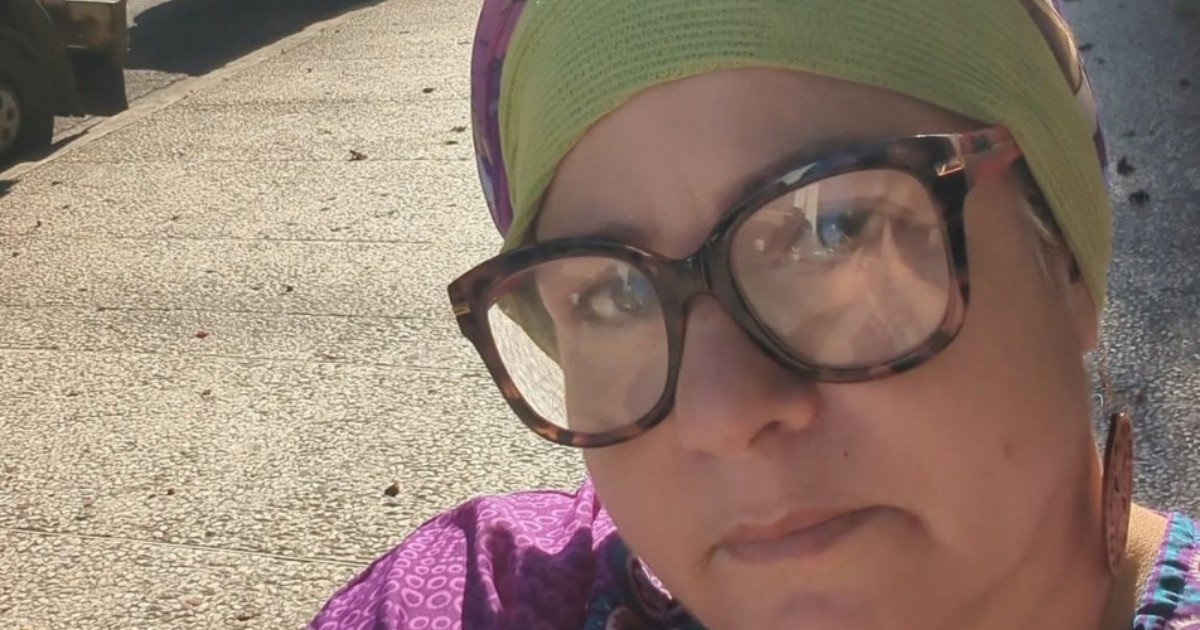
Cuban broadcaster and presenter Laritza Camacho took to Facebook this Tuesday with a direct demand aimed at the regime's officials: to abandon their political facades and fulfill their genuine responsibilities.
"It's essential for them to drop the act and the disguises. It's crucial for officials to actually function," she stated in her post, which is gaining traction on social media.
Her message cleverly revisits the "disguise" metaphor that shook Cuba a year ago, turning it on its head: while in July 2025, the government tried to paint the impoverished as impostors, Camacho now points out that it's the officials themselves who are in disguise.
"I was reflecting on the issue of disguises in Cuba. We've proven that the vulnerable aren't in disguise, but what about the officials?" the presenter wrote, drawing a direct line to the earlier controversy.
The origin of that scandal was then-Minister of Labor and Social Security, Marta Elena Feitó Cabrera, who claimed before the National Assembly that in Cuba "there are no beggars, just people disguised as beggars," suggesting that those cleaning windshields or scavenging through trash led an "easy" life.
The public response was one of widespread outrage. President Díaz-Canel had to step in on July 15, 2025, to address the "insensitivity in approaching vulnerability," and Feitó resigned the following day amid mounting pressure.
Following the scandal, the Cuban government acknowledged over 310,000 people living in poverty or social vulnerability, a stark contrast to 2024 data, which reported 189,000 families and 350,000 individuals in vulnerable conditions within a population of 9.7 million.
Camacho's latest post is not an isolated incident. Throughout 2026, she has consistently maintained a critical stance against the regime from within the island.
On July 25, she criticized official measures as attempts to "entrench the regime in power and luxury," and on July 11, she openly declared herself "against the Cuban government," calling for resignations of those who implemented ineffective policies.
In June, she urged leaders to "fill the pots," clean up the trash, listen to the people, and grant amnesty to political prisoners. She also questioned how those who have "done everything wrong" could guarantee they would "do everything right."
Born in Havana in 1967, Camacho is a well-known voice from the program Mediodía en TV and Radio Ciudad de La Habana.
Once associated with state media, her voice has become one of the most forthright within the island, holding the regime accountable for the ongoing crisis affecting its citizens.
"If they can't solve the problem, they need to step aside," she warned on July 11. Her message this Tuesday is a logical continuation of that demand: that officials stop pretending and start, at last, to function.
Understanding Laritza Camacho's Criticism of Cuban Officials
What did Laritza Camacho demand from Cuban officials?
Laritza Camacho demanded that Cuban officials drop their political facades and fulfill their genuine responsibilities, criticizing them for not effectively addressing the country's issues.
How did the Cuban government respond to the 2025 scandal involving Marta Elena Feitó Cabrera?
Following the scandal, the Cuban government acknowledged over 310,000 people living in poverty or social vulnerability, a significant increase from previous reports, and Marta Elena Feitó Cabrera resigned amid public outrage.