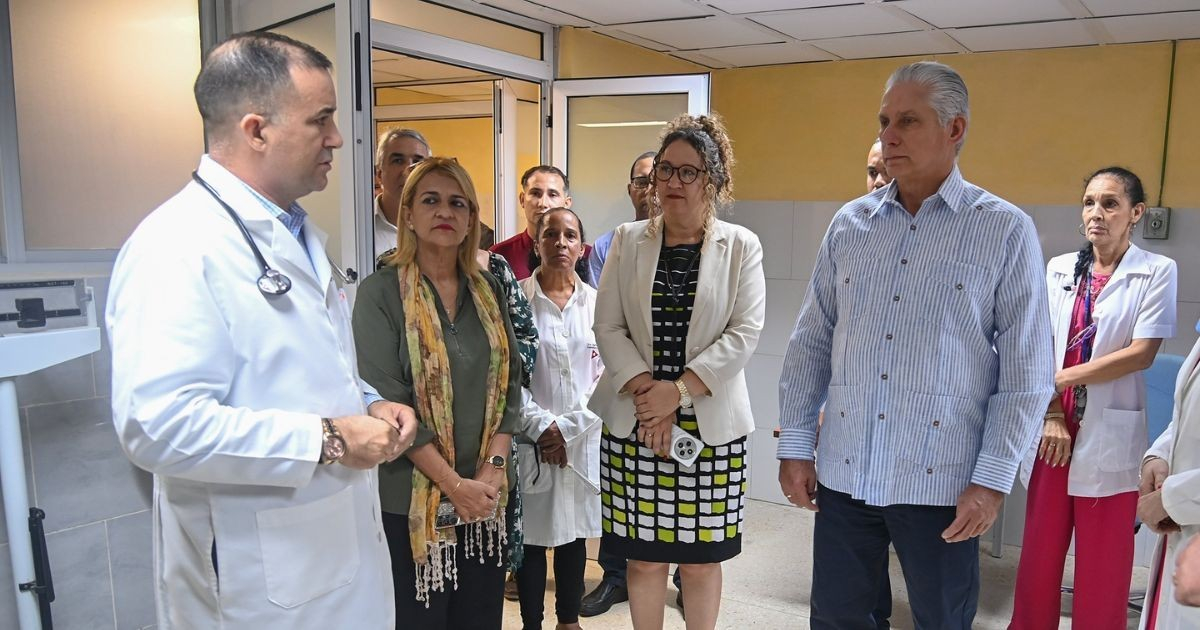
This Tuesday, the Cuban regime unveiled Resolution 17/2026 in the Official Gazette, issued by the Ministry of Labor and Social Security. This new directive outlines the revised wage structure for the employees of the National Health System, effective from July 1, 2026, with payments commencing in August.
The resolution, released as a corrected version of the ordinary edition from July 17—acknowledged by the Gazette itself for containing inaccurate data—sets the base salaries for doctors, dentists, nurses, and health technicians based on a complexity group system comprising 32 levels.
A second-degree specialist doctor is placed in Group XXII, earning 8,880 Cuban pesos (CUP) monthly for a 44-hour workweek. Newly graduated or non-specialized doctors fall into Group XVII, receiving 7,045 CUP per month. Specialist nurses also fall into Group XVII (7,045 CUP), while basic nurses start at Group IX with 4,755 CUP.
Aside from the base salary, the resolution continues to offer additional pay for night shifts, defined as work done between 7 PM and 7 AM: 50 CUP per hour for doctors and dentists, 40 CUP for nursing staff, and 30 CUP for technologists, other graduates, and health technicians.
For four highly complex specialties—Anesthesiology and Resuscitation, Neonatology, Pediatric Intensive Care, and Adult Intensive Care—the night rate rises to 100 CUP per hour, with an extra 20 CUP for high performance. The regulation also acknowledges 50 CUP per hour for weekend daylight hours for doctors and dentists.
Additional compensation for years of service remains for doctors, dentists, nurses, psychologists, technologists, and health technicians, though the resolution does not specify the exact amounts in the published text.
This measure is part of a broader package of 176 economic and social reforms approved by the National Assembly on June 18 and 19, 2026. The Cuban government touts it as a budgetary effort of 42.5 billion CUP, benefiting over a million workers in the budgeted sector, with Health and Education accounting for approximately 70% of those benefitting.
However, the true impact of the new salaries is questionable amid the island's economic crisis. At the informal exchange rate in July 2026, the 8,880 CUP for a second-degree specialist doctor translates to merely 13 to 16 dollars per month. Before the raise, Cuban doctors earned between 5,060 and 8,000 CUP, roughly 10 to 16 dollars.
The gap with the actual cost of living is vast: the basic basket for two people in Havana exceeds 41,000 CUP monthly, and independent economists estimate that meeting real basic needs requires up to 96,000 CUP per month, according to an analysis published this Tuesday.
This disparity has fueled the longstanding exodus of Cuban doctors and nurses, both abroad and towards the emerging private sector on the island. Resolution 17/2026 revokes all previous regulations governing the health sector's wage system, including Resolution 37 from November 2020 and its subsequent amendments up to 2025.
Understanding the New Wage Structure for Cuban Healthcare Workers
What are the new base salaries for healthcare workers in Cuba?
The new base salaries are set according to complexity groups. A second-degree specialist doctor earns 8,880 CUP monthly, while a newly graduated or non-specialized doctor receives 7,045 CUP. Specialist nurses also earn 7,045 CUP, and basic nurses start at 4,755 CUP.
Are there additional payments for night shifts in the Cuban health sector?
Yes, the resolution includes extra pay for night shifts. Doctors and dentists earn 50 CUP per hour, nurses receive 40 CUP, and technologists and other health technicians get 30 CUP. Highly complex specialties receive 100 CUP per hour plus an additional 20 CUP for high performance.
How does the new wage system impact the economic situation in Cuba?
Despite the wage increase, the salaries remain insufficient against the high cost of living in Cuba, with the basic basket for two people in Havana exceeding 41,000 CUP monthly. This has contributed to the ongoing exodus of healthcare professionals from the island.