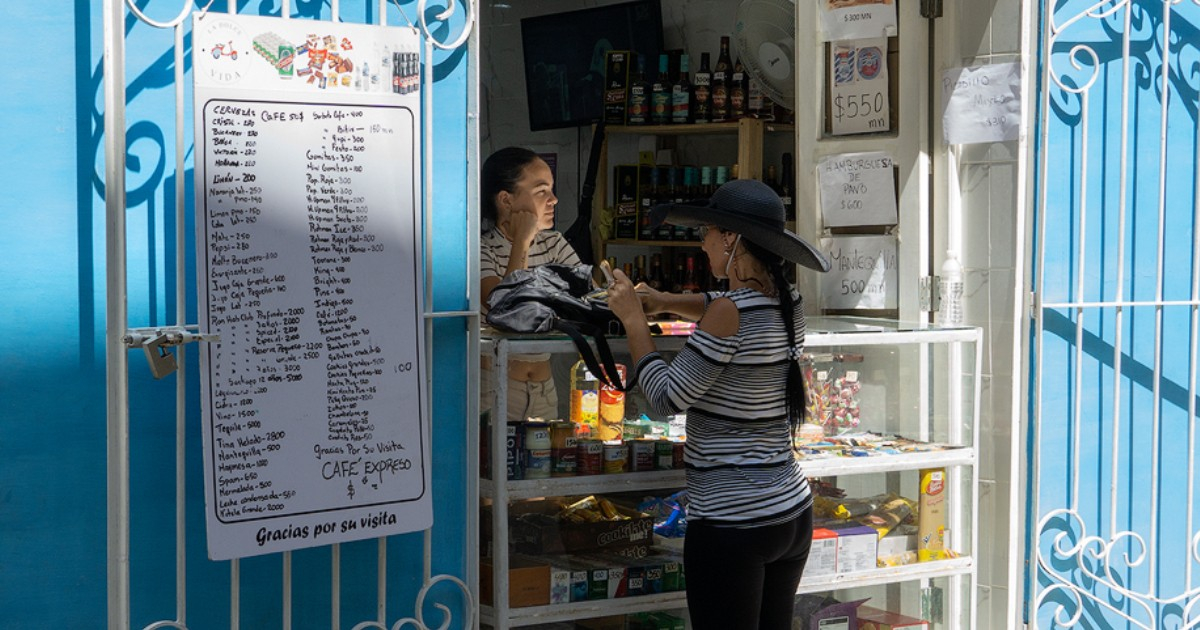
This Tuesday, the Cuban government unveiled Decree 160 in the Official Gazette, marking a significant overhaul of restrictions on the private sector. The decree replaces the previous uniform list of banned activities with a more nuanced regulation based on the type of economic actor, the most substantial reorganization since private micro, small and medium-sized enterprises (MSMEs) were legalized in 2021.
Signed by Prime Minister Manuel Marrero Cruz on July 22 and published in Ordinary Official Gazette No. 62, the new decree repeals Decree 107 from August 2024, which had imposed a list of 125 prohibited activities for private MSMEs, non-agricultural cooperatives, and self-employed workers.
With Decree 160, prohibitions on 46 activities have been completely lifted, and 35 others have been modified, leaving 124 restrictions out of more than 2,000 possible activities listed in the National Classification of Economic Activities.
Categories of Restrictions Introduced
A key feature of Decree 160 is the introduction of four distinct categories of restrictions, moving away from a one-size-fits-all prohibition for all non-state actors.
The official document explains the rationale behind this change: "The approved Economic and Social Transformations necessitate replacing the uniform list with differentiated regulations by type of economic actor, clearly distinguishing between unauthorized, conditional, or permissible activities."
The four categories are: absolute prohibition for activities posing unmanageable risks; activities reserved for the state due to sovereign functions or critical infrastructure; activities banned only for self-employed workers but permissible for private companies and cooperatives; and activities that are conditionally authorized, requiring a license or certification.
Expanded Opportunities in Key Sectors
Among the activities that are now permitted or eased include pharmaceutical services, senior living facilities, wholesale trade, direct importation of mopeds and electric cars, renewable energy generation, and gas station operations.
Crude oil and natural gas extraction are now classified as activities that require administrative concessions, while fishing of protected or endangered species remains an absolute prohibition for the private sector.
Additional Provisions and Reforms
The decree also mandates non-state actors renting properties or spaces to individuals residing abroad to report the tenant's identification details and those of any companions to the Ministry of the Interior.
This regulation is part of a broader set of 176 economic and social measures announced by Marrero Cruz during the National Assembly on June 18, 2026, which also lifted the cap of 100 employees for MSMEs and allowed individuals to own multiple private enterprises.
In July, further reforms were approved, including the removal of the limit on hectares for usufruct and the suspension of the 5,000 pesos limit on transactions between economic actors, all part of the ongoing reform process.
Decree 160 will come into effect on August 4, 2026, a week after its publication, and the Council of Ministers is required to review it at least biennially upon recommendation from the National Institute of Non-State Economic Actors.
Despite these announcements, many Cubans remain deeply skeptical about the actual impact of these reforms, given the regime's history of unfulfilled promises amid a crisis characterized by prolonged power outages, fuel shortages, and rampant inflation.
Understanding Cuba's New Economic Reforms
What is the significance of Decree 160 for Cuba's private sector?
Decree 160 represents a major shift in regulatory policy for Cuba's private sector by introducing differentiated regulations based on the type of economic actor, rather than a single list of prohibited activities.
How does Decree 160 change the previous regulations?
The decree eliminates prohibitions on 46 activities, modifies 35, and introduces four categories of restrictions, thus providing more specific guidelines for different types of non-state actors.
What challenges do Cubans face despite these reforms?
Cubans remain skeptical about the effectiveness of these reforms due to the government's history of unimplemented measures and ongoing issues like power outages, fuel shortages, and high inflation.