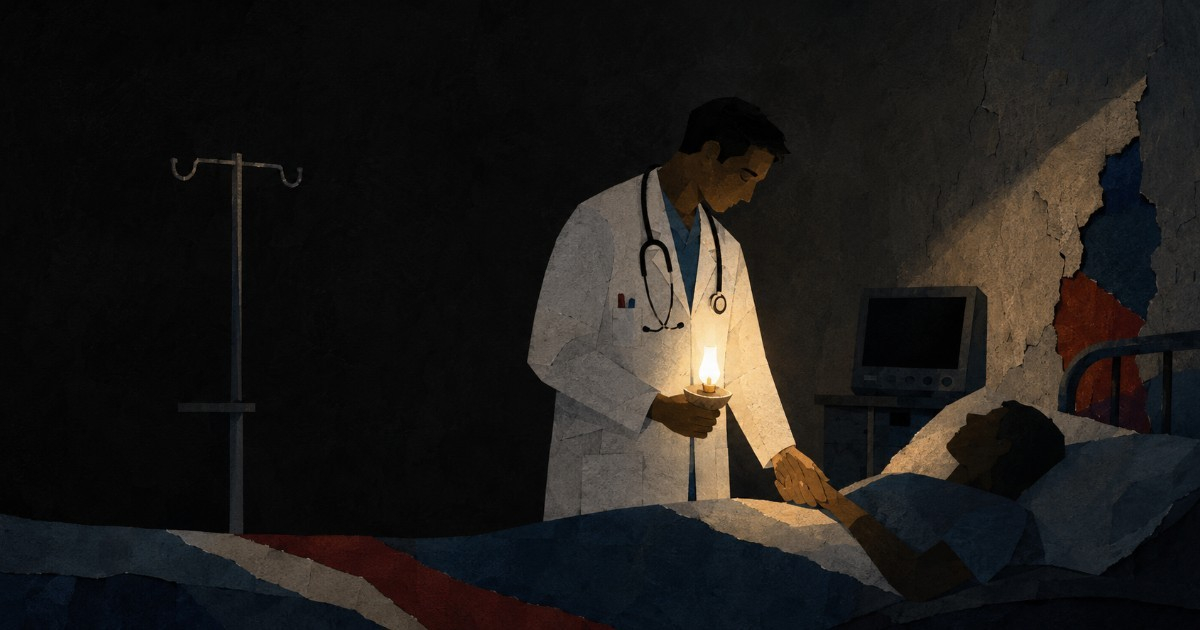
In recognition of World Hepatitis Day, the state-run media outlet Cubadebate released an article on Tuesday in which officials from the Ministry of Public Health (MINSAP) sought to reassure the public about outbreaks of the disease occurring in various parts of the country. They claimed that Cuba's situation is "not different from what happens in other parts of the world."
However, the article, sourced from the Cuban News Agency (ACN), crucially overlooks the root cause: the hepatitis outbreaks are directly linked to the water crisis and collapsing sanitation infrastructure on the island. Approximately 2.7 million Cubans lack regular access to potable water, and nearly 10 million experience intermittent supply.
Dr. Daniuska Hernández Griñán, a specialist in Hygiene and Epidemiology and head of the Digestive Transmission Diseases and Immunization Program at MINSAP, explained in the article that hepatitis A and E are transmitted through the digestive system, "often associated with poor sanitation and hygiene." She noted that prevention requires treating or boiling water and thoroughly washing fruits and vegetables before consumption.
This advice seems ironic in a country where power outages of up to 20 hours a day hinder both water pumping and chlorination. By mid-year, the hydraulic system was operating with only 37% of the necessary fuel.
Since January 2026, Cuba has experienced hepatitis A outbreaks in multiple provinces: Matanzas, Camagüey, Pinar del Río, Ciego de Ávila, Santiago de Cuba, and Havana.
Camagüey recorded 30 to 40 new cases daily in April, while in Matanzas, officials confirmed an active outbreak with 18 cases in the Versalles neighborhood and seven more in La Marina, Cárdenas.
The Reality Behind Official Statements
In June, official journalist Gisela García Rivero acknowledged that all provinces in the country had reported cases of hepatitis A. Despite this, Julio Guerra, Deputy Minister of Public Health, denied in May that Cuba was facing an epidemic, albeit admitting to the EFE agency that the health situation was "very complex."
The Cubadebate article notes that the World Health Organization estimates viral hepatitis causes approximately 1.3 million deaths worldwide annually, and the 2026 global campaign aims to eliminate viral hepatitis as a public health issue by 2030.
Yet, the official text fails to mention that as of April 2026, 461 of 651 essential medicines were missing nationwide—over 70% of the basic list—or that the main hospital in Villa Clara had been without water for more than 72 hours due to a pump system failure.
Cuban citizens themselves responded to the state article with stories that contradict the regime's reassuring tone: "Yesterday, I went to the clinic, and the doctor on duty was selling seasoning packets, the nurse was sitting at the entrance because she couldn't stand from fatigue, and the emergency room had no doors or electricity," wrote one user on Cubadebate's Facebook post.
Another comment captured the harsh reality: "Pharmacies now resemble museums like the bodegas. In short..."
Even Cubadebate, at the end of its article, admitted that Cuba "aspires not to decline in the indicators achieved despite the current challenging conditions," a statement that, when read alongside the reality described by Cubans, serves more as an unintended confession than a health guarantee.
Understanding Cuba's Health and Water Crisis
What is causing the hepatitis outbreaks in Cuba?
The hepatitis outbreaks in Cuba are primarily linked to the water crisis and inadequate sanitation on the island, affecting millions of Cubans' access to clean water.
How are power outages affecting Cuba's water supply?
Power outages, lasting up to 20 hours a day, disrupt both the pumping and chlorination processes necessary for providing safe water, exacerbating the water crisis.
What has been the government's response to the health crisis?
The government has downplayed the severity of the outbreak, with officials claiming the situation is similar to other global scenarios, despite evidence to the contrary.