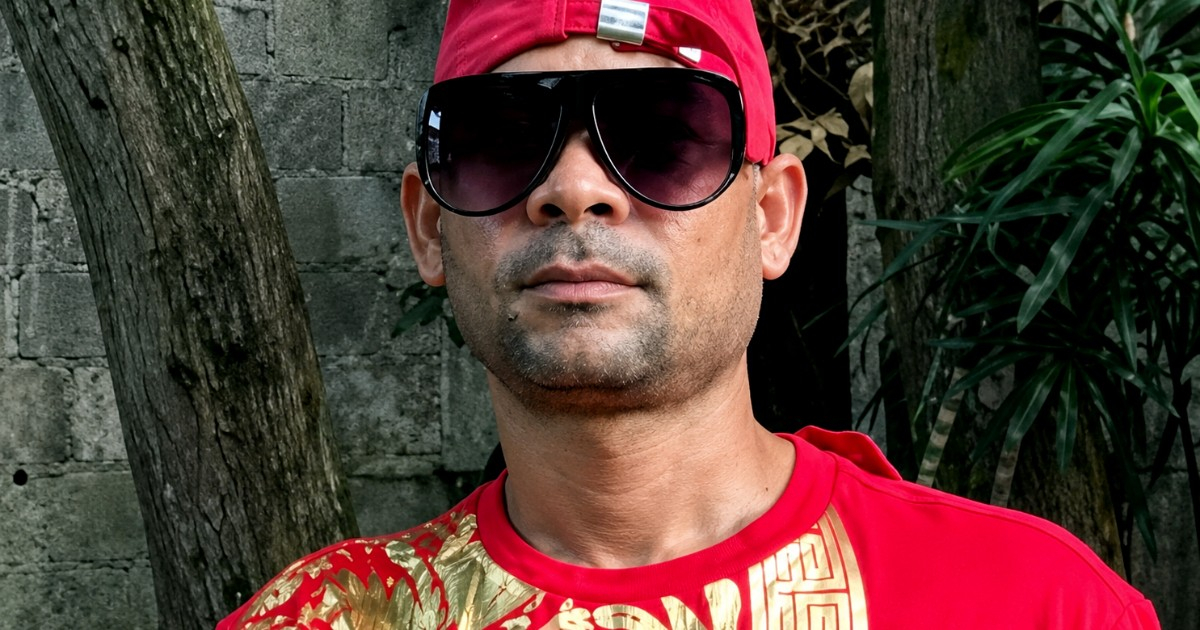
The family of Luis Guillermo Céspedes Fonseca, a 37-year-old man detained by the Revolutionary National Police (PNR) in Güines, Mayabeque province, is alleging that he died while in the custody of the Cuban government.
Activist Irma Lidia Broek shared the family's allegations on social media, crediting Yois Ramos, the victim's sister, who narrated the events from her perspective.
Allegations of Deliberate Harm
According to the account shared by the activist, the incident occurred on June 11 under circumstances the family describes as a "deliberate crime," which the authorities refuse to clarify.
The authorities informed the family that Luis Guillermo allegedly "hanged himself with a blanket" inside the cell. However, the family firmly rejects this explanation.
"My brother did not take his own life; he was beaten to death. An anonymous photograph we received reveals the violence inflicted on his body, and we don't even know the exact spot in the cemetery where he is buried," Ramos asserted.
Barriers to Family Grieving
The authorities not only refused to provide explanations but also barred the family from viewing the body or taking photographs.
Adding to the tragedy, the family, residing in Contramaestre, Santiago de Cuba, was given just 24 hours to travel to Güines, making it virtually impossible to arrive in time. Consequently, the burial occurred in solitude, denying a mother the chance to say goodbye to her son.
"A desperate mother's sacred human right to bid her son farewell was denied," wrote the deceased's sister.
Silence and Denial
Since June 11, Contramaestre authorities have maintained complete silence on the matter. The family is calling for a genuine and transparent investigation, warning that their outspokenness may endanger them in Cuba.
The pattern described by this family is not an isolated incident. Similar cases have emerged, such as Víctor Ángel Rodríguez Martí, who died in the Second PNR Unit in Santiago de Cuba in June 2025, and Manuel de Jesús Guillén Esplugas, a July 11 protester who died in the Combinado del Este on November 30, 2024. These cases share common elements: official suicide claims, family allegations of beatings, refusal to show the body, and institutional silence.
In Guillén Esplugas' case, the Secretary General of the OAS publicly condemned the death and held the Cuban State accountable for his custody.
Unreported Custodial Deaths
The human rights organization Cubalex recorded at least 30 custodial deaths in Cuba during the first half of 2026, including four political prisoners. They caution that this is likely an undercount due to the government's secrecy.
Between January 2022 and January 2024, the organization documented 56 deaths in custody in Cuba, with causes including denial of medical care, institutional violence, and suicides whose circumstances families consistently challenge.
"The incident occurred on June 11, and since then, Contramaestre authorities have remained completely silent. We demand a real and transparent investigation," Yois Ramos concluded in her statement.
Understanding Custodial Deaths in Cuba
What are the family's main allegations regarding Luis Guillermo Céspedes Fonseca's death?
The family alleges that Luis Guillermo Céspedes Fonseca was beaten to death while in police custody, contrary to the official claim of suicide by hanging.
How have the authorities responded to the family's claims?
Authorities have refused to provide explanations, barred the family from viewing the body, and have maintained silence since the incident.
What similar incidents have occurred in Cuba?
There have been other cases like Víctor Ángel Rodríguez Martí and Manuel de Jesús Guillén Esplugas, where the official narrative of suicide was contested by families who alleged foul play.