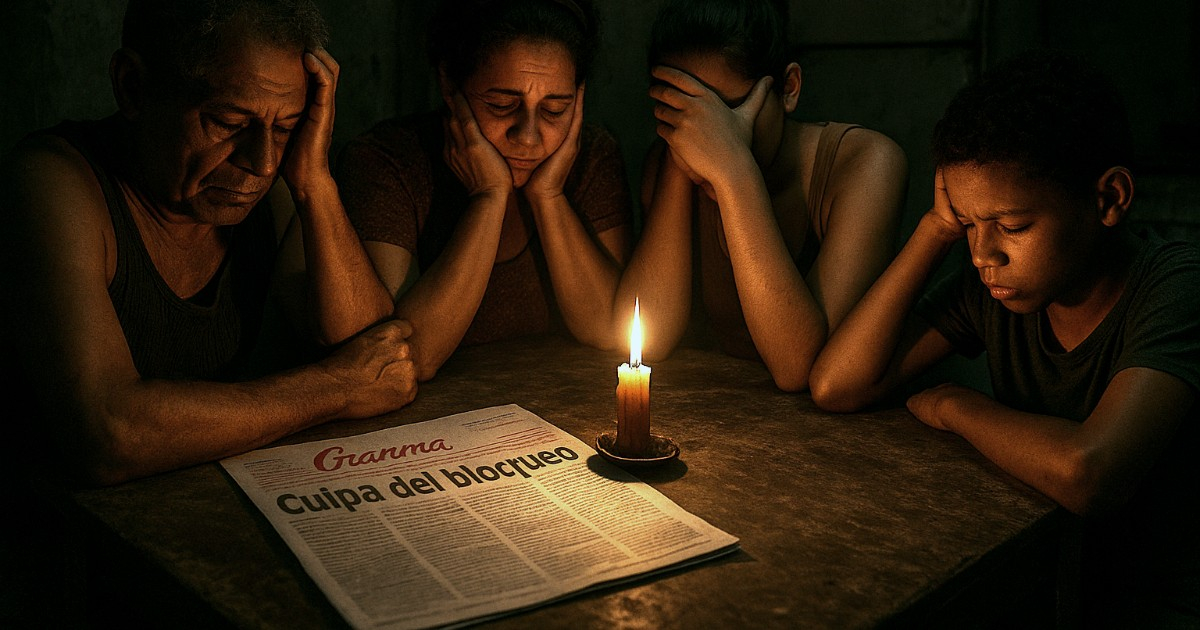
This Tuesday, Cuba is grappling with another round of extensive power outages, with an expected shortfall of 2,180 MW during peak nighttime demand, as reported by the official source, the Electric Union (UNE).
This power deficit will leave approximately 68% of the country without electricity at the same time.
By six in the morning, the National Electric System (SEN) was already experiencing a deficiency of 1,610 MW, with a mere 1,070 MW available against a demand of 2,650 MW.
By midday, the shortfall was projected to reach 1,500 MW, and conditions are set to worsen by nightfall when demand surges to 3,220 MW while availability remains stagnant at 1,070 MW.
On Monday, electricity service was disrupted for a full 24 hours without exception, including the early morning hours. The most significant outage occurred at 9:40 PM, affecting 2,066 MW.
Power Plant Operations and Maintenance
Several power-generating units are out of operation this Tuesday. The unit at the Antonio Guiteras Thermoelectric Plant, unit two at the Felton Plant, and unit three at the Renté Plant are facing breakdowns.
Meanwhile, maintenance work is underway for unit three at the Santa Cruz Plant, unit five at the Nuevitas Plant, and units five and six at the Renté Plant. These thermal generation limitations add up to 398 MW.
The island's 54 solar photovoltaic parks generated 3,885 MWh on Monday, with a peak power output of 604 MW at midday, a figure insufficient to offset the structural deficit that escalates during nighttime hours.
Historical Context and Ongoing Crisis
July has been one of the most challenging months for the electric system this year. On July 10, the SEN experienced its fourth total blackout of 2026, with a historic shortfall of 2,341 MW and only 935 MW available. By July 24, the deficit reached 2,315 MW, and on July 26, outages exceeded 2,200 MW, impacting all provinces.
The crisis stems from deep-seated issues the regime refuses to acknowledge: outdated thermoelectric plants with chronic failures and a severe fuel shortage. By May, Cuba had entirely depleted its fuel oil and diesel reserves, and only two fuel tanker ships had officially unloaded cargo so far this year.
Government Response and Public Unrest
Miguel Díaz-Canel's response to the emergency has sparked public frustration.
On July 4, he attributed the blackouts to the U.S. embargo, stating, "complain to our northern neighbors."
During a tour of Havana on July 10, he merely urged for "better organization of blackout schedules" without announcing any concrete measures to boost power generation.
The accumulated desperation has ignited a wave of street protests. In June, the Cuban Conflict Observatory recorded 107 demonstrations, nearly doubling the previous record, with 82 occurring in Havana alone. In July, pot-banging protests continued in neighborhoods across the capital and in Santiago de Cuba.
This Tuesday, Yasmila Otero Heredia, a resident of the Diez de Octubre municipality, shared a video on Facebook demanding explanations from leaders about water shortages and blackouts, another sign of the widespread frustration sweeping across the island.
Understanding Cuba's Energy Crisis
What is causing the frequent blackouts in Cuba?
The frequent blackouts in Cuba are caused by outdated thermoelectric plants, chronic equipment failures, and a severe shortage of fuel. These structural issues have not been adequately addressed by the government.
How has the Cuban government responded to the electricity crisis?
The Cuban government, led by Miguel Díaz-Canel, has largely attributed the crisis to external factors such as the U.S. embargo, rather than implementing concrete measures to increase power generation or modernize the energy infrastructure.
How are Cuban citizens reacting to the ongoing power outages?
Cuban citizens have expressed their frustration through a series of protests and demonstrations, including pot-banging protests in various cities, demanding solutions and accountability from the government.