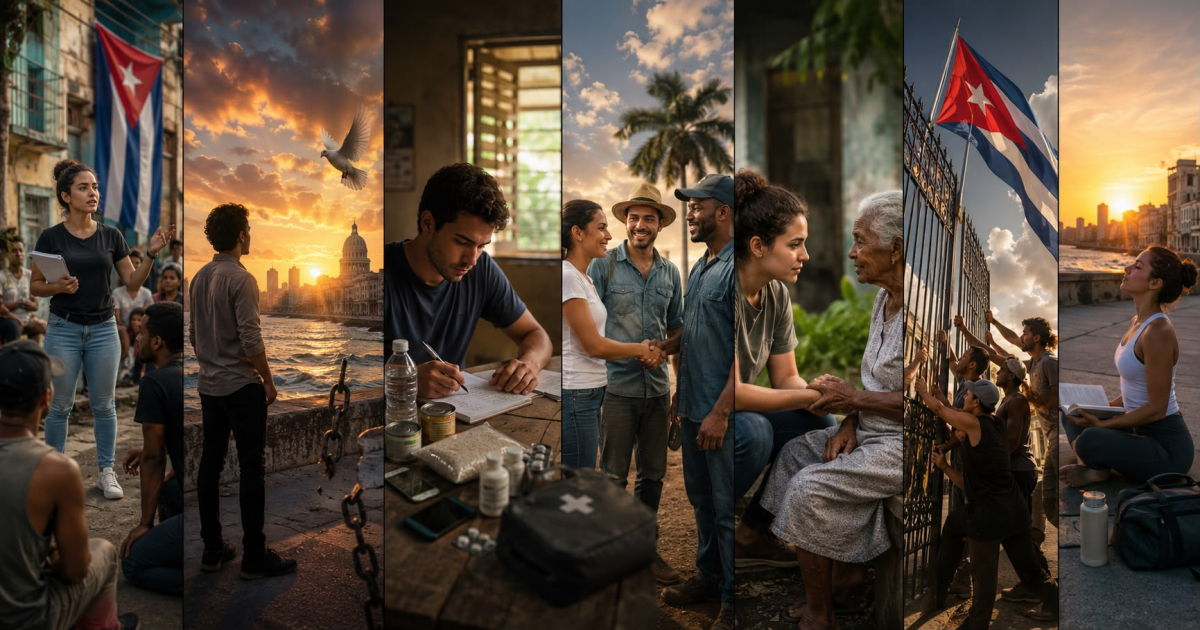
Stephen R. Covey's book, "The 7 Habits of Highly Effective People," extends beyond personal growth; it serves as a guide for those aiming to transform societies, build robust organizations, and pursue challenging objectives without compromising principles. For Cubans striving for freedom, democracy, human rights, and a thriving economy, Covey's insights provide invaluable tools.
Proactivity in the Fight for Freedom
The first habit, being proactive, underlines the importance of choosing our responses, even when circumstances are beyond our control. For decades, the Cuban regime has instilled fear, resignation, and dependency. Adopting a proactive stance means rejecting a perpetual victim mentality and assuming responsibility. Every Cuban can contribute: by spreading information, speaking out, organizing, supporting political prisoners and persecuted activists, and engaging in civic initiatives. True liberty begins when we stop waiting for others to solve our problems and take decisive action ourselves.
Envisioning a Democratic Future
The second habit emphasizes beginning with the end in mind. Opposing communism isn't enough; we must envision the Cuba we wish to create. Our goal should be a democratic nation with a separation of powers, free elections, freedom of speech, respect for private property, independent justice, and full rights for all. We must also imagine a Cuba free from discrimination based on ideas, religion, origin, economic status, or political stance. Clarity of purpose prevents our struggle from devolving into mere improvisation or reaction.
Prioritizing the Essential
Putting first things first, the third habit, is crucial in a democratic cause filled with numerous urgencies. Unity around basic principles, defending political prisoners, supporting repression victims, organizing citizens, and preparing for transition should be prioritized. Personal conflicts, rivalries, and excessive egos must not overshadow the national cause. An effective movement distinguishes between what is truly important and what is secondary.
Embracing Win-Win Solutions
Thinking win-win, the fourth habit, discourages imposing leadership or projects dishonestly. Leadership and projects must stem from transparent elections or majority support. Future Cuban politics must reject the notion that some must destroy others. A genuine democracy seeks agreements, coexistence, and benefits for the entire nation. This doesn't imply impunity or abandoning justice; rather, it acknowledges that a free Cuba will require the participation of citizens with diverse ideas. Transition will be stronger if it offers opportunities to those who break from the regime and side with the people yearning for freedom and democracy, provided they haven't committed severe human rights abuses.
Understanding Before Being Understood
The fifth habit, seeking first to understand, then to be understood, requires prodemocracy opposition to listen to each other and the population. They must empathize with the suffering of workers, farmers, youth without future prospects, retirees, prisoners, exiles, and even those who remain silent out of fear. A leadership disconnected from its people's concerns cannot effectively lead. Listening enhances credibility and allows for communication that resonates with real needs.
Creating Synergy in Unity
Creating synergy, the sixth habit, emerges when diverse individuals and organizations cooperate to achieve superior results than they could alone. Democratizing Cuba demands coordination among dissidents, activists, independent journalists, prisoners' families, exile organizations, churches, intellectuals, and workers. Diversity should be viewed not as a weakness but as a source of experience and creativity.
Renewal for Sustained Effort
The seventh habit, sharpening the saw, highlights the need for personal and organizational renewal. Long-standing struggles against dictatorship can lead to exhaustion, frustration, and demoralization. It's essential to maintain health, strengthen spiritual life, study, prepare new leaders, and nurture familial and human connections. A cause cannot endure if its members are physically or emotionally depleted.
These seven habits teach that effectiveness isn't solely about talent or the desire to succeed. It relies on character, discipline, vision, cooperation, and adherence to principles. The quest for a free Cuba requires individuals who can govern themselves before aspiring to govern a nation.
The democracy we aim to build must begin with our present conduct. Responsibility, listening, cooperation, respecting differences, acting with integrity, and maintaining a clear vision of the future are crucial steps. Freedom won't merely result from the fall of a dictatorship; it will be the conscious work of citizens prepared to build a republic where all Cubans can live with dignity, justice, full rights, and prosperity.
Key Questions on Cuba's Path to Freedom
What is the first step towards achieving a free Cuba?
The first step is adopting a proactive mindset, where Cubans take responsibility for their actions and contribute to the cause rather than waiting for others to bring about change.
Why is it important to have a clear vision for Cuba's future?
Having a clear vision prevents the movement from becoming reactionary or improvisational. It ensures that efforts are focused on building a democratic nation with freedom and rights for all.
How can diverse groups contribute to Cuba's democratization?
Diverse groups can contribute by creating synergy, where different organizations and individuals work together towards a common goal, leveraging their unique experiences and strengths.