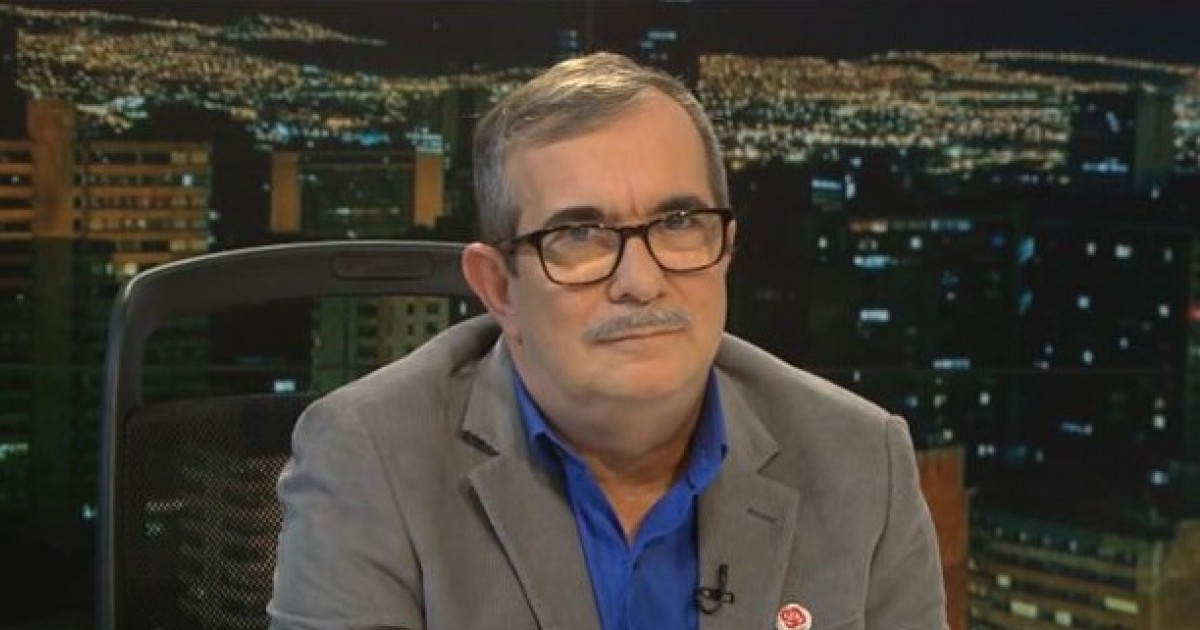
Rodrigo Londoño, widely recognized as "Timochenko" and the former top commander of the now-dissolved FARC-EP, has called on Colombia's president-elect, Abelardo De La Espriella, to reconsider his decision to cut diplomatic ties with Cuba. His statement came just one day after the newly elected leader announced his administration's plan to completely sever connections with Havana and Nicaragua.
In a post on his X account (@TimoComunes), Londoño highlighted the critical role Cuba played in Colombia's peace process and appealed to the "gratitude" that he believes the South American nation owes the island.
"I urge reflection on the announced diplomatic break with Cuba. Cuba is a friendly nation with a heroic populace and a government that has supported Colombia's peace," the former guerrilla leader wrote.
Londoño's defense is grounded in Cuba's role as a guarantor country, alongside Norway, during the negotiations between the Colombian government and FARC-EP, which culminated in the 2016 Final Peace Agreement.
Cuba's Crucial Role in Peace Negotiations
The talks commenced in November 2012 and unfolded over nearly four years in Havana. The agreement was initially signed on August 24, 2016, in the Cuban capital, followed by a ceremony in Cartagena and its final endorsement in Bogotá on November 24 of the same year.
The island also hosted negotiations between the government of Gustavo Petro and the National Liberation Army (ELN) guerrilla group. In 2023, it was the venue for the third round of discussions, which ended with the signing of a 180-day bilateral ceasefire.
Political Tensions with the Incoming Administration
In his message, Londoño went beyond acknowledging Cuba's mediatory role, openly praising the Cuban regime. "To Cuba, a moral beacon for humanity, we owe immense gratitude," the ex-guerrilla commander stated, concluding with the sentiment: "Cuba and Colombia, brother nations."
Timochenko's remarks come amid political tensions with the president-elect. Throughout his campaign, De La Espriella insisted that the former FARC leader "deserves to be imprisoned for life" and pledged to pursue actions to hold him accountable before the law.
On Monday, the president-elect confirmed the closure of 14 Colombian embassies, specifying that only with Cuba and Nicaragua would there be a complete diplomatic break, citing both nations as "tyrannies."
"Under my administration, there will be no ties with tyrannies," he asserted.
Havana quickly responded. On Tuesday, Cuba's Ministry of Foreign Affairs released a statement accusing De La Espriella of being influenced by Washington. The document, titled "An Act of Subordination to the United States' Aggressive Policy," claims that the decision "lacks any justification and does not serve Colombian national interests."
The Cuban Foreign Ministry also asserted that the breakup "does not reflect the sentiment of the brotherly Colombian people."
Upcoming Diplomatic Changes
De La Espriella is set to assume the presidency on August 7, 2026, during a ceremony in Cali. On the same day, the break in relations with Cuba is expected to take effect, marking the third diplomatic rift between the two countries, following previous breaks in 1961 and 1981.
FAQs on Colombia-Cuba Diplomatic Relations
What role did Cuba play in Colombia's peace process?
Cuba served as a guarantor country during the peace negotiations between the Colombian government and FARC-EP, leading to the 2016 Final Peace Agreement.
Why is Colombia's incoming president cutting ties with Cuba?
President-elect Abelardo De La Espriella plans to sever ties with Cuba, labeling it a "tyranny," as part of his broader policy against what he perceives as oppressive regimes.