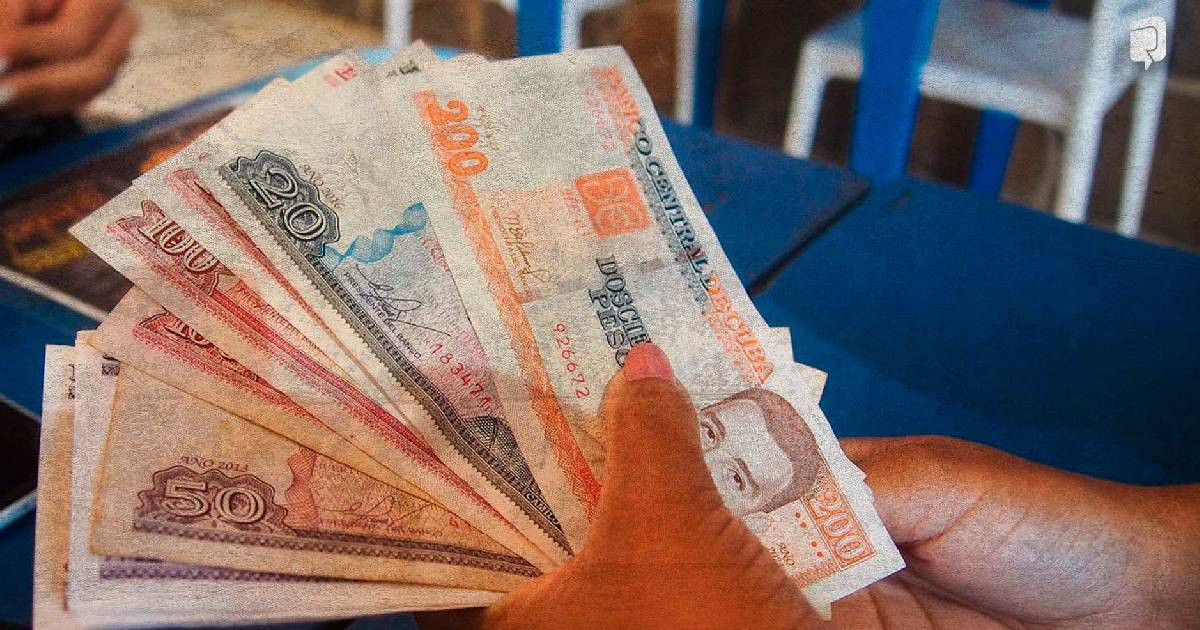
Dr. Javier Pérez Capdevila, a noted Cuban economist, has delivered a scathing critique of the recent salary hike in Cuba, labeling it as a "monetary illusion" that fails to address the purchasing power crisis faced by Cubans.
The new minimum wage of 3,210 pesos, reflecting a 53% increase from the stagnant 2,100 pesos since January 2021, took effect on July 1. However, workers will not see this change until they receive their July salaries in August.
Pérez presents a stark reality: "A minimum wage of 3,210 pesos doesn't even cover a thirtieth of the basic necessities, and the highest wages, reaching 14,535 pesos, don't cover even a sixth. In markets where we actually shop, a basic monthly basket exceeds 100,000 pesos per person, excluding some essential needs."
In a study from May 2026, Pérez estimated that an individual requires approximately 96,060 pesos monthly to meet basic needs in Cuba, with over 70,000 pesos needed just for food.
The informal market prices highlight the gap: a pound of rice costs 360 pesos, black beans are 450 pesos, a liter of vegetable oil approaches 3,000 pesos, and a 30-egg carton ranges from 3,000 to 4,000 pesos, which is equal to or more than the entire minimum wage.
A basic weekly grocery trip can exceed 21,000 pesos, over three times the new monthly minimum wage.
Economic Illusions and Harsh Realities
The economist describes the phenomenon as a psychological trap: "The harshest part is the mental trap. You feel like you're earning more, and you see it on paper, but when you go out, your money buys less than before. That's the monetary illusion: more bills in your wallet, but less food on your table."
Moreover, prices have increased even before the wage hike took effect. "No salary has effectively doubled with this law, despite claims. Meanwhile, essential goods prices have nearly doubled beforehand," Pérez warns.
He concludes unequivocally: "The increase is an illusion. It’s not a real solution; it’s a mirage that crumbles under inflation. Meanwhile, Cubans continue to perform miracles to stretch a day that always ends too soon and a paycheck that never, ever suffices."
The exchange rate disparity exacerbates the situation: with dollars trading between 660 and 695 pesos on the informal market, 3,210 pesos are worth just 4.65 dollars monthly.
The Cuban peso has depreciated by over 95% since 2021, when the monetary reform fixed it at 24 pesos per dollar.
Government Acknowledgement and Policy Impact
Interestingly, even government officials have acknowledged the inadequacy of the adjustment. Guillermo Sarmiento, Director of Labor Organization, admitted that 3,210 pesos "remain insufficient to cover the basic basket of goods and services." Prime Minister Manuel Marrero Cruz echoed this sentiment, stating before the National Assembly that the increase "is still insufficient but is a first step based on real possibilities."
The measure, formalized through a series of resolutions by the Ministry of Labor and Social Security—including resolutions 14/2026 and 15/2026—benefits approximately 1.2 million workers, primarily in the state-funded sectors such as Health, Education, Culture, and Public Administration.
This wage increase is part of the 176 economic and social transformations approved by the National Assembly on June 18, 2026.
FAQs on Cuba's Economic Challenges
Why is the new minimum wage in Cuba considered insufficient?
The new minimum wage of 3,210 pesos is insufficient because it does not cover the cost of basic necessities, which exceeds 100,000 pesos monthly per person in Cuba. This gap leaves many unable to afford essential goods and services.
How has the Cuban peso devaluation affected the economy?
The Cuban peso has depreciated by more than 95% since 2021, drastically reducing its purchasing power. This devaluation has made it increasingly difficult for Cubans to afford basic necessities, as their salaries buy less in both local and informal markets.
What steps has the Cuban government taken to address economic challenges?
The Cuban government has implemented a series of resolutions aimed at increasing salaries, particularly for state-funded sector workers. However, these measures have been criticized for not effectively addressing the real cost of living and inflation pressures.