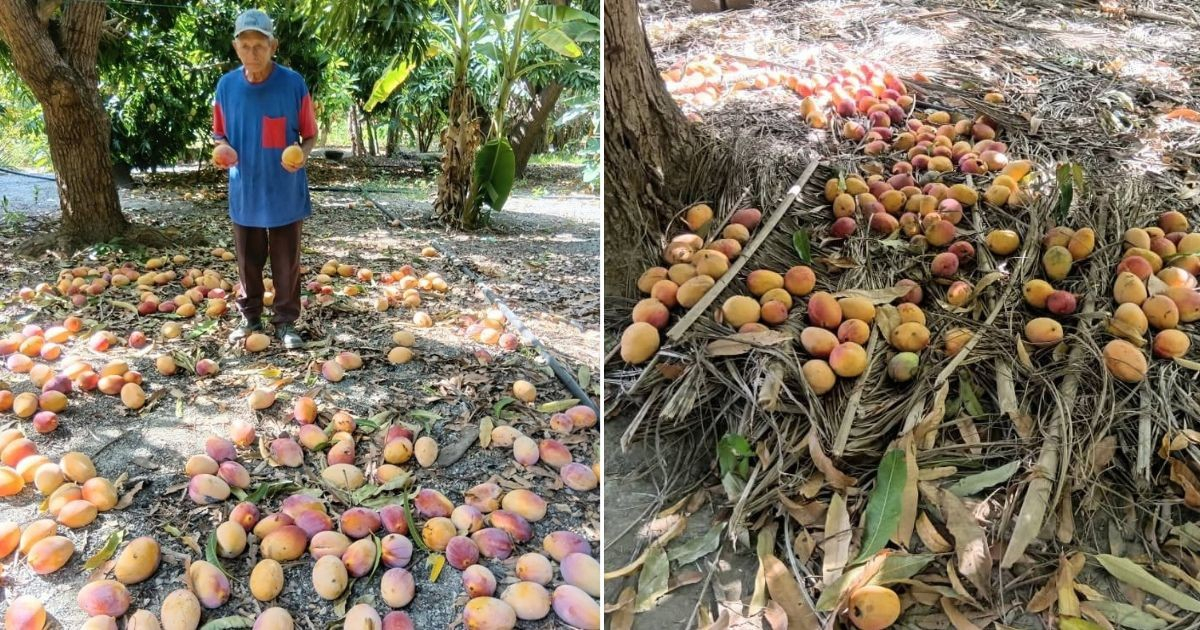
Social media erupted after an official spokesperson publicly condemned the wastage of tons of mangos left to rot under the sun in Maisí, a municipality in Guantánamo province, while the local populace struggles to find food.
The post, authored by Chely Tamayo, was accompanied by images showing a farm floor covered in ripe mangos—yellow, orange, and red—uncollected and left to decay.
"The ground is painted yellow! What seems like a picturesque scene is actually a brutal contradiction: tons of mango rotting in the sun, while people are desperate for food," Tamayo expressed in his post.
The alarming situation centers around Aparicio Samón Leyva, one of the leading mango producers in the "Luis Ramírez López" cooperative in Río Seco, Maisí.
Tamayo stressed that the issue lies not in the harvest, but in the collection process: "The lack of fuel is not an excuse; it's the bottleneck turning essential food into waste."
The regime's spokesperson described the scenario as "catastrophic and unacceptable," urging agricultural and transport entities to ensure the diesel required for moving the fruit: "The farmer's efforts are thwarted by bureaucratic and logistical barriers."
Tamayo concluded with a phrase highlighting the paradox: "The people aren't asking for handouts; they demand that the land's produce be utilized. Collecting and selling these mangos isn't a luxury—it's an urgent necessity."
What makes this post especially noteworthy is its source: not from a dissident or independent outlet, but from a voice recognized by the system itself, showcasing the frustration even within official ranks.
Furthermore, the contradiction becomes glaring as citizens beg, scavenge for food, or sift through garbage, while the regime—allegedly protecting its people—does little to collect such valuable produce.
However, this scenario is not new.
The pattern repeats each season. In 2021, images from Granma province went viral showing ground covered with fallen ripe mangos.
That same year, the mango collection campaign in Guantánamo began on May 25, aiming to process about 5,000 tons by mid-July. Yet, the diesel shortage had already halted fruit transportation in Imías for three days in the same month.
In 2021, 12,800 pounds of mangos rotted in Camagüey due to similar collection failures. By 2023, tons of mangos were wasted in Guantánamo because of inefficiencies in the production model.
Key Questions About the Mango Waste Crisis in Cuba
Why are mangos rotting in Guantánamo?
The mangos are rotting due to inefficiencies in collecting and transporting the fruit, largely stemming from a lack of diesel fuel.
What does the official spokesperson say about the mango crisis?
The spokesperson described the situation as catastrophic and unacceptable, urging agricultural and transportation sectors to address the fuel shortages.
How does the mango crisis affect the local population?
The crisis exacerbates food scarcity issues, as mangos that could feed the population are left to waste.