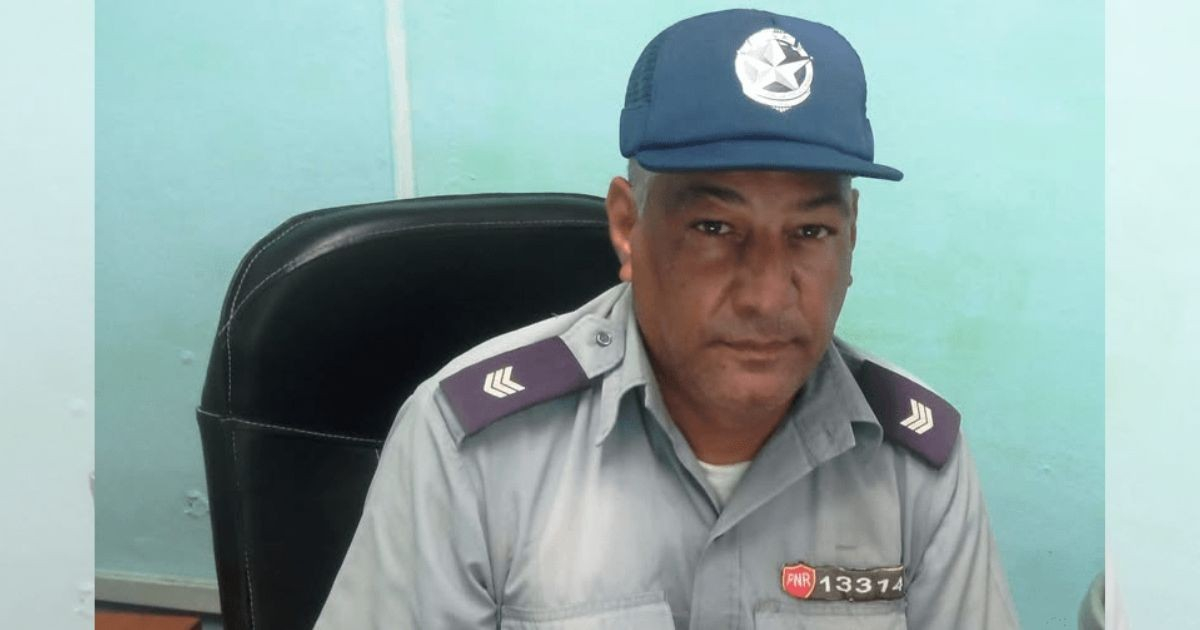
State-run Radio Caribe recently published a piece in which Captain Aramis González Almeida, head of municipal traffic on Isla de la Juventud, boasted about a reduction in traffic accidents this year. He credited the decline to the preventive efforts of the authorities.
González Almeida highlighted common accident causes such as alcohol consumption, speeding, and distracted driving. He pointed out that young people, aged 18 to 30, driving scooters without licenses are a major risk factor.
The captain also celebrated the installation of a summer alcohol checkpoint near the beaches, noting that no drunk drivers were found in July. He presented this as evidence of drivers' increased "awareness."
The announcement sparked a wave of sarcasm on social media, where many Cubans pointed out what the official report neglected: there is no fuel.
"Fewer accidents aren't due to increased awareness or police control; it's simply because there's no fuel and the streets are deserted. With no traffic, even statistics improve on their own," wrote Kevin Ivan Ramirez Cedeño.
Others were more blunt. "No fuel, no accidents," summarized Onel Cosme Rodriguez Broche.
Yasmani Hernández Veg questioned, "Are traffic accidents decreasing, or is it just the traffic that's diminishing? I'm not sure."
Salezky Izquierdo added a humorous twist: "What they won't tell you is that collisions between people walking half-asleep have increased."
Javier Prieto Mulet painted a picture of the island's transport collapse: "You won't even see people on foot. You could lay down and nap on the road."
Yunier Cabrera extended the irony beyond traffic: "Alcoholics, obesity, and smokers have also decreased. So have tubers, vegetables, proteins, and many other things. Come on, Caribe, do a report on all that."
Tuxel Lexut criticized the state media: "Please, be serious. Of course, there are fewer accidents. A respectable journalist wouldn't report that."
Gumersindo Figueredo added nuance without dismissing criticism: "Despite low traffic due to fuel scarcity, there's still heavy circulation of electric transport, mostly tricycles. Many operate without licenses, experience, or responsibility."
Juan Neris Perez Ruiz highlighted an unaddressed issue: "There's an influx of electric scooters driven by minors, some as young as six or seven, without helmets, at speeds they can barely handle. What's being done about that?"
Yudisleny Leyva Gracia summed up the general sentiment: "It's not because of good work; it's cause and effect. No traffic means no accidents."
Nationally, Cuba ended 2025 with 750 fatalities and 6,718 injuries from traffic accidents, according to official figures from a meeting of the National Road Safety Commission.
The official report ignored a dire context. Since December 2025, no Venezuelan oil has arrived on the island, leading to rapid deterioration: by February 2026, the electric company announced four-hour power cuts; by May, available generation dropped to six hours daily; and by July 2026, residents of Isla de la Juventud endure just two hours of electricity a day.
Common Concerns about Traffic and Fuel Shortages in Cuba
Why have traffic accidents decreased on Isla de la Juventud?
The reported decrease in traffic accidents is largely attributed to the scarcity of fuel, leading to empty streets and reduced vehicle movement.
What measures have been taken to prevent traffic accidents?
Authorities have implemented preventive measures such as summer alcohol checkpoints near beaches to monitor drivers' sobriety.
How has the fuel shortage affected daily life in Cuba?
The fuel shortage has led to severe limitations on transportation and electricity, with residents experiencing long power outages and minimal vehicle use.