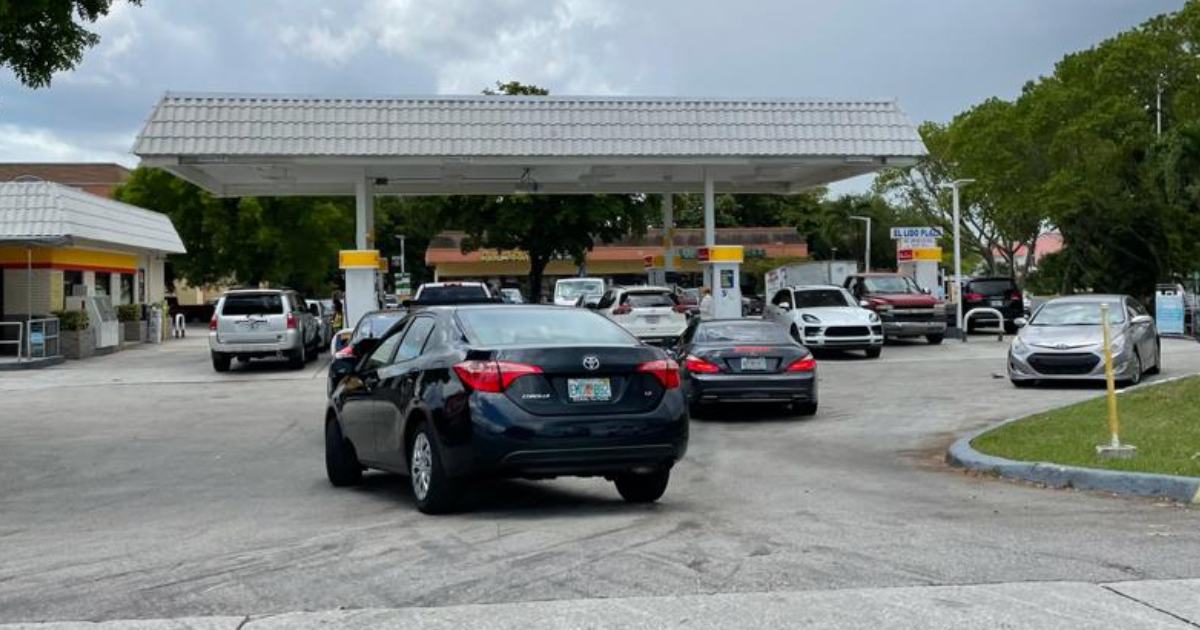
This Monday saw another increase in gas prices across South Florida, with several counties nearing or exceeding the $4 per gallon mark, according to data released by AAA and GasBuddy on July 27.
In Miami-Dade, the average price reached $3.96 per gallon, up three cents from the previous week. Fort Lauderdale, located in Broward County, saw prices rise to $4.01, a two-cent increase. Meanwhile, West Palm Beach and Boca Raton reported prices at $4.12, also up by two cents. The most expensive area was Monroe County, encompassing the Keys, where prices were $4.19, though they slightly decreased by one cent compared to last week.
The price hike is not just a local phenomenon. Nationwide, the average price rose by 11 cents compared to the same time last week, as indicated by GasBuddy's survey of nearly 1,700 stations in South Florida. In the Miami area, prices are now 15 cents higher than a month ago and 91 cents higher than a year ago.
Geopolitical Tensions Fuel Price Increases
The primary driver behind the surge is geopolitical tension surrounding the Strait of Hormuz, a crucial passage for a significant portion of the world's oil supply. Instability in the region has pushed crude oil prices into the $90 per barrel range, which quickly impacted gas prices at the pump.
"Currently, drivers should brace for sustained high prices, but the extent of further increases largely hinges on the geopolitical developments in the coming week," warned Patrick De Haan, GasBuddy's head petroleum analyst.
Price Discrepancies Across Florida
Within Florida, there's a noticeable gap between the north and south. The cheapest markets include Panama City ($3.70), Pensacola ($3.74), and Crestview-Fort Walton Beach ($3.76). In contrast, the priciest areas are West Palm Beach-Boca Raton ($4.10), Fort Lauderdale ($4.00), and Naples ($4.00), as reported by AAA.
Historical Context and Consumer Advice
This price escalation follows a brief period of relief. In June, gasoline prices in Florida dropped after signs of easing tensions between the United States and Iran brought Brent crude down to around $83 per barrel. However, renewed uncertainty over the cease-fire's longevity pushed oil prices back up in July.
Recent history has been even more dramatic: in May, gas prices in Florida jumped 40 cents in one week, reaching a peak of $4.34 per gallon. In April, Miami Beach saw prices soar past $5 per gallon, with some stations charging as much as $5.39.
To manage fuel expenses, experts suggest consolidating errands, paying with cash to avoid credit card surcharges, minimizing vehicle weight, and using apps like GasBuddy to find the cheapest stations in each area.
Analysts predict that the future price trajectory will depend on developments in the Middle East and whether the oil market perceives a lasting stabilization in the region.
Understanding the Rising Gas Prices in Florida
What is causing the recent increase in gas prices in South Florida?
The surge in gas prices is primarily due to geopolitical tensions around the Strait of Hormuz, a vital passage for oil transport, which has raised crude oil prices.
How do gas prices in South Florida compare to other areas in the state?
South Florida generally has higher gas prices compared to northern regions. For example, West Palm Beach-Boca Raton and Fort Lauderdale have higher prices compared to Panama City and Pensacola.
What can consumers do to save on gas expenses?
Consumers can save by combining trips, using cash to avoid credit card fees, reducing vehicle weight, and using apps like GasBuddy to find cheaper gas stations.