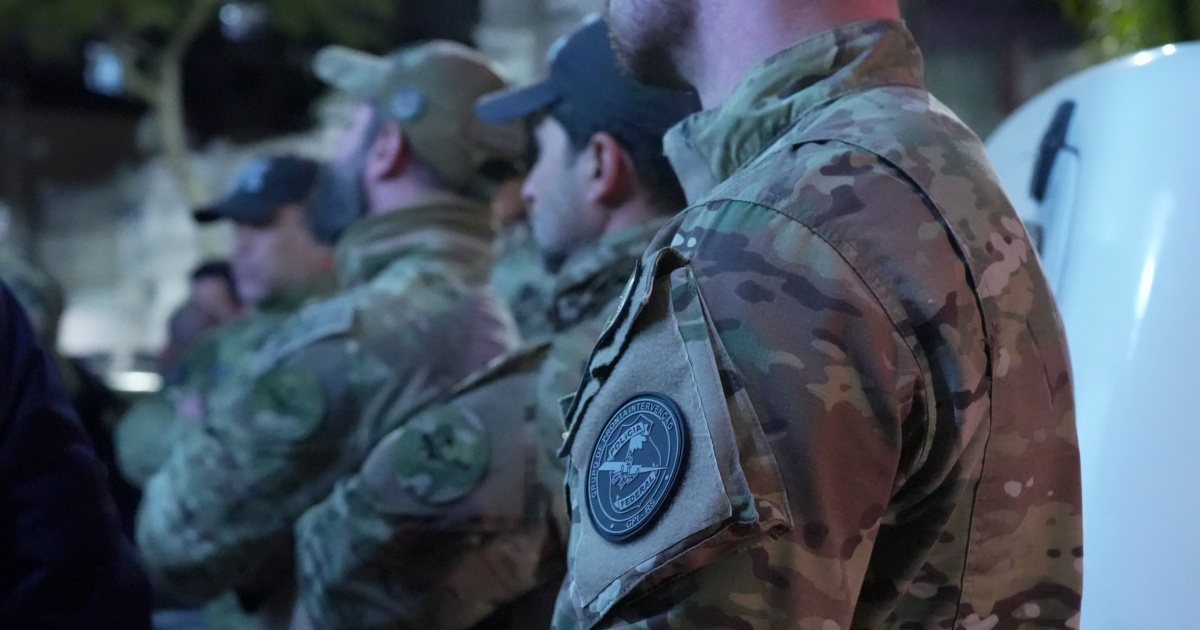
Last Thursday, Brazil's Federal Police launched "Operation Tricksters," a strategic initiative aimed at dismantling a criminal network responsible for facilitating the illegal entry of Cubans from Guyana into Brazil, as reported by Globo's G1 portal.
Authorities executed two search and seizure warrants issued by the 4th Federal Court of Boa Vista, located in Roraima, a northern state of Brazil.
The Guyana-Brazil Route
The criminal network under investigation operates along the border corridor between Lethem, Guyana, and Bonfim, a municipality in Roraima.
The journey begins with a flight from Havana to Georgetown, the capital of Guyana— the only country in the region that does not require a visa for Cuban citizens. From there, migrants travel overland to Lethem and secretly cross the Tacutu River to reach Bonfim.
Once in Brazil, many migrants proceed by road to Boa Vista, often continuing towards Curitiba, São Paulo, or even Uruguay.
Federal Highway Police officer Isaías Magalhães highlighted the organization's operations:
"For many of these individuals, Boa Vista is merely a transit point. This criminal network offers a comprehensive package, covering the journey from Cuba to the final destination within Brazil."
The smugglers, commonly referred to as "coyotes," charge between $300 and $2,800 per segment of the journey.
According to BBC News Brasil, as cited by O Globo, "Many Cubans are led to believe it's necessary to undertake this journey through illegal traffickers, paying amounts exceeding $10,000 from the point of departure in Cuba."
Investigation Origins in 2022
The investigation leading to Operation Tricksters began in July 2022, following the arrest of two men transporting foreigners who had entered Brazil illegally.
Analysis of seized cell phones indicated a broader network was at play.
The Federal Police are also investigating document forgery, criminal association, and efforts to gain economic advantage.
In 2026 alone, over 200 individuals have been rescued in operations connected to this network at the border region.
A Year of Ongoing Operations in 2026
This operation is part of a series of intensified police actions throughout the year. In February, "Operation Malecón" dismantled a network in Boa Vista that had trafficked at least 200 Cubans over three months, led by Venezuelan José Alberto Lira Lezama.
In June, "Operation Conexão Norte" resulted in the rescue of 189 Cuban migrants within a week. On June 8 and 9, the largest humanitarian rescue in Roraima occurred, with 108 Cubans and five "coyotes" apprehended in a single day.
Previous operations have rescued 39 Cubans, including ten children, a pregnant woman, and several elderly individuals, who were found after enduring three days without food while crowded in three rental vehicles.
Between 2024 and June 2026, the Federal Highway Police rescued 297 migrants in Roraima, arrested 31 suspected traffickers, and seized 31 vehicles; 91% of those rescued were Cuban.
A Continuing Exodus
The driving force behind these numbers is the crisis forcing thousands of Cubans to risk their lives: chronic power outages, food and medicine shortages, rampant inflation, and political repression.
This situation has been exacerbated by the near-total closure of the route to the United States since January 2025, when the Trump administration ended the humanitarian parole program, reducing the irregular encounters of Cubans at the U.S. border by 99%.
Brazil has since emerged as the primary alternative destination.
In 2025, Cubans filed 41,919 asylum requests in Brazil, accounting for 55.4% of the national total, surpassing Venezuelans for the first time in a decade with an 88.1% increase from 2024.
In the first four months of 2026, 13,414 Cubans sought asylum in Brazil—representing 58% of all applications during that period—though none received formal refugee status during this time.
Understanding the Cuban Migration Crisis
Why are Cubans leaving their country in such large numbers?
Cubans are fleeing due to severe economic hardships, including persistent power outages, shortages of essential goods, high inflation, and political repression.
What has changed in the migration routes for Cubans?
Since the U.S. closed the route to Cuban migrants in 2025, Brazil has become a primary destination, offering a new path for those seeking asylum.
How do traffickers operate in the Brazilian-Guyanese border region?
Traffickers, known as "coyotes," facilitate illegal crossings from Guyana into Brazil, charging substantial fees for their services.