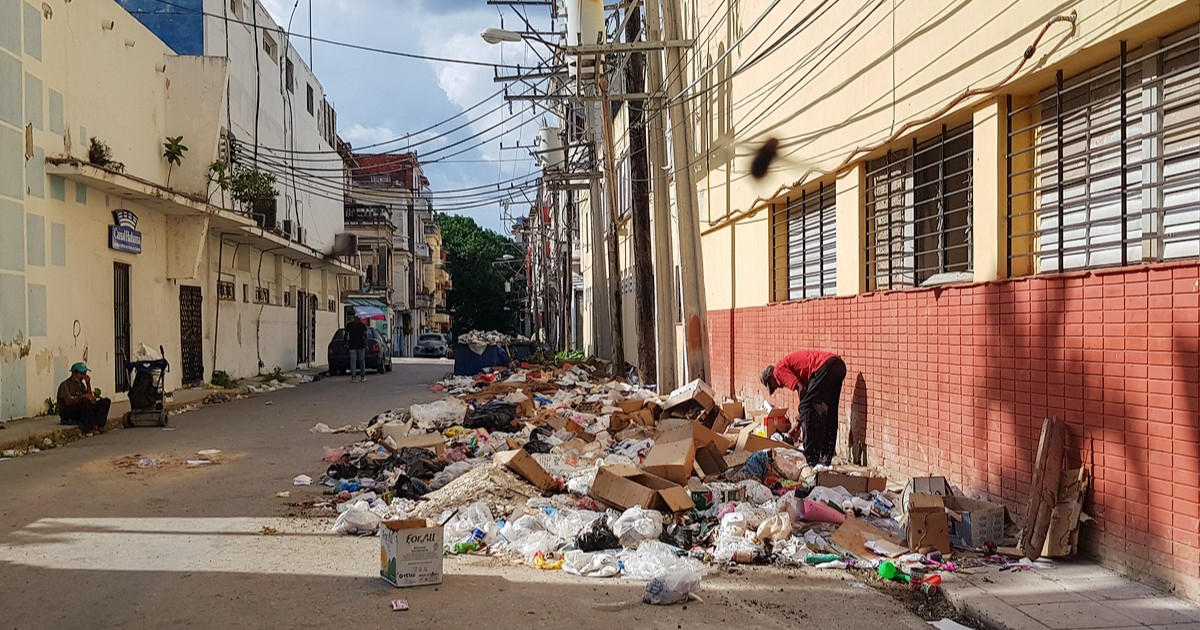
The Cuban playwright and activist Yunior García Aguilera recently published an incisive column on 14ymedio, critically dismantling the perceived accomplishments of Cuba's regime under Miguel Díaz-Canel. He argues that the Cuban dystopia is, in essence, a way to "call hope resignation, resistance misery, and continuity decline."
This critique was sparked by an interview Díaz-Canel gave on July 20 to the Russian channel RT en Español. When questioned about Cuba's potential solutions to its ongoing crisis, he quoted an idea originally from Argentine filmmaker Fernando Birri and later popularized by Uruguayan writer Eduardo Galeano.
In Díaz-Canel's words: "Utopia is on the horizon... What is utopia for? To walk. I would say hope is the same."
Twisting the Concept of Utopia
García Aguilera contends that Díaz-Canel "completely twisted the meaning of utopia," arguing that this wasn't just an intellectual slip but a stark confession: the regime no longer promises to achieve anything tangible.
"The regime no longer promises to achieve anything. It only asks us to walk backward, like crabs; to resist and wait for nothing, like zombies," writes the playwright, who has lived in exile in Madrid since November 2021.
A Catalog of Failures under Díaz-Canel
The column reviews Díaz-Canel's eight-year tenure as a period of setbacks. His administration implemented the "Tarea Ordenamiento," touted as the ultimate fix for accumulated economic distortions. However, it resulted in the collapse of wages and pensions, skyrocketing inflation—reaching 77% in 2021—and the entrenchment of a caste-based economy where some shop with foreign currency while others merely gaze at the displays.
The national electrical system has repeatedly failed. By July 2025, nearly 45% of Cuba endured blackouts lasting up to 20 hours a day. Tourism plummeted even before the new sanctions from the Trump administration, and foreign businesses are fleeing, fed up with a state that doesn’t pay its debts and changes the rules at whim.
Demographic Decline and Political Repression
The demographic situation is equally dire. In 2025, Cuba recorded 134,354 deaths, the second-highest number since records began, trailing only 2021. According to July 2026 data from the National Office of Statistics and Information, that year saw twice as many deaths as births: 136,214 deaths compared to just 68,064 births.
"Continuity has not managed to multiply loaves and fishes, but it has multiplied the corpses," García Aguilera writes.
He also recalls the mass protests on July 11, 2021, when thousands of Cubans demanded freedom, food, and electricity. Díaz-Canel's infamous response was: "The order of combat is given." This led to violence, arrests, show trials, and harsh sentences.
The Role of Díaz-Canel
For García Aguilera, that day unveiled Díaz-Canel’s true role: "Raúl Castro didn't place him in power for his boldness, but for his obedience. He needed someone willing to destroy an entire country rather than endanger the elite."
The column was published on the anniversary of the Moncada Barracks assault, joining a chorus of critical voices. Comedian Ulises Toirac mocked Díaz-Canel's metaphor with the quip "the light at the end of the tunnel... there is no tunnel," while actor Luis Alberto García publicly criticized the regime for its failures to address blackouts and shortages.
"Díaz-Canel is the civilian fuse of a military machine, the dispensable face of a power that uses surnames without history to protect the important ones," concludes García Aguilera, founder of the Archipiélago civic movement and promoter of the thwarted Civic March on November 15, 2021.
Insights into Cuba's Current Crisis
What did Yunior García Aguilera criticize about Díaz-Canel's regime?
García Aguilera criticized the regime for its failure to achieve tangible progress, its economic mismanagement, and its oppression of the Cuban people, framing these issues as part of a broader dystopian reality.
How has the Cuban economy been affected under Díaz-Canel's leadership?
Under Díaz-Canel, the Cuban economy has struggled with hyperinflation, wage and pension degradation, and a stark division between those who can shop with foreign currency and those who cannot.
What demographic challenges is Cuba currently facing?
Cuba is experiencing a demographic crisis, with significantly more deaths than births, reflecting the country's severe socio-economic issues.