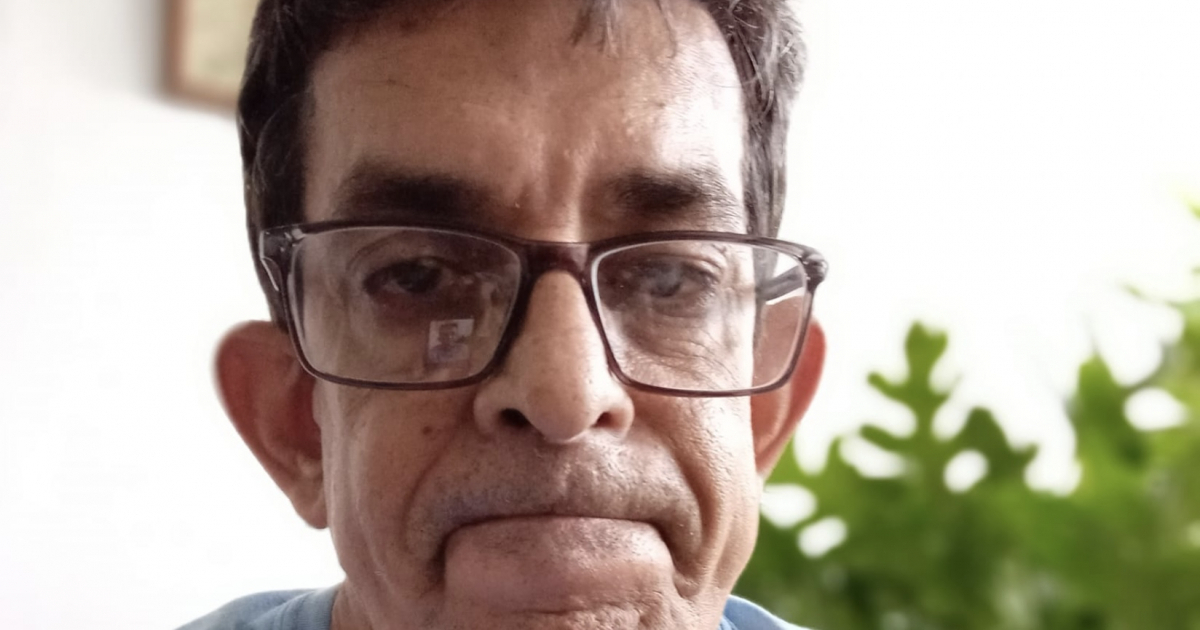
Cuban comedian Ulises Toirac used his signature irony on Sunday to highlight the ongoing struggles in Cuba during the National Rebellion Day: a blackout that overshadowed both the eve and the day of July 26th, as the regime marked the 73rd anniversary of the Moncada Barracks assault.
On his Facebook profile, Toirac posted: "Nice blackout from the eve in salute to the 26th. On the side, there's an issue with the transformer that we hope won't turn into the fireworks of the celebration, as it would be a catastrophe added to the existing chaos. In the end... happier than a widow without an inheritance. Indeed, it's always the 26th."
The concluding remark—"it's always the 26th"—twists the festive meaning of the most symbolic date in Cuba's political calendar, turning it into a metaphor for the country's continuous collapse.
While the official anniversary event took place in Pinar del Río, led by Miguel Díaz-Canel, much of the island was left in darkness.
Toirac's irony lies in this stark contrast: the regime celebrates its foundational act while the system it governs crumbles around it.
Severe Energy Crisis Amid Celebrations
This message comes amid a severe energy crisis. As Cuba approached July 26th, it faced widespread blackouts: on Saturday, the electricity demand was 3,200 MW, but the available capacity was only 1,070 MW, with 106 distributed generation plants offline due to fuel shortages.
In the early hours of Sunday, the Antonio Guiteras thermoelectric plant—the country's largest—was disconnected from the National Electric System at 1:07 a.m. due to an economizer failure, marking at least 17 unplanned outages so far in 2026.
July has been a disastrous month for Cuba's electrical grid. The National Electric System suffered at least three total collapses—on the 6th, 10th, and 14th of July—leaving millions without power during each incident.
Understanding Cuba's Energy Crisis
What is causing the frequent blackouts in Cuba?
The frequent blackouts in Cuba are primarily caused by a significant gap between electricity demand and available capacity, exacerbated by fuel shortages and technical failures in power plants.
How has the energy crisis affected daily life in Cuba?
The energy crisis has severely disrupted daily life, leading to widespread blackouts that affect homes, businesses, and essential services, compounding the island's existing economic challenges.