Oscar Sánchez Serra, the director of the sports newspaper Jit and an official representative of the Cuban delegation at the XXV Central American and Caribbean Games in Santo Domingo 2026, acknowledged on Saturday the defection of goalkeeper Moisés David Torres Puig. Sánchez Serra tried to portray the event as purely a personal decision, devoid of any political or social implications.
In an interview with the Dominican newspaper El Día, Sánchez Serra admitted that the young athlete left the delegation but dismissed any interpretation linking his departure to living conditions in Cuba or any vulnerability issues.
"He is the goalkeeper of the field hockey team. And he separated from the Cuban delegation," stated the official, emphasizing that such incidents are part of migratory processes occurring in various countries.
Sánchez Serra stressed that the athlete traveled to the Dominican Republic with all his needs provided by the Cuban government.
"This young man arrived here with all his nutritional needs met. He was sponsored by the Cuban government. And he's not a beggar. He is well-prepared but has chosen, on a personal level, to change his life project," he remarked.
However, the official narrative contrasts with a plea for help issued shortly after by the athlete's family. Torres Puig's brother publicly sought assistance from journalist Magdiel Jorge Castro, claiming the young man was left alone after leaving the delegation and lacked documentation.
"Please, this is my brother. His name is Moisés Torres Puig. He has no one and no passport. Please, support him," wrote the family member.
During the interview, Sánchez Serra also denied that the goalkeeper would face any repercussions should he choose to return to Cuba.
"No, not for an athlete, nor for any citizen. Many citizens have been repatriated," he assured, although he noted that returnees undergo medical evaluations.
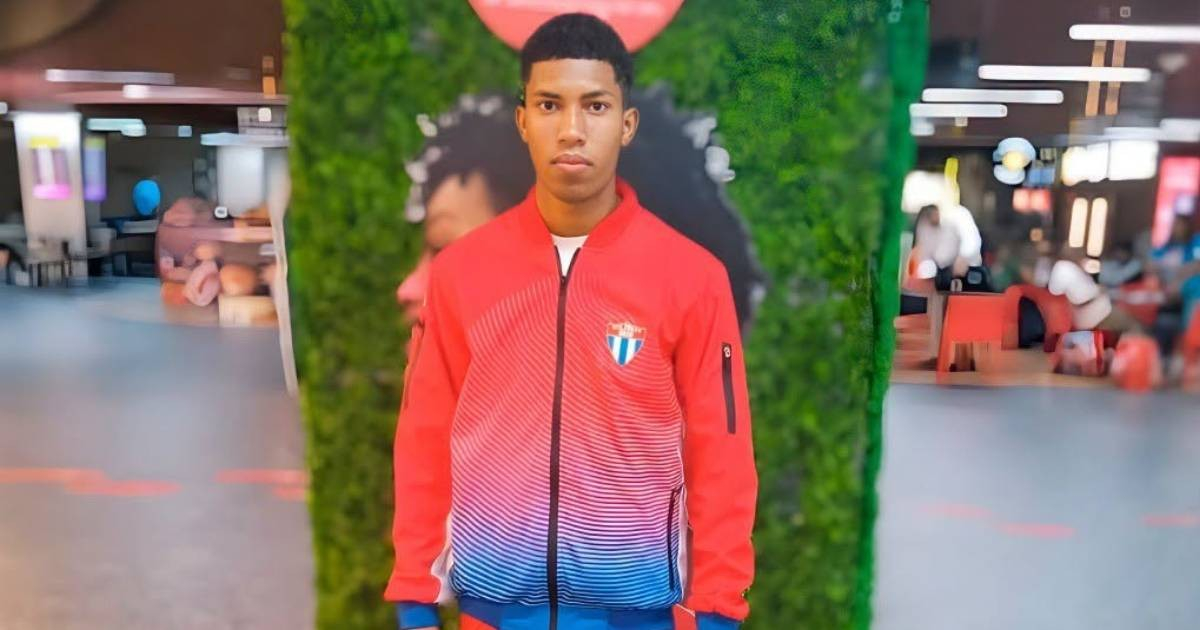
Torres Puig, a 21-year-old from Las Tunas, was the second goalkeeper and the youngest player on the Cuban men's field hockey team. On Friday, July 24, he became the first Cuban athlete to leave the delegation during the Central American and Caribbean Games in Santo Domingo, even before the official opening ceremony.
The athlete himself recounted in an audio recording released after his departure that he executed a meticulously planned escape while the team was watching a women's match as spectators.
"I was very nervous about being discovered. I felt they suspected something, but I requested ice, claiming I had been hit by a ball during practice, and that eased the situation a bit," he explained.
The young athlete described stepping into the hallway under the pretense of discarding the ice, where someone was waiting with civilian clothes. After changing, they walked out of the stadium and boarded a private transport vehicle.
"Then I said I was going to throw away the ice in a bin in the stadium hallway, and that's when I managed to leave with the person who helped me escape. We exchanged clothes and walked out until the Uber arrived," he detailed.
Torres Puig's departure is part of ongoing defections by Cuban athletes during international competitions. Just days earlier, nine out of twelve members of the Cuban canoeing team abandoned the delegation while participating in a World Cup in Montreal, Canada, marking the largest defection in the history of that sport for Cuba.
Cuba is participating in the Central American and Caribbean Games in Santo Domingo with a delegation of 504 athletes across 42 disciplines, aiming to finish among the top three countries in the medal tally. The men's field hockey tournament runs from July 26 to August 4, leaving the Cuban team to compete with one less goalkeeper.
Key Questions About Cuban Athlete Defections
What prompted Moisés David Torres Puig to leave the Cuban delegation?
Moisés David Torres Puig's decision to leave the Cuban delegation was reported as a personal choice. He had planned his escape while the team attended a match, indicating his desire to change his life path.
How does the Cuban government view athlete defections?
The Cuban government tends to downplay athlete defections, framing them as individual decisions. Officials, like Sánchez Serra, often emphasize that athletes' needs are met and that such defections are part of normal migratory processes.
What are the implications for Cuban sports due to these defections?
The continuous defections pose challenges for Cuban sports, affecting team compositions and potentially impacting performance at international competitions.